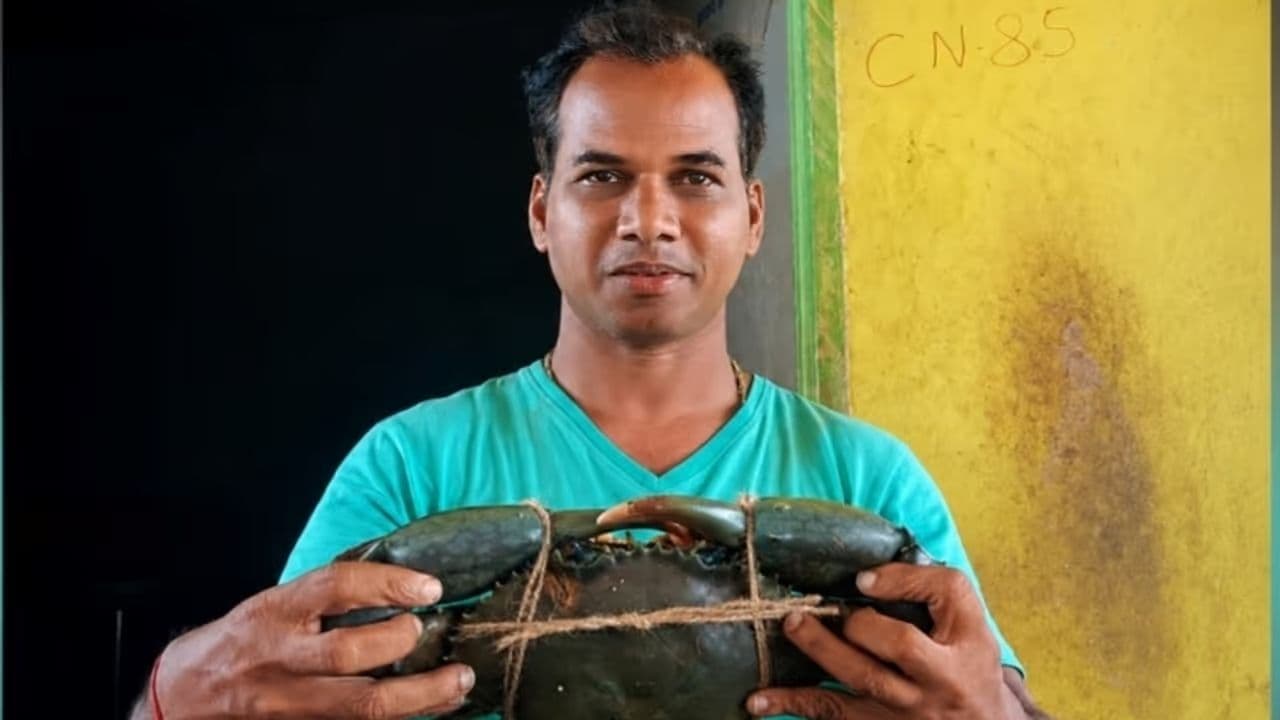
Karnataka’s premium mud crabs from Uttara Kannada are witnessing strong global demand, with exports to several Southeast Asian countries fetching premium prices. However, fishermen and experts warn that climate change and marine pollution are causing a steady decline in the crab population.
A unique variety of mud crab found along Karnataka’s coast is witnessing strong demand in international seafood markets, providing a valuable source of income for fishermen in Uttara Kannada district. Popularly known as ‘Kallu Genji’, these crabs are harvested from estuaries where rivers meet the Arabian Sea and are exported live to several Southeast Asian countries. While the export business has recovered strongly after the pandemic, fishermen and environmental experts are increasingly concerned about the declining crab population, which they attribute to climate change and marine pollution.
Live Crabs Exported to Southeast Asian Markets
The premium mud crabs are sourced from coastal areas including Madanageri, Belekeri, Tadadi and Honnavar in Uttara Kannada district. They are transported to Mangaluru and Chennai before being exported by air to countries such as Singapore, Malaysia, Thailand, Taiwan, Hong Kong and China.
These crabs are highly valued for their taste, nutritional value and high protein content, making them a sought-after delicacy in international markets.
While the crabs sell locally for around ₹2,000 per kilogram, they can fetch nearly ₹3,500 per kilogram in overseas markets.
Premium Mud Crab Known for Its Size and Durability
Known in English as the Mud Crab, the species is locally referred to as ‘Kari Yedi’, or black crab, in parts of Ankola. The crabs are categorised by size into Excel, Big and Medium grades, with the dark grey and dark green varieties commanding the highest demand.
Large mud crabs can weigh up to 3.5 kilograms and measure nearly nine inches across. One of their unique characteristics is their ability to survive on land for up to seven days, making them suitable for long-distance transportation and export.
Live Export Essential for Higher Value
Exporters emphasise that the crabs must remain alive throughout the transportation process to command premium prices. More than one tonne of live mud crabs is reportedly shipped from Uttara Kannada every day.
The crabs are packed in specially designed baskets that allow adequate airflow during transit. If a crab dies, or even loses a leg, its market value drops significantly and, in some cases, buyers reject it altogether.
As the crabs have extremely powerful claws capable of cutting through fishing nets, their claws are carefully tied before packaging to ensure safe handling and transportation.
Fishermen Face Challenges Despite Strong Demand
Although demand for these crabs remains high, local fishermen do not receive the full financial benefit from exports. Due to licensing requirements and export-related documentation, most fishermen are unable to export directly and must instead rely on intermediaries or agents.
As a result, a significant share of the profits is retained by exporters rather than the fishermen who catch the crabs.
The crabs are also valued for their meat and claws, which are widely used in soups and other seafood dishes across several Asian countries.
Business Recovers After Covid-19
Brothers Ananda Harikantra, Bhairava Harikantra and Mohan Harikantra from Madanageri have been involved in the crab trade for more than 34 years.
According to them, the Covid-19 pandemic severely affected the business as international flights were suspended, bringing exports to a complete halt. With flight services restored, exports have resumed and demand has recovered steadily.
Declining Crab Population Raises Environmental Concerns
Despite the revival in exports, fishermen and environmental experts have expressed concern over the declining mud crab population along Karnataka’s coast.
They believe climate change, marine pollution and changing coastal conditions are contributing to the gradual decline in crab numbers.
“We have been exporting these crabs through agents for many years,” said Bhairava Nagappa Harikantra, a crab supplier from Madanageri.
“The prices are good this year, but the number of crabs we find is decreasing every year,” he added.
The declining population has raised concerns about the long-term sustainability of the trade, with experts warning that conservation measures may be necessary to protect this valuable marine resource.