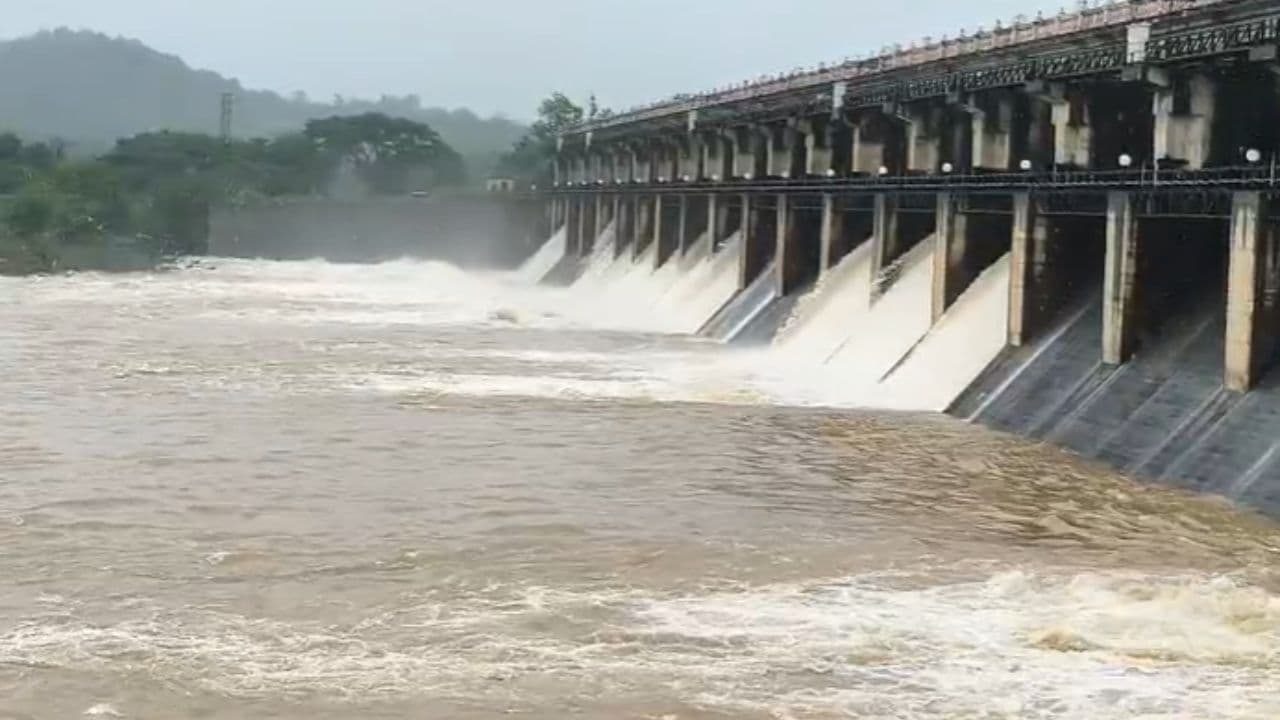
Heavy rainfall over the past five days has nearly doubled water storage in Karnataka’s major dams, easing drought concerns. Reservoir storage rose from 66.62 TMC to 117.53 TMC, with strong inflows improving water levels across the state.
After a delayed and largely dry start to the southwest monsoon, Karnataka has finally received much-needed relief as widespread heavy rainfall over the past four to five days has dramatically improved the state’s water situation. Reservoirs that had been witnessing alarmingly low storage levels just a month into the monsoon have recorded a sharp rise in inflows, with total water storage across the state’s major dams nearly doubling in less than a week. The development has eased growing concerns over a possible drought and brought renewed hope to farmers and water resource managers alike.
The improvement comes after fears of a drought intensified due to the anticipated impact of a ‘Super El Niño’. However, the recent spell of heavy rainfall has significantly boosted water levels in 22 major reservoirs across Karnataka.
Reservoir Storage Nearly Doubles
The figures highlight the remarkable turnaround. According to the Water Resources Department, the combined storage in the state’s 22 major reservoirs stood at just 66.62 TMC on July 4. By July 9, it had surged to 117.53 TMC, marking an impressive increase of 50.91 TMC in just five days.
Water Levels Improve Across Major Dams
The reservoir situation has improved considerably over the past week.
As of July 4, seven reservoirs had storage levels below 25% of their total capacity. Six reservoirs were between 25% and 55% full, while seven others were in the 55% to 75% range. Only Vani Vilas Sagara and Mullamari Lower had water levels above 75% of their capacity.
By July 9, only three reservoirs, Tungabhadra, Bhima Lift, and Saudagar, remained below the 25% mark. Ten major reservoirs, including Krishnaraja Sagar (KRS) and Almatti, were between 25% and 55% full, while six reservoirs recorded storage levels between 55% and 75%. Vani Vilas Sagara and Mullamari Lower continued to remain comfortably above 75% of their capacity.
Strong Inflows Bring Relief to Farmers
The sharp increase in reservoir storage is expected to provide significant relief to farmers by improving water availability for irrigation during the ongoing agricultural season.
At the Krishnaraja Sagar (KRS) reservoir, the current storage stands at 13.51 TMC, of which 5.13 TMC is usable. The reservoir is receiving an inflow of 12,694 cusecs, while the outflow stands at just 684 cusecs.
Similarly, the Almatti reservoir is receiving a substantial inflow of 1.31 lakh cusecs. Other major reservoirs are also recording healthy inflows, including Tungabhadra at 28,000 cusecs, Bhadra at 16,304 cusecs, and Hemavathi at 15,646 cusecs.
Major Reservoir Levels (As of July 9, 2026)
- Kabini: 47%
- Hemavathi: 54%
- Tungabhadra: 13%
- Supa: 25% (water level measured in metres)
- Krishnaraja Sagar (KRS): 27%
- Ghataprabha: 31%
- Linganamakki: 19%
- Bhadra: 42%
- Harangi: 51%
- Almatti: 36% (water level measured in metres)
- Narayanpur: 59% (water level measured in metres)
- Malaprabha: 29%