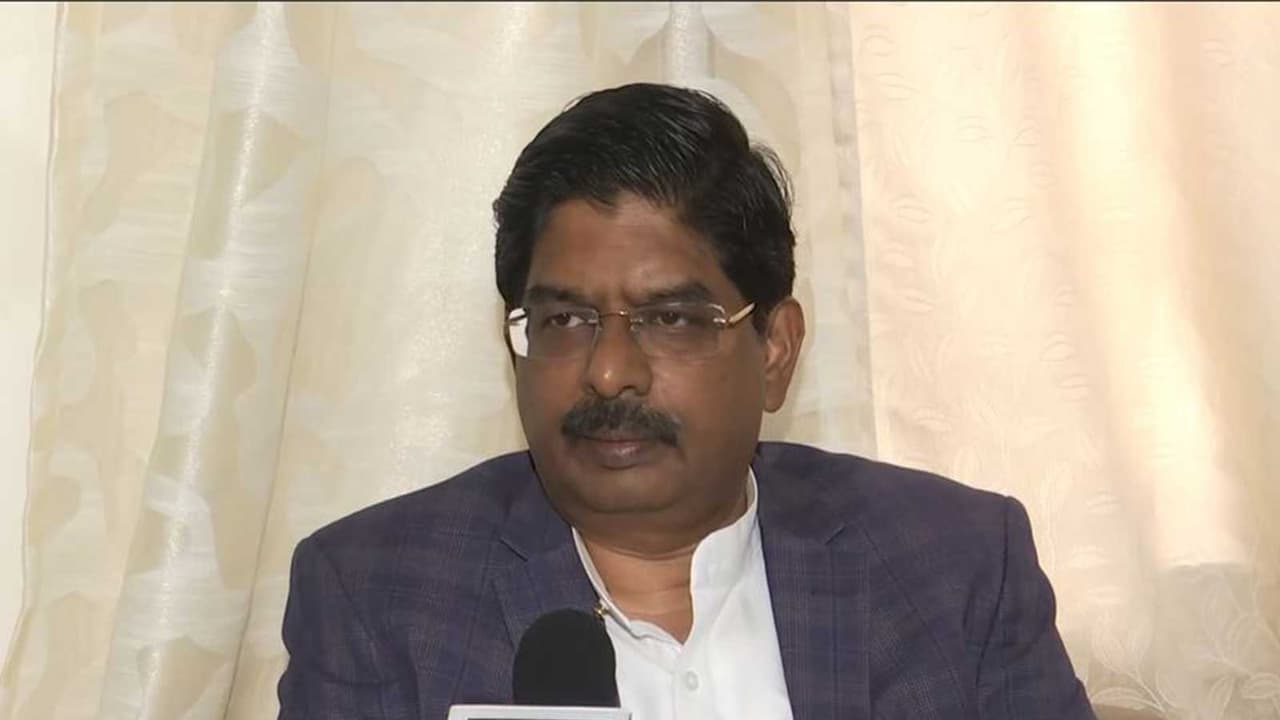
DMK MP P Wilson defends the cancelled informal meeting between the JPC on ‘One Nation, One Election’ and SC judges. He argues such interactions are not unprecedented and constitutional, meant to seek an institutional perspective from judges.
Amid the controversy over the proposed informal meeting between the Joint Parliamentary Committee (JPC) examining the ‘One Nation, One Election’ (ONOE) Bills and Supreme Court judges which has been cancelled, DMK Rajya Sabha MP P Wilson has defended the proposal of informal interaction, saying such interaction is not unprecedented in parliamentary practice.
In a letter to the panel, P Wilson said his party DMK is opposed to the One Nation, One Election bill and party leader MK Stalin has always maintained an unequivocal position against it. “Our opposition to this Bill is firm, consistent and unwavering,” he said. “My remarks today regarding the proposed interaction with the Chief Justice of India and other judges are strictly confined to seeking Judiciary’s institutional perspective on a Bill under examination by the Joint Parliamentary Committee in their individual capacity. They should not, in any manner, be construed as support for, endorsement of, or dilution of the DMK’s political and constitutional opposition to One Nation, One Election,” he said.
Justification for the Meeting
Wilson said the panel has been holding extensive consultations to identify constitutional, legal, financial, administrative and practical consequences of the proposed reform and to see whether the Bill can be strengthened by addressing those concerns. “In this spirit of broad-based consultation, I suggested that this Committee hear the views of the present Chief Justice of India and other Judges of the Supreme Court of his choosing through a Study Tour. After obtaining permission from the competent authority, I took up the issue through the Secretary General of the Supreme Court. After obtaining the approval of the Chief Justice of India, I informed the Chairman, who, through his office, sought necessary permission from the competent authority,” Wilson told the panel in his clarification on cancellation of study tour.
He said later the Secretariat of the committee approached the office of the Chief Justice of India, and the two offices exchanged communications. “Acceptance was conveyed and acknowledged. The names of the members of the proposed delegation were discussed, and the meeting was being worked out. Unfortunately, due to political objections surrounding this meeting, it was decided to call off the meeting because of unnecessary and unfortunate circumstances caused by vested interests. With great pain and sadness, I place on record that this Committee has lost the valuable opportunity to interact with the Chief Justice of India and some judges of the Supreme Court,” he said.
Rebutting ‘Unconstitutional’ Claims
The committee examining One Nation, One Election’ (ONOE) Bills met today. The panel is chaired by BJP MP PP Choudhary. Wilson said that several arguments made against the proposed informal meeting “are fundamentally flawed”.
He said separation of powers does not mean the three organs of the State must operate in watertight compartments, never communicate with one another, or never exchange institutional perspectives. He said seeking informal views of the Chief Justice of India and other judges is not the same as seeking adjudication from the Supreme Court of India.
“We are not asking the views of the Supreme Court. We are asking for their views in their individual capacity, as stakeholders in democracy. We were asking for their institutional perspective, in their individual capacity, informally, on a constitutional reform of enormous significance,” he said.
“To assume that because some judges gave suggestions to this Committee, future judges will not be able to hear challenge to this Bill undermines the ability and integrity of the judiciary. The CJI & judges giving their suggestions and inputs to this Committee does not preclude constitutional courts from hearing challenges to the legislation, if and when enacted,” he added.
Historical Precedents Cited
Wilson said when the Draft Constitution was prepared, it was circulated widely, and those judges who later became the first judges of the Supreme Court and the Chief Justices of the various High Courts were specifically invited to offer their opinions. He said in March 1948, the judges of the Federal Court and the Chief Justices of the High Courts even met to formulate their collective views on the Draft Constitution, he said, adding that the Drafting Committee accepted many of those suggestions and amendments, and they found their place in the final Constitution.
“We are not asking the Chief Justice and his companion judges to certify the Bill. We are not asking them to pre-judge its validity. We are asking them, as the highest constitutional functionaries of the judicial wing, to share their considered institutional perspective on the practical and constitutional implications of a reform that will reshape the electoral process of the world’s largest democracy. That is responsible dialogue between the organs of the State in the national interest,” Wilson said in his seven-page letter.
Reference to Article 143
He said Article 143 itself recognises that the President may refer questions of law or fact of public importance to the Supreme Court for its consideration and opinion. Invoking this power, questions about the Kerala Education Bill, the Bill on levy of certain taxes in the pre-Independence transition period, and others were referred, and the highest court gave its opinion on the pending legislative proposals. “Constitutional validity is adjudicated only after enactment and notification of the law. If their argument is accepted, Art 143 cannot remain in the Constitution,” he said, adding that the very existence of this Advisory jurisdiction shows that the makers of the Constitution envisaged constitutional dialogue between the branches of Government.
He said that stating that a Bill cannot even be discussed with constitutional experts or members of the judiciary because it may later become the subject of judicial review goes far beyond what the Constitution requires. “If we were to say that every institution which could potentially encounter a law in the future must remain completely silent during the legislative process, Parliament would be deprived of an enormous amount of institutional expertise. It is absurd to make such an argument. This is not unprecedented in parliamentary practice.”
Past Parliamentary Practices
Wilson said when he was associated with the Parliamentary Department Related Standing Committee on Personnel, Public Grievances, Law and Justice, chaired by Sushil Kumar Modi, during the examination of the Mediation Bill referred by the Parliament, the Committee interacted with Chief Justices and members of the judiciary, including from the Bombay, Karnataka and Madras High Courts.
“On May 11, 2022, the Parliamentary Standing Committee on Law and Justice visited the Supreme Court and interacted with then CJI Justice NV Ramana and Justice D.Y. Chandrachud on Virtual Courts and court proceedings through video conferencing. On March 2023, the committee interacted with then CJI Justice DY Chandrachud, Justice Sanjay Kishan Kaul and Justice Sanjiv Khanna, regarding the functioning of the National Legal Services Authority. There are several instances like this,” he said.
Wilson said he as part of the Parliamentary standing committees on Law and Justice, has visited several high courts and interacted with Chief Justices and other Hon’ble Judges of these High Courts on various issues. “The Committee sought their views because they had practical experience of the judicial system and could identify issues that a purely legislative examination might not otherwise capture. Their suggestions formed part of the Committee’s consideration. This is how parliamentary scrutiny works.”
Wlson said that argument that this is unconstitutional is therefore misplaced. “If someone disagrees with the proposed interaction on grounds of judicial propriety, that is a legitimate institutional position which can be respectfully considered. But to go further and declare that the very act of a Parliamentary Committee seeking the views of judges in their individual capacity is unconstitutional is a completely different proposition.”
He said if a JPC is constituted to examine amendments to the High Court Judges (Salaries and Conditions of Service) Act, 1954 and other such laws, should it not be allowed to consult sitting Judges.
‘Effort Made in Good Faith’
Wilson said he fully respects the decision of the Chief Justice of India and the Judges, not to proceed with the proposed interaction but “does not accept the proposition that our effort to seek their views was unconstitutional”.
The DMK MP said he does not accept the suggestion that seeking wider consultation somehow compromises Parliamentary sovereignty. “Our effort was therefore made in good faith, with one objective: to hear every relevant perspective, address every legitimate concern and ensure that the constitutional amendment, if enacted, is as carefully considered and constitutionally valid. That I believe is the mandate of this Committee,” he added.
Kapil Sibal’s Opposition
Former Union Minister and Rajya Sabha MP Kapil Sibal said last week that he learnt of the proposed visit of the panel examining the One Nation, One Election bill to the Supreme Court and any such move for the discussion on the bill is “unconstitutional. “Sibal, addressing a press conference, said that the Constitution provides a clear separation of powers and the court decides on the constitutionality of a bill passed by the Parliament.Sibal said that he had learnt that a programme has been circulated of a local study visit program of the ONOE panel to the Supreme Court on October 6, 2026. He said that the agenda included an informal discussion on the issue of simultaneous elections. “I have never heard in the history of India till date that a parliamentary group holds a meeting in the Supreme Court regarding a law (One Nation One Election), to tell the Supreme Court judges what this law actually is. I am talking about ‘One Nation One Election’… I have never heard of such a thing in my legal career. This is unconstitutional,” he said. (ANI)
(Except for the headline, this story has not been edited by Asianet Newsable English staff and is published from a syndicated feed.)