Italy’s national team faces an unprecedented crisis after the collapse of two high-profile coaching negotiations, plunging the federation into chaos and uncertainty.
The ill-fated attempts to secure Pep Guardiola and Andrea Pirlo as head coach have exposed deep fractures within the Italian Football Federation (FIGC), leaving Paolo Maldini and Leonardo’s leadership under intense scrutiny.
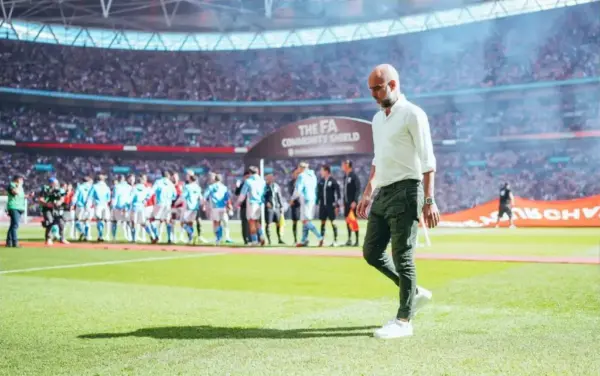
The saga began with an audacious bid to bring in Pep Guardiola, arguably the world’s most sought-after coach. Maldini and Leonardo, entrusted with revitalising the Azzurri, pursued Guardiola as a statement of intent. However, the Catalan manager’s decision to prioritize a sabbatical year to focus on family and personal well-being dealt a crushing blow to the federation’s ambitions. While disappointing, Guardiola’s refusal was anticipated given his recent Manchester City tenure.
The real shock came with the collapse of the secondary plan: Andrea Pirlo’s appointment. Negotiations with the former Juventus and Italy midfielder had progressed swiftly, but the deal unraveled amid controversy surrounding Pirlo’s association with a Russian betting firm. This revelation halted talks abruptly, transforming what seemed a straightforward appointment into a humiliating setback for the federation.
“This was not just about Pirlo’s name but the manner in which the deal fell apart,” sources close to the FIGC lamented. “A deal practically finalized, yet undone over an overlooked detail that should have been flagged much earlier.”
These back-to-back failures have gravely weakened Maldini and Leonardo’s position, especially given Italy’s recent dark spell marked by missing three consecutive World Cups. The federation desperately needed a show of strength to signal stability and vision; instead, it has revealed disarray and poor planning.
With the coaching crisis deepening, the FIGC president Giovanni Malagò faces a critical crossroads. Reports indicate two possible paths: appoint a proven high-profile coach like Antonio Conte or Roberto Mancini, or pivot to a less conventional, developmental approach with Silvio Baldini, noted for his work with Italy’s under-21 squad.
Baldini’s candidacy represents a strategic gamble, aiming to emulate youth-driven models similar to Lionel Scaloni’s Argentina or Luis de la Fuente’s Spain. This route offers flexibility and a medium-term commitment, leaving the door open for a future Guardiola arrival should he reconsider national team management.
However, the prospect of Conte or Mancini accepting the role after being third-choice options following Guardiola and Pirlo seems unlikely. Such a scenario would likely force Maldini and Leonardo to resign, triggering a technical revolution within weeks.
The FIGC now stands at a precarious juncture. After two high-profile misfires, the urgency to make the “definitive and right” decision is paramount. As one insider warned, “The Italian national team and its passionate supporters deserve a fresh start that honors their storied legacy.”
The next appointment will not only define the future of the Azzurri but also determine whether the federation can restore credibility or spiral further into dysfunction. The clock is ticking, and Italy’s footballing fate hangs in the balance.