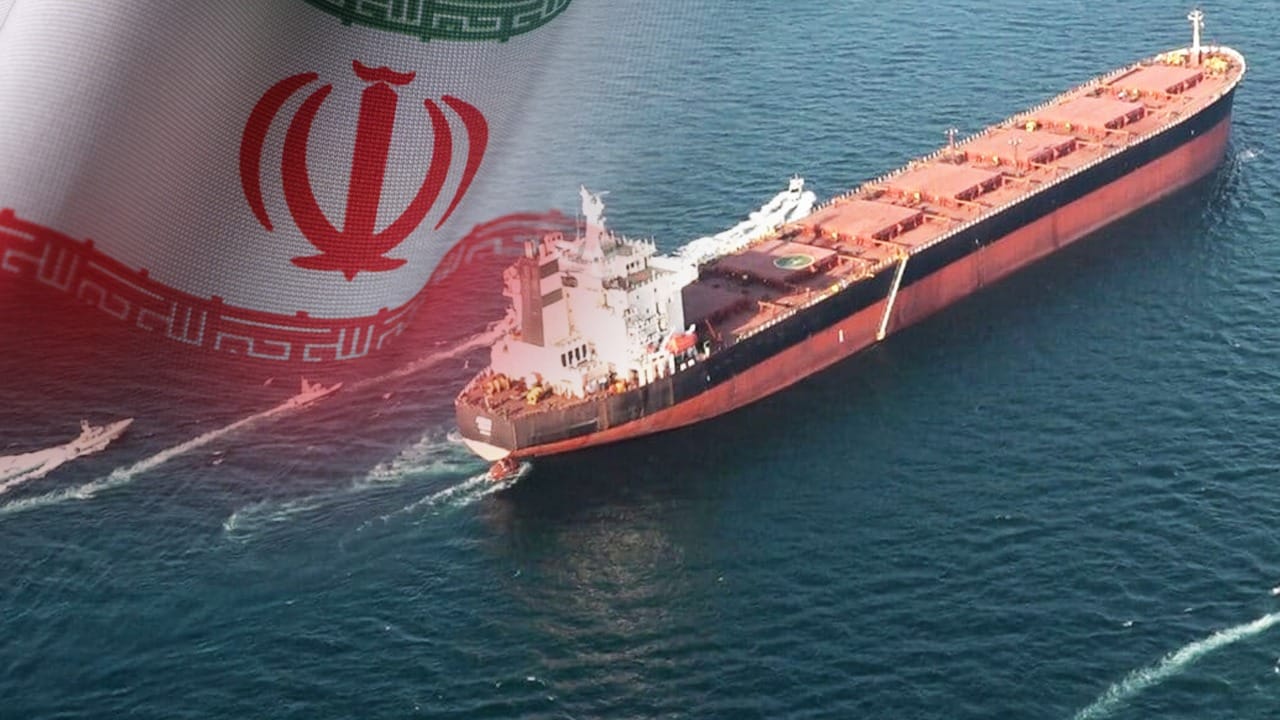
strait of hormuz
After the signing of an interim peace agreement between Iran and the US, while the world is waiting for the full opening of the Strait of Hormuz, the United Arab Emirates (UAE) is working on a very big and ambitious plan to end its dependence on this vital route. UAE Foreign Trade Minister Thani Al Zeyoudi said in an interview that we are moving towards zero dependence on Hormuz, and it does not matter whether this route is open or not. It will open and we hope it will happen soon, but we will not stop our new plan.
The Strait of Hormuz has been almost closed since the US and Israel began bombing Iran in late February. This has revealed the importance of this waterway for the global supply of energy and other goods (such as fertiliser, helium and aluminium). UAE has already benefited from partial escape from this strait. It has used an already existing pipeline to transport some crude to ports on its east coast. In recent weeks the country has also managed to send some oil cargo through the Strait of Hormuz, with ships traveling anonymously (without signals) to avoid detection.
What is UAE’s planning?
According to Al Zeyoudi, a key part of the UAE’s plan is to massively expand eastern ports such as Dibba, Fujairah and Khor Fakkan, which are located outside the strait on the coast of the Gulf of Oman. He said that UAE will also build at least one more new port on the same coastline. He said that along with this, huge investment will also be made in new pipelines, rail and road networks. These projects will improve connectivity between eastern ports and the country’s oil and gas fields and petroleum facilities.
In addition to accelerating the construction of a second pipeline to double crude oil exports through Fujairah, announced in mid-May, the UAE is also considering building a third petroleum pipeline. Al Zeyoudi said the country is also considering more options to ensure the export of petrochemicals, LNG and other energy products. Although he did not give any information about the cost and time frame of these projects and said that they are still in the planning stage, but perhaps several billion dollars will be required to complete them. He said that the direction has been decided, we are doing a complete feasibility study to move ahead. In difficult times, you always recognize your shortcomings and start working on them.
It will not be easy for UAE
Before the war, about a fifth of the world’s crude oil and liquefied natural gas (LNG) passed through the Strait of Hormuz, and its closure has led to inflation, which has impacted the global economy. It will not be easy at all to reduce UAE’s dependence on this strait. Pipelines might help the former OPEC member ship all or most of its crude and refined oil to eastern ports, but moving other commodities like LNG and aluminum the other way would be more difficult. Additionally, the UAE is heavily dependent on its Gulf ports, such as Jebel Ali – the world’s largest container hub outside Asia – for imports. It will be more expensive to transport goods by trucks from eastern ports to big cities like Dubai and Abu Dhabi.
Export capacity will more than double
Al Zeyoudi said these costs would be reduced by a major expansion of the railway and both Jebel Ali and Abu Dhabi’s Khalifa Port would remain key hubs for the redistribution of goods. The UAE currently operates an LNG export terminal in the Persian Gulf (which Arab countries call the ‘Arabian Gulf’). The country is building another project in the Gulf itself, which will more than double its export capacity. The US-Israeli attacks on Iran — which prompted Tehran to attack other Gulf states — dealt an unprecedented blow to a country that has built its economy on free trade and maritime navigation and has stayed away from Middle East wars. Iran launched nearly 3,000 drones and ballistic missiles at the UAE, more than any other country. Although most attacks were stopped, some attacks caused damage to vital energy and port facilities on the east coast, including Fujairah.
This line proved to be a lifeline
The UAE has mitigated the impact of the closure of the Strait of Hormuz to some extent by increasing cargo imports through Khor Fakkan and oil exports from Fujairah. The 1.5 million barrel per day pipeline from the oil fields to Fujairah port proved to be a vital lifeline. Al Zeyoudi said air cargo played a big role in moving many goods — although it cost much more than sea routes. The process of delivery and clearance of cargo at ports in countries like Egypt and India also helped. Underscoring the importance of the Strait of Hormuz to the country’s economy, the UAE has consistently said that Iran should reopen it and allow unhindered movement. Along with the US, Europe and other Gulf countries, it is protesting Iran’s claim that the Islamic Republic can continue charging navigation fees even after the war ends.