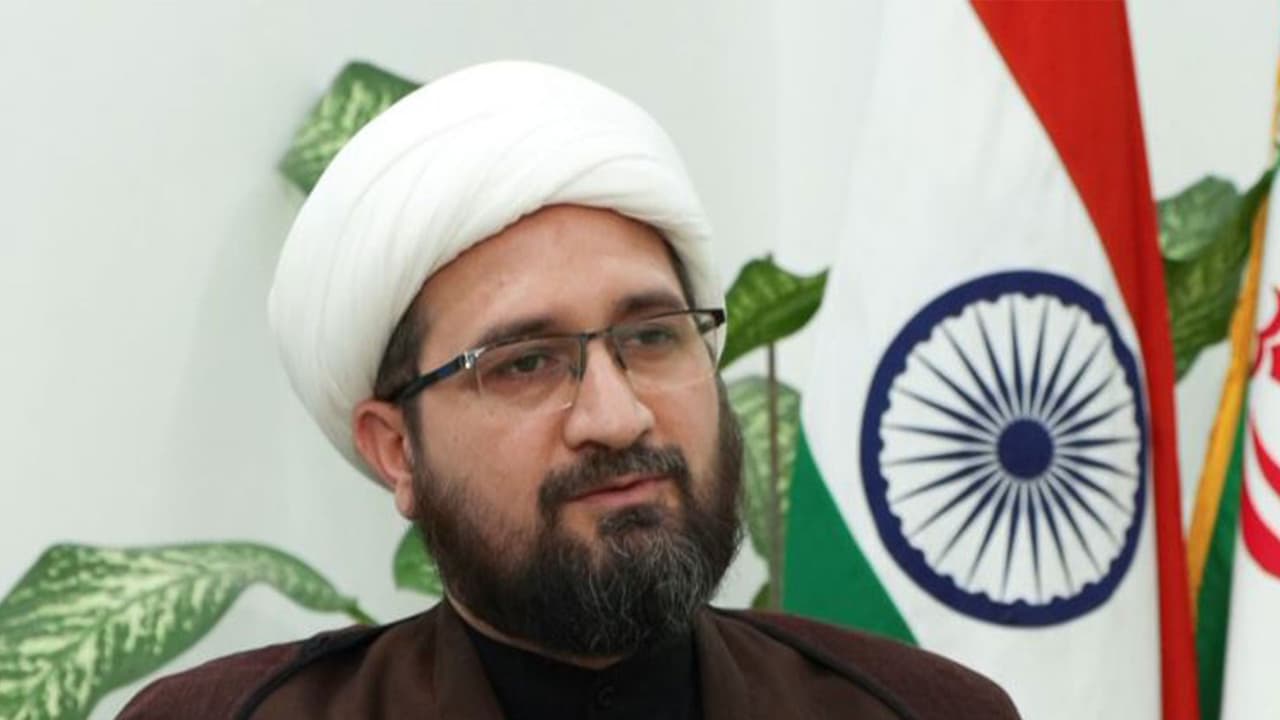
An Iranian official has accused the US of rejecting a proposed security framework for the Strait of Hormuz, claiming Washington has a ‘plan’ to maintain instability and may be behind ‘false flag’ operations to blame Tehran.
In a sharp critique of Western maritime policy, Dr Mohammad Hossein Ziyaeenia, the Deputy Representative of the Supreme Leader of Iran in India, has accused the United States of deliberately rejecting a proposed structured framework for security in the Strait of Hormuz. Speaking with ANI on Tuesday, Ziyaeenia suggested that Washington’s opposition to a formal transit mechanism hints at a “plan” to maintain instability rather than foster global trade security.
US Accused of Rejecting Hormuz Security Framework
Ziyaeenia emphasised that Iran has actively proposed a sovereign maritime framework to ensure the safe passage of goods through the strategic waterway, a chokepoint vital for energy markets in Asia and Europe. He questioned why a global power like the US would oppose such an order. “So Iran is suggesting this mechanism. But they say no, there should be no mechanism. Why? Are they against the order? The issue is what they want; they have some plan. So they understood that their plan would not work with this, so they said that the Strait of Hormuz should be blocked,” the Deputy Representative said.
Iran Argues It Benefits Most from Open Strait
Addressing long-standing allegations that Tehran is responsible for maritime harassment and blockades, the Deputy Representative turned the narrative back on the US Navy. He argued that Iran, as a regional power, has the most to lose from a closed Strait. “We need this Strait of Hormuz; the people in the region need this Strait of Hormuz, and the people in the world need this Strait of Hormuz. So we are all responsible for this, to put pressure on those countries that are putting a blockade on this Strait and to make it open,” he added.
Ziyaeenia noted that Iran relies on the waterway for its own economic survival, making a blockade counterintuitive. “First of all, we have to consider that no one is benefiting from the blockade of the Strait of Hormuz. Because we are living in this region, and our benefit is that the Strait of Hormuz remains open, and because this is also the way and the path that we require,” he said.
Allegations of ‘False Flag’ Operations
He also addressed allegations that Iran was responsible for initiating disruptions in the waterway, rejecting claims made by external actors. “The US Navy is saying that we are the ones who have put a blockade on the Strait of Hormuz, right? So if it is like that and they want to shoot at the ships, you have seen that they have shot, they have targeted our ships,” the Deputy Representative added.
He suggested that incidents during periods of conflict are often misattributed to Iran. “So now this is the possibility that when the ships come, because the situation is a war situation, someone would target them and then attribute it to the Islamic Republic of Iran,” he said, adding that Iran has consistently denied involvement in such incidents.
When asked whether he was implying false flag operations, he responded, “Yes, definitely. Because we saw it. During the war, it happened not a single time but more than four or five times.”
Call for Collective Responsibility
The Deputy Representative concluded by framing the security of the Strait as a collective global responsibility. He urged the international community to shift its pressure toward those he claims are actually obstructing the waterway.
(Except for the headline, this story has not been edited by Asianet Newsable English staff and is published from a syndicated feed.)