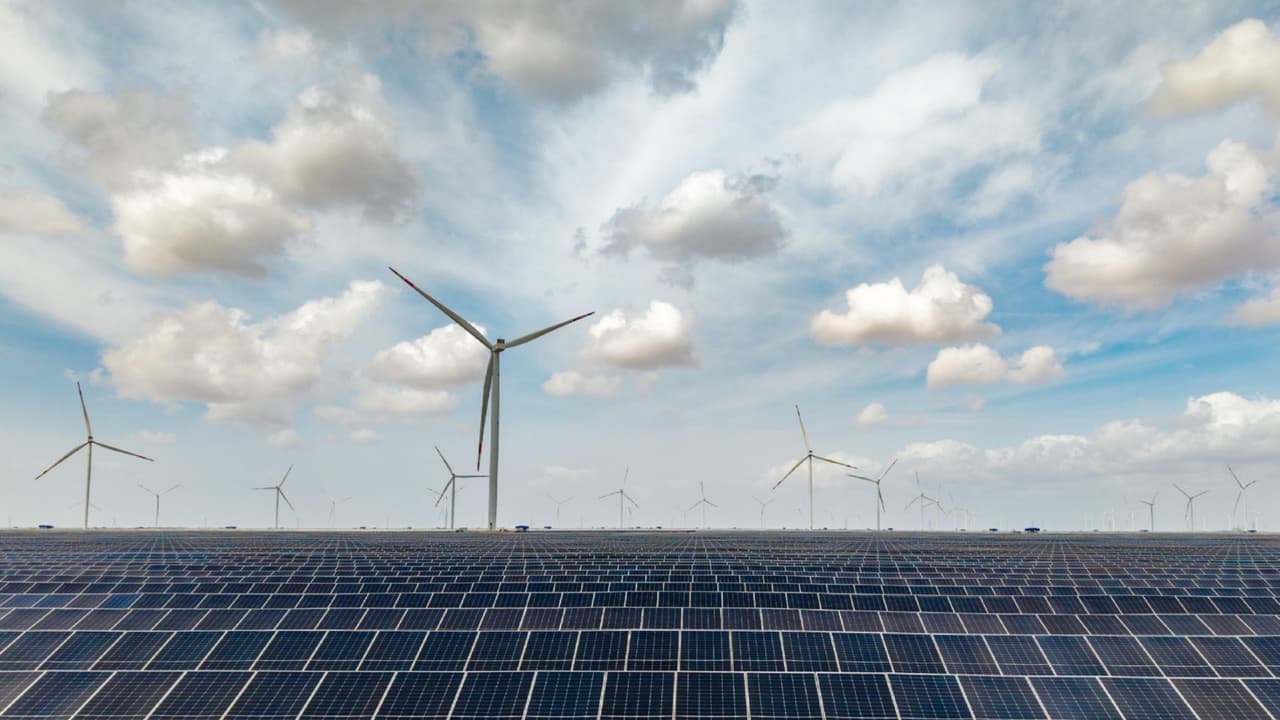
Industry experts say large solar parks are key to India’s green transition, but success hinges on stronger power evacuation infrastructure from remote areas and boosting domestic manufacturing of components to reduce import dependence and ensure self-reliance.
Large-scale solar parks can play a key role in making renewable energy more financially viable and supporting India’s green transition, while stronger power evacuation infrastructure and domestic manufacturing will be critical to expanding clean energy capacity, industry experts told ANI.
Infrastructure and Technology Key for Solar Expansion
Sanjay Ganjoo, Director General, Indian Federation of Green Energy, said India needs to invest in technologies that can extend the period during which solar power can be generated, while addressing infrastructure constraints in areas with high renewable energy potential. “We need to create a mechanism to evacuate the power from Ladakh so that we are able to… invest in technologies where we can harness solar energy for a longer period of time,” Ganjoo said.
He was referring to the potential of large solar projects in remote areas, including Ladakh, where evacuation of generated electricity remains an issue. Ganjoo said projects such as the Khavda solar park demonstrate how otherwise difficult or unused land can be utilised for renewable energy generation. “The land there was of no use, almost like a desert, and they made use of that land, using solar energy and producing electricity which is being used within the country,” he said.
Focus on Domestic Manufacturing
Ganjoo also stressed the need to strengthen India’s domestic supply chain for renewable energy and reduce dependence on imported components. “Wafers have to be produced locally. Batteries have to be produced locally. Then only we are self-dependent,” he said, adding that India needs greater investment in research and locally manufactured products.
Financial Viability and Economic Benefits
Mohammad Rihan, Director General, National Institute of Solar Energy, said large solar parks have helped improve the financial viability of solar power by bringing together policy support, industry participation and large-scale infrastructure. “Such solar parks played a major role in making solar financially viable… strengthening the industry, reducing the prices,” Rihan said.
He said these projects had also generated benefits in remote and challenging locations through employment and other local economic activity. Rihan said solar installations had reached nearly 165 gigawatts, while module manufacturing capacity had crossed 213 gigawatts and cell manufacturing capacity stood at more than 30 gigawatts, adding that India was on track to meet its longer-term renewable energy targets. “Such parks will continue playing a great role in our green energy transition,” he said.
The Path Forward for India’s Green Energy
Going ahead, India will need to combine large-scale renewable energy projects with stronger transmission infrastructure, technology development and domestic manufacturing to deepen energy self-reliance. (ANI)
(Except for the headline, this story has not been edited by Asianetnews Editorial staff and is published from a syndicated feed.)