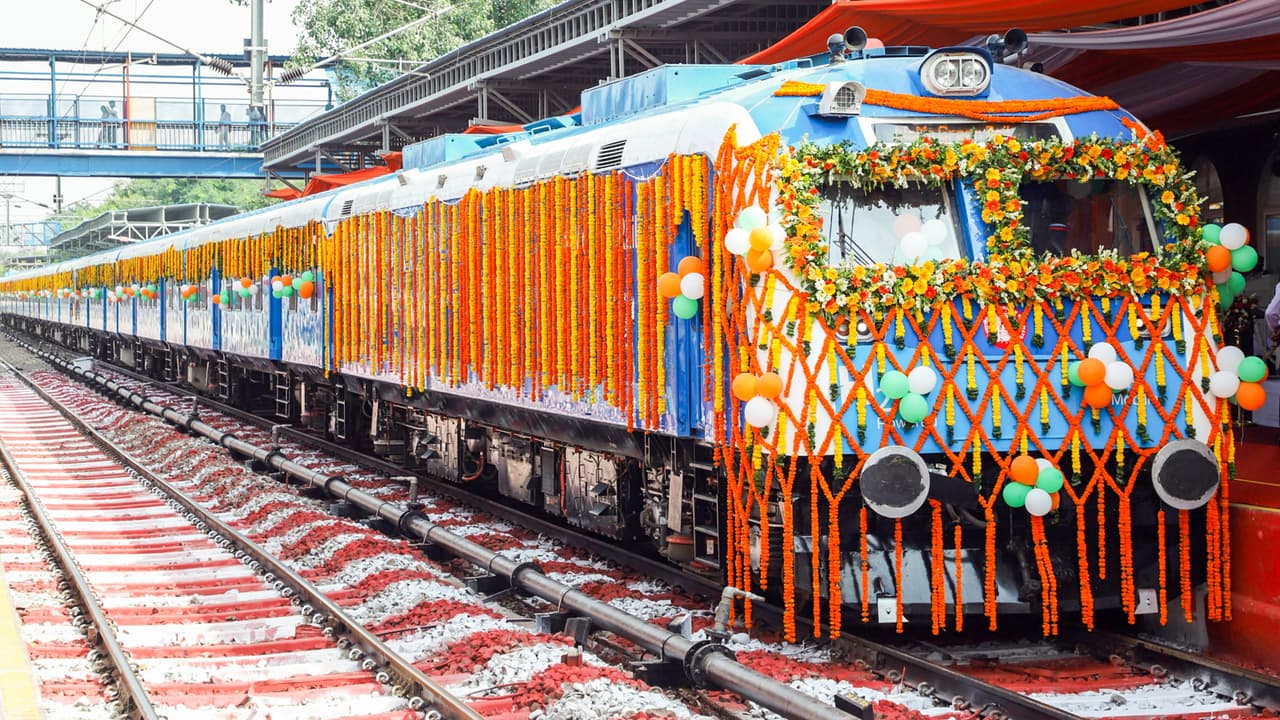
India has taken a major step towards green transportation as its first hydrogen-powered train successfully completed over 900 km of operations on the Jind-Sonipat route in Haryana. The milestone strengthens the National Green Hydrogen Mission and paves the way for cleaner, zero-emission rail travel.
India has achieved a landmark feat in sustainable transport with the successful completion of more than 900 kilometres of operations of its first hydrogen-powered train on the Jind-Sonipat route in Haryana. It is a big milestone under the National Green Hydrogen Mission and takes India’s quest towards cleaner and zero-emission rail travel further.
A milestone for green mobility”
The hydrogen train is running on the 89-km Jind-Sonipat stretch of Northern Railway and has demonstrated the reliability of hydrogen fuel-cell technology by successful trial and operational runs of over 900 km. The initiative is anticipated to minimise dependency on fossil fuels while boosting green mobility.
How the hydrogen train operates
Unlike typical diesel trains, the hydrogen train generates electricity aboard using hydrogen fuel cells. Hydrogen and oxygen combine within the fuel cell to create energy that drives the train’s engines. This technique only generates water vapour as a by-product, meaning it is a zero-emission mode of transportation.
India’s first hydrogen train features a 10-car train running on the Jind-Sonipat route in Haryana 10-car train with room for around 2,600 passengers It was made up of two hydrogen-fuelled power vehicles and eight passenger cars. Design Speed of 110 kmph and operating speed of 75 kmph Supported by an integrated hydrogen ecosystem at Jind with facilities for hydrogen production, storage, compression and refuelling. Why this project is important
The successful run of the first hydrogen train of India has put the country in a select group of countries using hydrogen fuel-cell technology in rail transport. The project is in line with India’s long-term commitments to cut carbon emissions, promote clean energy and reach net zero emissions by 2070 under the National Green Hydrogen Mission.