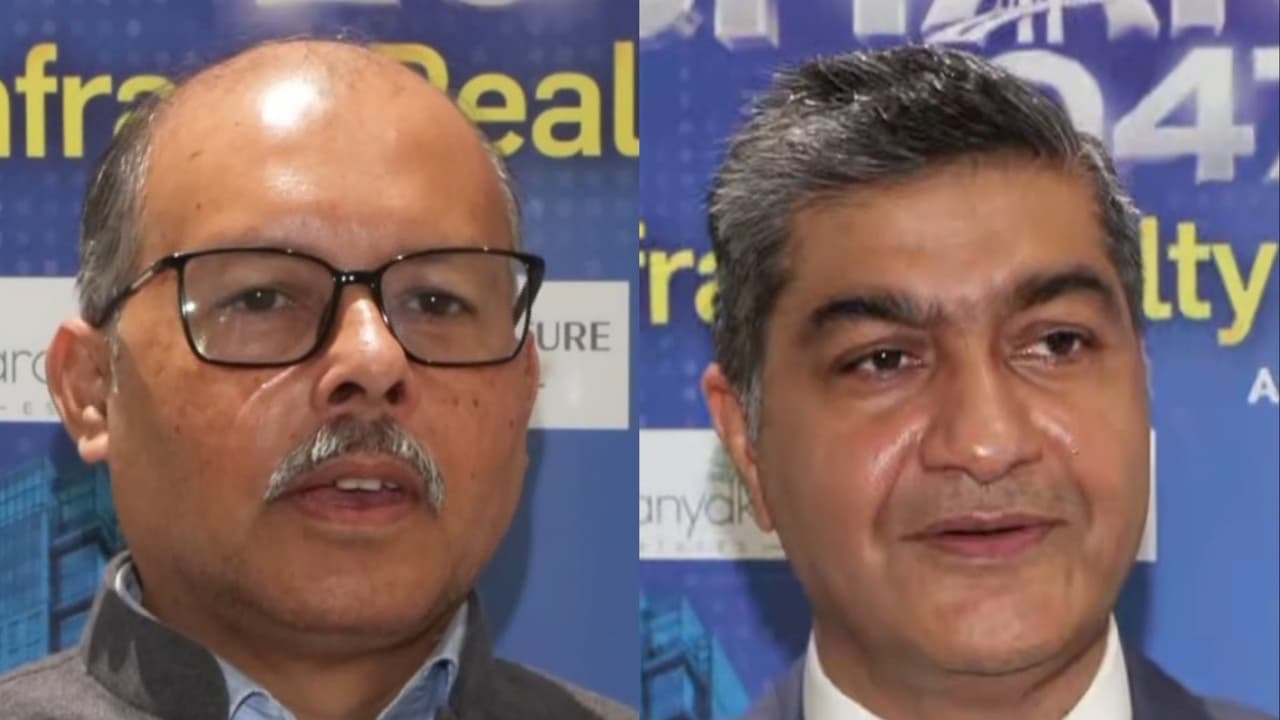
Experts highlight India’s rapid infrastructure growth, noting 80% of 2070’s buildings are yet to be built. They call for sustainable development and urban planning tailored to local conditions, cautioning against replicating foreign models directly.
India’s infrastructure development is moving at a “very fast pace”, with the country likely to see a massive expansion in its built environment over the coming decades, making sustainable development and urban planning tailored to local conditions increasingly important, experts have said.
In an interview with ANI, Debajit Palit, Head, Chintan Research Foundation, said India’s infrastructure is expanding rapidly, highlighting the scale of development required as the country urbanises and expands its built environment. “India’s infrastructure is moving at a very fast pace. And if you look at the kind of infrastructure that we need, 80 per cent of the building stock that we are going to have in 2070 has not yet been built. So, you can imagine the type of infrastructure that India needs in the next 30 to 40 years,” Palit said.
Sustainability: A Challenge and an Opportunity
He said the scale of future construction presents both a challenge and an opportunity for India to embed sustainability into infrastructure development from the outset. With a substantial share of the country’s future building stock yet to be constructed, planning and design choices made today could have long-term implications for energy use, emissions and urban liveability.
Palit also pointed to the growing importance of green infrastructure in India’s development trajectory, particularly in the context of the country’s long-term climate goals. India has set a target of achieving net-zero emissions by 2070, making sustainable infrastructure and energy-efficient buildings important components of its broader transition.
The rapid pace of infrastructure development is also expected to reshape India’s urban landscape, with Palit pointing towards the emergence of “big city Bharat” by 2047 as urbanisation and infrastructure expansion gather momentum.
Tailoring Urban Planning to Indian Conditions
However, experts stressed that rapid development needs to be accompanied by urban planning approaches that reflect India’s diverse geography, settlement patterns and social requirements rather than relying on models developed for other countries.
Architect and urban planner Dikshu C. Kukreja said the concept of the 15-minute city, which seeks to ensure that essential services and amenities are accessible within a short distance from where people live, has merit but cannot simply be replicated in India. “Mumbai is very different from Paris,” Kukreja said, stressing that the 15-minute city model is positive but “requires study and adaptability to Indian conditions and requirements.”
He said urban planning models need to account for differences in geography, existing urban structures and societal aspirations. A model that works in one global city may therefore require substantial adaptation before being applied to an Indian city.
Focus on Mixed-Use and Sustainable Redevelopment
Kukreja also underlined the importance of mixed-use development in redevelopment projects, saying residential, commercial and other urban functions should be planned in an integrated manner.
At the same time, he stressed that redevelopment and higher density should not create additional pressure on existing urban infrastructure. Instead, increased density should be accompanied by sustainable design and planning measures that help create healthy and resilient urban environments over the long term.
(Except for the headline, this story has not been edited by Asianetnews Editorial staff and is published from a syndicated feed.)