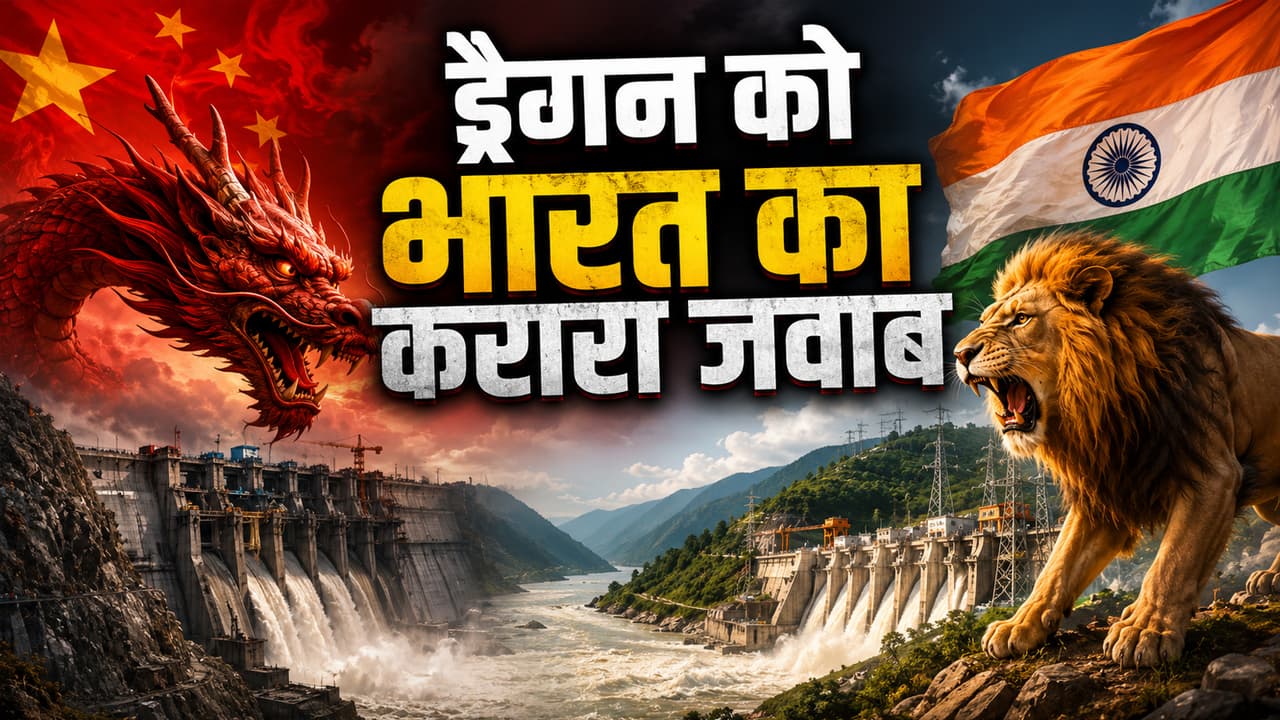
Which dam is China building near the border of Arunachal Pradesh? What will be the power generation capacity of China’s mega dam? At what distance is this dam located from the Indian border? What steps has India taken in response to China’s dam? What is Siang Upper Multipurpose Project (SUMP)?
China has officially begun construction of the world’s largest hydroelectric dam on the lower Yarlung Tsangpo River in Tibet. This huge project is located at a distance of about 50 kilometers from the border of Arunachal Pradesh, India. This project is being considered one of the most ambitious hydropower schemes of China. Its capacity is said to be around 60,000 MW, which will be included in the world’s largest hydropower projects.
India’s Siang Upper Multipurpose Project in response to China’s dam
Amidst this Chinese project, India is also intensifying its strategic preparations. Under this, ‘Siang Upper Multipurpose Project’ (SUMP) is being taken forward on Siang River in Arunachal Pradesh. This project is proposed in Upper Siang and Siang districts of Arunachal Pradesh. SUMP will be a hydroelectric and flood control project with a generation capacity of 11,000 MW. Government company NHPC will operate this project. If this project is completed then it will become India’s largest hydropower project.
SUMP project cost and power generation capacity
Siang Upper Multipurpose Project is expected to generate about 47 billion units of electricity every year. The estimated cost of this mega project is said to be around 13 billion dollars i.e. around Rs 1.5 lakh crore. Along with energy production, its purpose is also flood control and water management.
What is the difference between the projects of China and India?
A comparison of the projects of the two countries makes clear the challenge facing India. While China’s 60,000 MW Medog Hydropower Project is rapidly progressing towards construction, India’s SUMP is still in the initial stages. Pre-construction work related to the project has also not started completely yet. In terms of capacity, China’s project is considered to be many times bigger than India’s proposed dam.
Why increased concern over Brahmaputra river?
Yarlung Tsangpo River originates from Tibet and enters India through Arunachal Pradesh, where it is called Siang River. Later this river became known as Brahmaputra. The livelihood, agriculture and water resources of millions of people living in Arunachal Pradesh and Assam depend on this river. Experts believe that construction of such a large-scale dam in the upper part of the river may alter the natural flow of water. This could affect local ecosystems, impact agriculture and increase the risk of flash and severe flooding in low-lying areas.
Indian government is keeping an eye on China’s activities
In a written reply given in the Lok Sabha, the Central Government has said that it is constantly monitoring all the activities related to the Brahmaputra river basin. The government has clarified that it is also monitoring China’s plans in the field of hydropower. Besides, assurance has been given to take necessary precautionary measures to protect the safety and livelihood of the people living in low-lying areas.
Strategic and geopolitical importance of SUMP project
SUMP is not just a power generation project. It is designed to control seasonal floods in the lower reaches and protect Indian areas from potential changes in water flow in the upper reaches. This is why the importance of this project goes beyond economic benefits and reaches the strategic and geopolitical level.
Surveillance and infrastructure being strengthened in the Northeast
India is also working on strengthening flood forecasting systems, river monitoring networks and other critical infrastructure in the northeastern states in view of the potential risks associated with the Chinese project. The objective of the government is to meet the potential challenges in a timely manner and ensure the safety of the people living in the Brahmaputra Basin.