India is planning to create such a large strategic reserve of crude oil, Liquefied Petroleum Gas (LPG) and Liquefied Natural Gas (LNG) that it can meet the country’s domestic demand for one month. This is being done so that a situation like the supply shock (sudden reduction in supply) caused by the war in the Persian Gulf does not happen again. According to people with knowledge of the matter, the Oil Ministry has formed a committee to study details like possible locations, operating model and distribution of storage above and below ground.
The world’s most populous country has been one of the countries most affected by the US and Israel’s attacks on Iran, which also includes the almost complete closure of the Strait of Hormuz. The crisis not only exposed the heavy dependence on energy imports from the Middle East, but also exposed the limits of the reserves that were supposed to act as a buffer. However, the Oil Ministry of India has not given any official statement regarding this scheme.
How much is India’s current reserve?
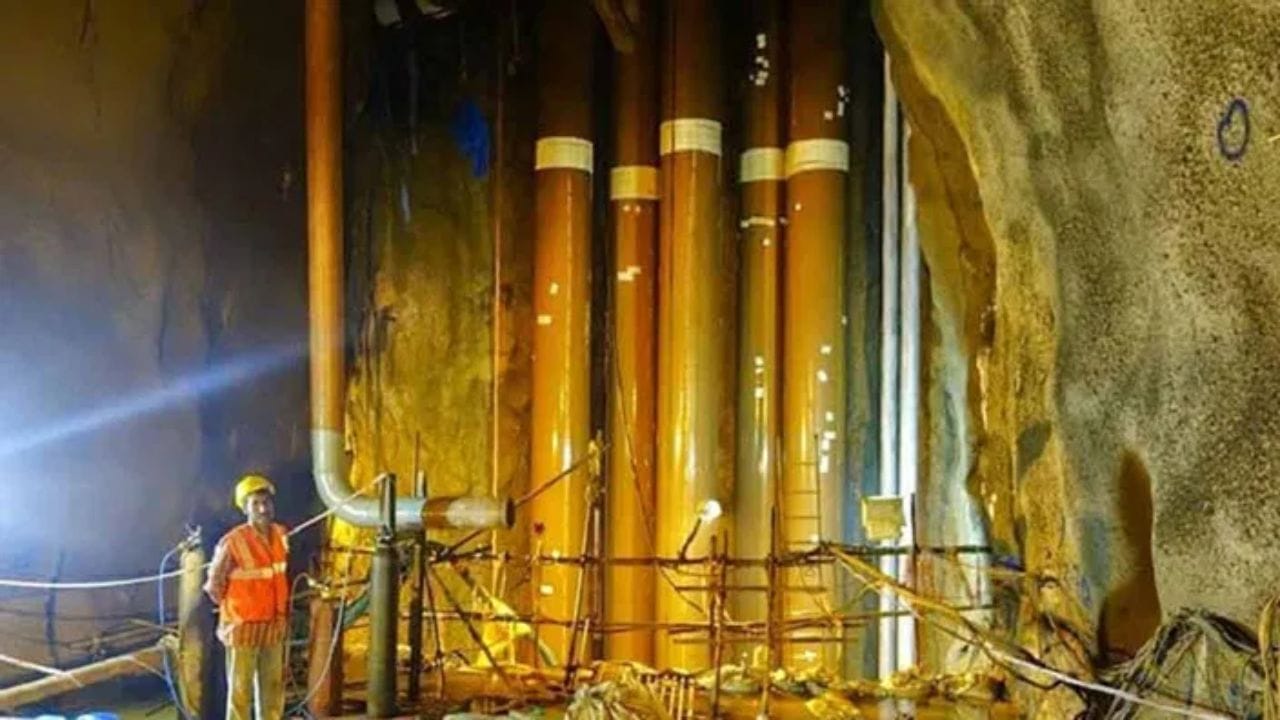
New Delhi currently has a strategic crude oil reserve of about 39 million barrels, which is enough to meet about eight days of imports. This is a tiny fraction of the reserves held by Asia’s second largest energy-consuming country — China — although the stocks held by refiners and fuel retailers combined could meet oil demand for more than 70 days. The ET report quoted sources as saying that strategic crude oil storage capacity is already being increased through underground caverns on the eastern and western coasts of the country, which will more than double the existing reserves.
He cited a plan that is expected to be completed in about five years. He said that its aim is to ultimately create reserves of at least 120 million barrels. However, the reserves of LPG and LNG are almost non-existent because both are difficult to store — LPG is stored as a liquid under pressure, while LNG has to be kept at very low temperatures. Both require strict safety protocols to avoid leaks or explosions.
Instructions to increase stock
According to Bengaluru-based think tank Takshashila Institution, India’s long-term LPG storage capacity is just around 140,000 tonnes, mainly in underground rock caves on the east and west coasts, enough to meet about two days of the country’s consumption. Although refineries and import terminals hold excess stocks, India has continued to rely on imports and distribution due to the complexity and cost of storage. People said that the Oil Ministry has already asked government oil refineries to work on increasing the stock of LPG for emergency use.
In the case of gas, the situation is even more difficult, because there is no strategic reserve yet. Last year, the government introduced a draft policy that would require terminal operators to maintain 10 percent more LNG storage capacity than their normal operational needs — the government can requisition these volumes if needed. LNG importing companies like Petronet LNG Limited are already building new storage tanks.
India and Japan can make a deal
At the height of the Iran crisis, India had to ration the supply of diesel, LPG and gas and had to approach other Asian buyers such as Japan and South Korea, which have reserves of LPG and LNG, to help meet the shortage. Its effort to create a safety net — the largest ever to protect the country from future shocks — is in line with other countries in the region such as Singapore, Taiwan and Pakistan, which are all planning to increase storage to strengthen energy security. ‘The Japan Times’ on Sunday quoted unnamed sources as saying that Japan and India are also considering cooperation on LNG stocks. The newspaper said that Japanese Prime Minister Sanae Takaichi and Indian Prime Minister Narendra Modi could reach an agreement during talks in New Delhi this week.