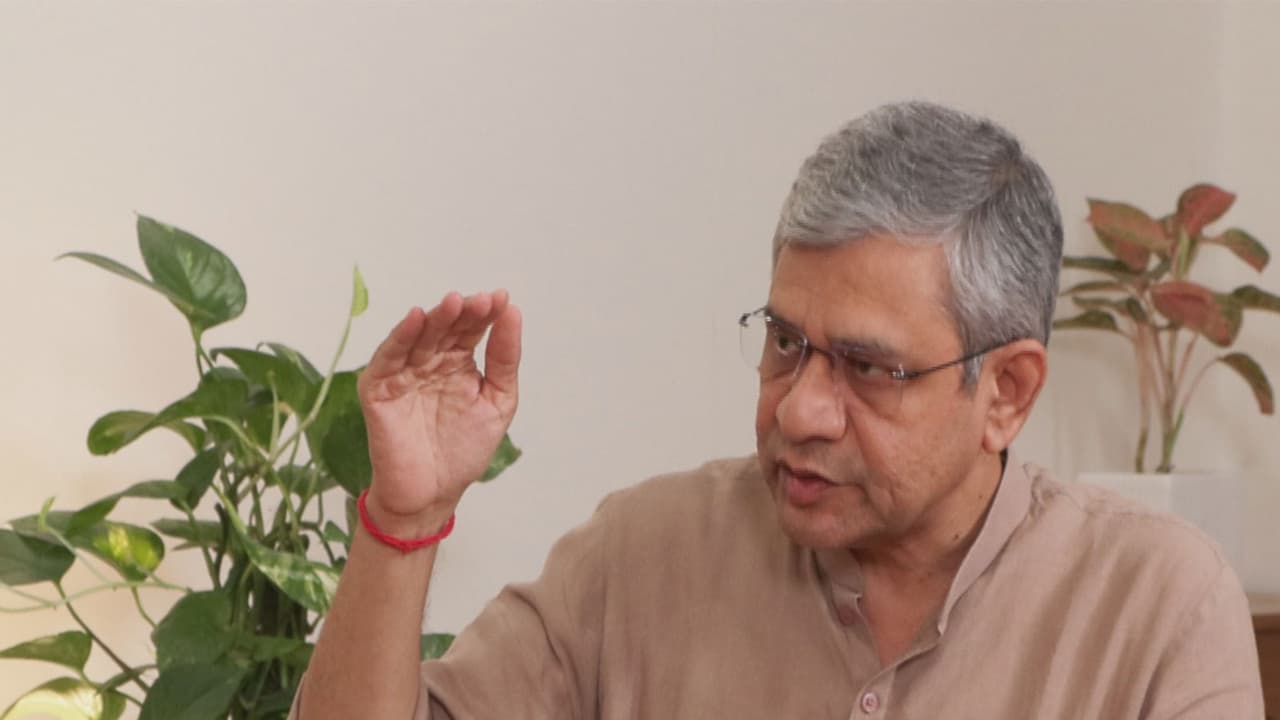
Union Minister Ashwini Vaishnaw says India wasted four decades in manufacturing due to ‘license-permit raj’ and lost momentum during the UPA era. He credits the Modi government for a manufacturing revival, citing a boom in electronics exports.
Union Electronics and IT Minister Ashwini Vaishnaw on Monday said that India “wasted four decades” from 1950 to 1990 when several ASEAN countries boosted their manufacturing capabilities, saying that restrictive rules were in place during the period and entrepreneurs had a difficult time.
In an interview with ANI, Vaishnaw referred to “license-permit raj” in India and the growth take off by China, South Korea and some other countries and the relatively slow growth rate of India. “1950 to 1990, four decades we wasted. These were lost decades. Entrepreneurs were made criminals. Factory Act, if something happens, it was a kind of rules and regulations which was a total waste of our country’s talent,” he said.
‘Lost Momentum from 2004-2014’
He referred to the liberalisation and changes in economic policy brought about in 1990 during the balance of payments crisis faced by India, but said it lost momentum during the Congress-led UPA governments. “Change happened in 1990. In the subsequent 14 years, lot of changes happened, so many sectors were opened up. The thrust which was required in that initial part, was lost from 2004 to 2014. That is the time when we went back to the old 1950s kind of mindset, that Left oriented mindset where entrepreneurs were not even like they were not even allowed to use their energy and create new enterprises and create new jobs and create new employment,” he said.
“That was a time frame where whatever momentum was built between 1990 and 2004 that momentum was kind of lost,” said Vaishnaw.
Modi Govt Revitalised Industrial Landscape
The Minister said the Modi government has revitalised the industrial landscape. “In 2014, we started once again on that journey. The single most important thing which is required in manufacturing is your ability to have a very fair labour system, your ability to have quick approvals, your ability to provide credit to the people. And so the banking sector is extremely important. The banking sector was in shambles in 2014 when Prime Minister Modiji took the responsibility of the country.”
The minister noted that India was a manufacturing hub for about 2,000 years which was disrupted by colonial rule. “Our country has always been a manufacturing country for 2000 years. It is just that when the British came, they killed our industry. Our Congress governments from 1950 to 1990, they continued that entire thing. In a sense, stopping production processes, timing it, and having that license permit raj. So, that entire slack when we compare ourselves with China, Taiwan, Korea, we have to see where they started and where we started. But I am sure given the kind of design capabilities that India has and given the entrepreneurial abilities that a country has,” he said.
“We certainly will be a big force and another big factor is the trust. Today when I talk to my counterparts from Europe, my counterparts from US, from many parts of the country, they believe that they would like to procure their entire electronics from India because India is a trusted country,” he added.
Success of ‘Make in India’
Answering a query, the Minister spoke of the success of Make in India and said in 2025, electronics emerged as the third-largest category for exported goods. “I’ll give you two examples of successful Make in India. First is electronics. If you look at the export categories throughout the last 30-40 years, electronics were never among the top 4 or top 5 exported items. It would have been maybe far below. In 2025, electronics emerged as the third-largest category for exported goods out of India. If you look at the single most exported item, earlier it used to be traditionally diesel and then used to be gems and jewellery, then used to be textiles, garments, and engineered goods. Last year, it was mobile phones,” he said.
“Our electronics production has grown six times in the last decade, and exports have grown eight times in the last decade. We have about 25 lakh new jobs in the electronics sector in the last few years… Last year, we started exporting railway electronics to Germany, Switzerland, France, Italy and the US. So that kind of thing has started happening in a country in such a big way, and see it to have that inertia of 40-50 years it has taken some time to reach this level, and the growth is now very sustained,” he added.
Consistent Growth Rate Projected
He said India will have a consistent growth rate of 6-8%. “The way we are growing and our economic growth model, we will be growing at a 6-8% consistent growth rate… This is being recognised definitely by the global investor community, and we certainly will see more capital inflows in the coming years,” he said.
Increased Investment in Railways
Vaishnaw, who is also the Railways Minister, said that in last 60-70 years, the investment in railways was peanuts. “It was like Rs 20,000 crore. Prime Minister Modi started increasing it in 2014… From Rs 35,000 crore investment, he has brought it to Rs 2,72,000 crore… It’s a slack of 50-60 years, which has to be filled up in the last 10 years. After COVID, we have added about two thousand more train services. And in the next five years, we want to add at least three thousand more regular trains,” he said.
(Except for the headline, this story has not been edited by Asianet Newsable English staff and is published from a syndicated feed.)