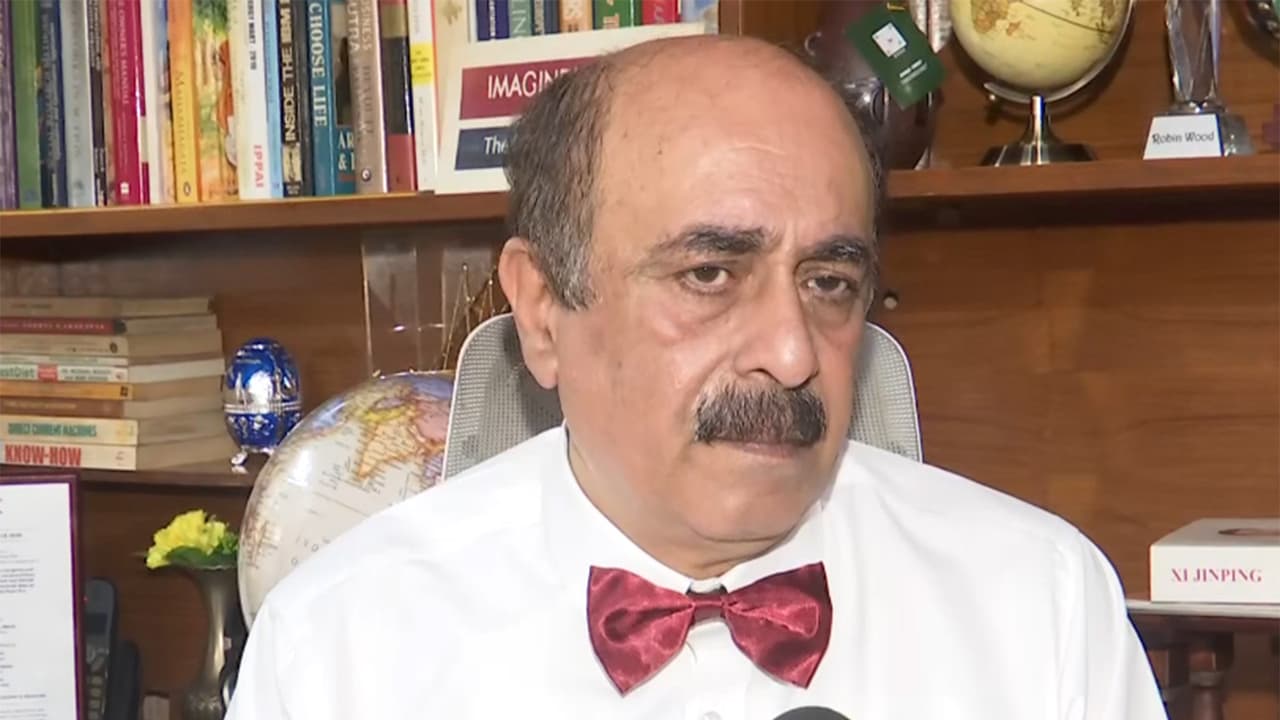
Amid Middle East tensions, expert Robinder Sachdev calls BRICS a ‘hugely contradictory organisation’ as it includes warring nations. He notes attacks on Indian ships are likely unintentional ‘fog of war’ and not a message to India.
As India hosts the BRICS Foreign Ministers’ meeting amid escalating Middle East tensions, the bloc is grappling with deep internal contradictions. According to foreign affairs expert Robinder Sachdev, recent attacks on Indian-flagged vessels and the high-profile visit of Iranian Foreign Minister Abbas Araqchi highlight the complex geopolitical tightrope New Delhi is walking.
Addressing the attacks on Indian-flagged ships in the Strait of Hormuz, Sachdev dismissed the notion of deliberate targeting. “I would ascribe it to the fog of war and confusion in that region,” he said, emphasising that the strikes were likely unintentional collateral damage rather than a strategic message directed at India.
Internal Contradictions Weaken BRICS
The broader challenge, however, lies within the BRICS platform itself. With the recent inclusion of nations like Iran and the UAE, the bloc now houses factions actively engaged in regional hostilities. Sachdev pointed out that with reports of Saudi Arabia and the UAE supporting strikes against Iran, BRICS has inherently become a “hugely contradictory organisation.”
“I do not think BRICS will be able to force or push or bring the warring parties together,” Sachdev remarked. He explained that the ongoing foreign ministers’ meeting is doing the heavy lifting to find diplomatic pathways ahead of the main leaders’ summit. He likened the intense, behind-the-scenes negotiations to “duck diplomacy”–appearing calm and stable on the surface while paddling furiously underwater.
India-Iran Bilateral Focus
Despite India’s reluctance to interject itself into the fundamental conflicts of the Middle East, Aragchi’s presence in New Delhi holds significant strategic weight. Sachdev noted that face-to-face discussions with External Affairs Minister S. Jaishankar foster crucial mutual understanding. This is particularly vital as Tehran actively seeks India’s diplomatic backing at the United Nations General Assembly to help navigate upcoming UN resolutions.
Ultimately, while BRICS serves as a valuable platform for expressing geopolitical viewpoints, Sachdev suggested that finding a tangible solution to the Middle East crisis remains a task for the primary warring parties, not the BRICS coalition. (ANI)
(Except for the headline, this story has not been edited by Asianet Newsable English staff and is published from a syndicated feed.)