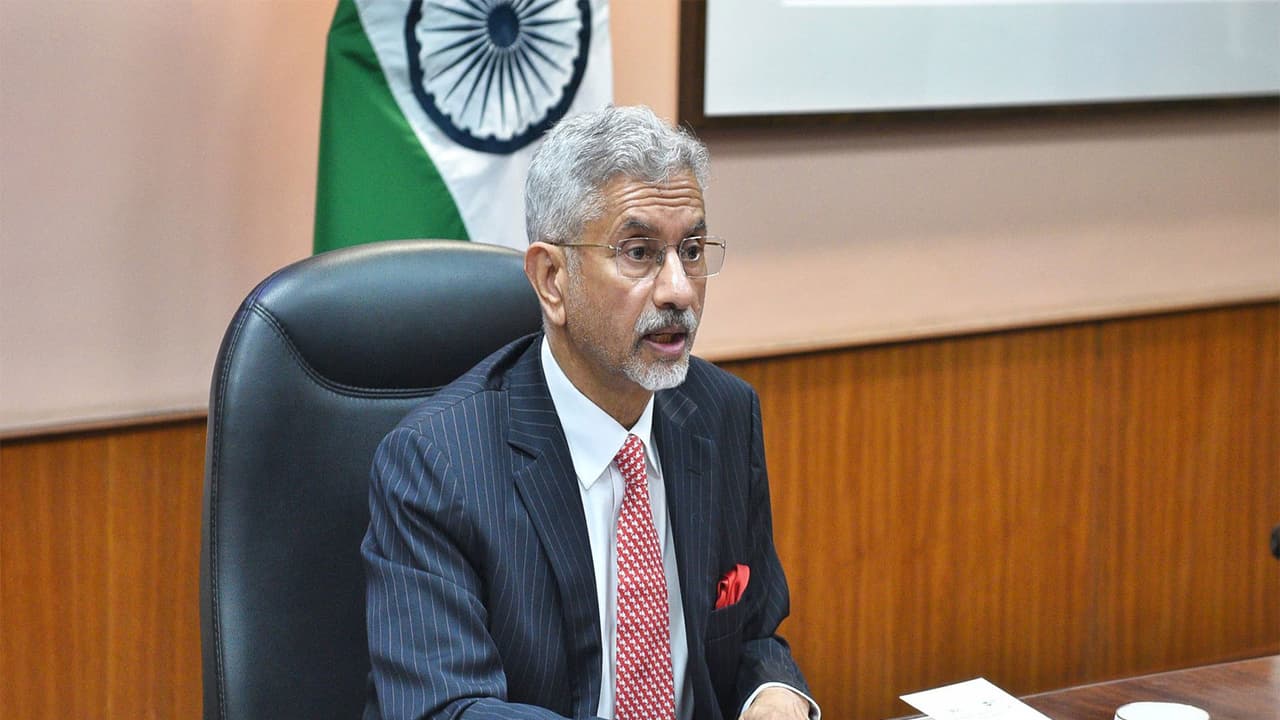
At the ‘AZEC Plus’ meeting on energy, EAM S Jaishankar condemned attacks on merchant shipping, affirming India’s commitment to safe maritime transit and supply chain resilience, a view echoed by Malaysian PM Anwar Ibrahim amid rising Gulf tensions.
India’s Stance on Maritime Security and Supply Chains
External Affairs Minister S Jaishankar on Wednesday participated in the ‘AZEC Plus’ meeting where he underlined India’s strong commitment to safe and unimpeded transit passage of maritime shipping. Jaishankar said that India stands ready to work with like-minded partners to develop supply chain resilience.
In a post on X, he said, “Participated in the ‘AZEC Plus’ meeting convened by Japan to discuss supply chain disruptions in the energy markets. Underlined India’s strong commitment to safe and unimpeded transit passage of maritime shipping. Attacks on merchant shipping are completely unacceptable. Global growth demands that energy markets are not constricted. As a major energy consumer, India will work with like-minded partners to develop supply chain resilience.” Participated in the ‘AZEC Plus’ meeting convened by Japan to discuss supply chain disruptions in the energy markets. Underlined India’s strong commitment to safe and unimpeded transit passage of maritime shipping. Attacks on merchant shipping are completely unacceptable. Global… pic.twitter.com/wsiQokYU5e — Dr. S. Jaishankar (@DrSJaishankar) April 15, 2026
Malaysia Echoes Call for Regional Cooperation
The summit echoed similar views from regional partners. Malaysian Prime Minister Anwar Ibrahim, who also attended the Asia Zero Emission Community (AZEC) Plus Online Summit, said that Malaysia remains committed to strengthening regional cooperation to ensure stable, sufficient and resilient energy supply.
In a post on X, he said, “I participated in the Asia Zero Emission Community (AZEC) Plus Online Summit on Energy Resilience at the invitation of the Government of Japan. I thank Prime Minister Sanae Takaichi for convening this timely meeting. Recent developments in West Asia, particularly affecting the Strait of Hormuz, remind us that stable energy supply is critical to ensure economic resilience and safeguard the wellbeing of our people.” Saya telah menyertai ‘Asia Zero Emission Community (AZEC) Plus Online Summit on Energy Resilience’ atas jemputan Kerajaan Jepun. Penghargaan dirakamkan kepada Perdana Menteri Jepun, Sanae Takaichi, atas penganjuran sidang tergempar pada waktu yang amat kritikal ini, khususnya… pic.twitter.com/eTIh1mSWjH — Anwar Ibrahim (@anwaribrahim) April 15, 2026
“Malaysia remains committed to strengthening regional cooperation through AZEC to ensure stable, sufficient and resilient energy supply. As an energy producer, including liquefied natural gas (LNG), Malaysia will continue to play a constructive role in supporting regional energy security, while diversifying energy sources including renewable energy and strengthening our energy system in line with national development priorities,” he added.
Geopolitical Tensions Escalate in Gulf Region
These high-level talks occur against a volatile backdrop in the Gulf region. Following a deadlock in US-Iran peace talks, the UKMTO announced that maritime access restrictions are now being enforced. These measures affect Iranian ports and coastal areas, spanning the Arabian Gulf, the Gulf of Oman, and the Arabian Sea east of the Strait of Hormuz.
The urgency of these diplomatic engagements is underscored by the commencement of a US-led blockade of all Iranian ports. This follows President Trump’s announcement of a naval blockade of the Strait of Hormuz, a critical maritime artery through which a fifth of the world’s global crude supply typically passes. (ANI)
(Except for the headline, this story has not been edited by Asianet Newsable English staff and is published from a syndicated feed.)