India has rejected references to Jammu and Kashmir in a China-Pakistan joint statement, reiterating that J&K and Ladakh are integral parts of its sovereign territory. New Delhi also objected to CPEC passing through disputed regions under illegal occupation.
New Delhi: India has firmly rejected references to Jammu & Kashmir in a joint statement issued by China and Pakistan, asserting that the union territory is an inseparable part of Indian sovereign territory and that no third country has any standing to comment on the matter.
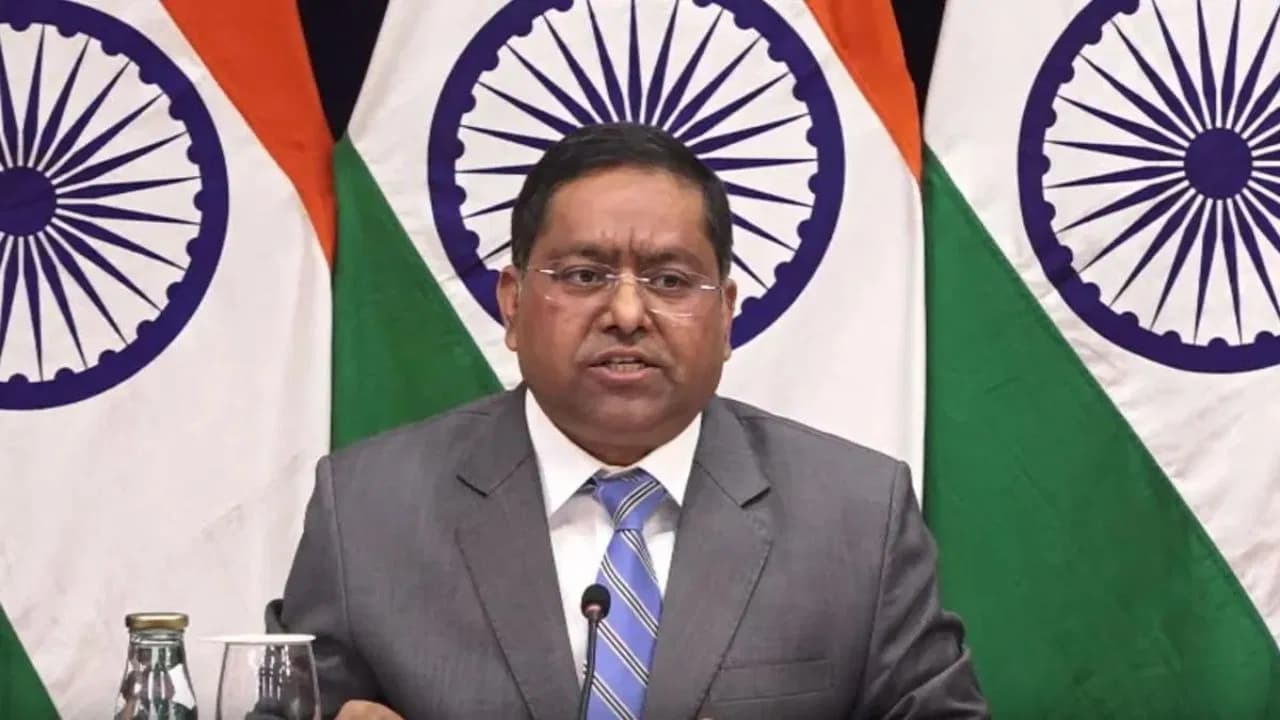
The ministry of external affairs spokesperson, Randhir Jaiswal said India’s position on Jammu & Kashmir and Ladakh was “consistent and well known” to all parties concerned.
He said, “The Union Territories of Jammu & Kashmir and Ladakh have been, are and will always remain integral and inalienable parts of India.”
The joint statement — issued following high-level engagement between Beijing and Islamabad — had invoked references to Kashmir, drawing a sharp rebuttal from New Delhi.
New Delhi also pushed back on the China-Pakistan Economic Corridor, or CPEC, describing parts of the infrastructure project as running through Indian sovereign territory under Pakistan’s “illegal and forcible occupation.”
India said it “resolutely” opposes any effort by third countries to reinforce or lend legitimacy to Pakistan’s control over those areas. CPEC, a flagship component of China’s Belt and Road Initiative, passes through Pakistan-administered Kashmir — a region India claims in full.
Beijing has committed tens of billions of dollars to the project, which links China’s Xinjiang region to Pakistan’s Gwadar port on the Arabian Sea.
A separate element of the joint statement references to so-called “trans-boundary water resources cooperation” between China and Pakistan was also dismissed by New Delhi.
India’s position is that the two countries share no common boundary, which renders any such framework legally meaningless.
The ministry of external affairs further stated that it has never recognized the 1963 boundary agreement between Pakistan and China, under which Pakistan ceded a portion of Kashmir to China, a deal India has long regarded as illegitimate, as it involved territory not Pakistan’s to give away.
The 1963 agreement transferred the Shaksgam Valley, part of theJammu and Kashmir, to China.
India’s non-recognition of that accord has been a consistent thread in its foreign policy and feeds directly into its objections to CPEC routing and Sino-Pakistani diplomatic formulations on the region.