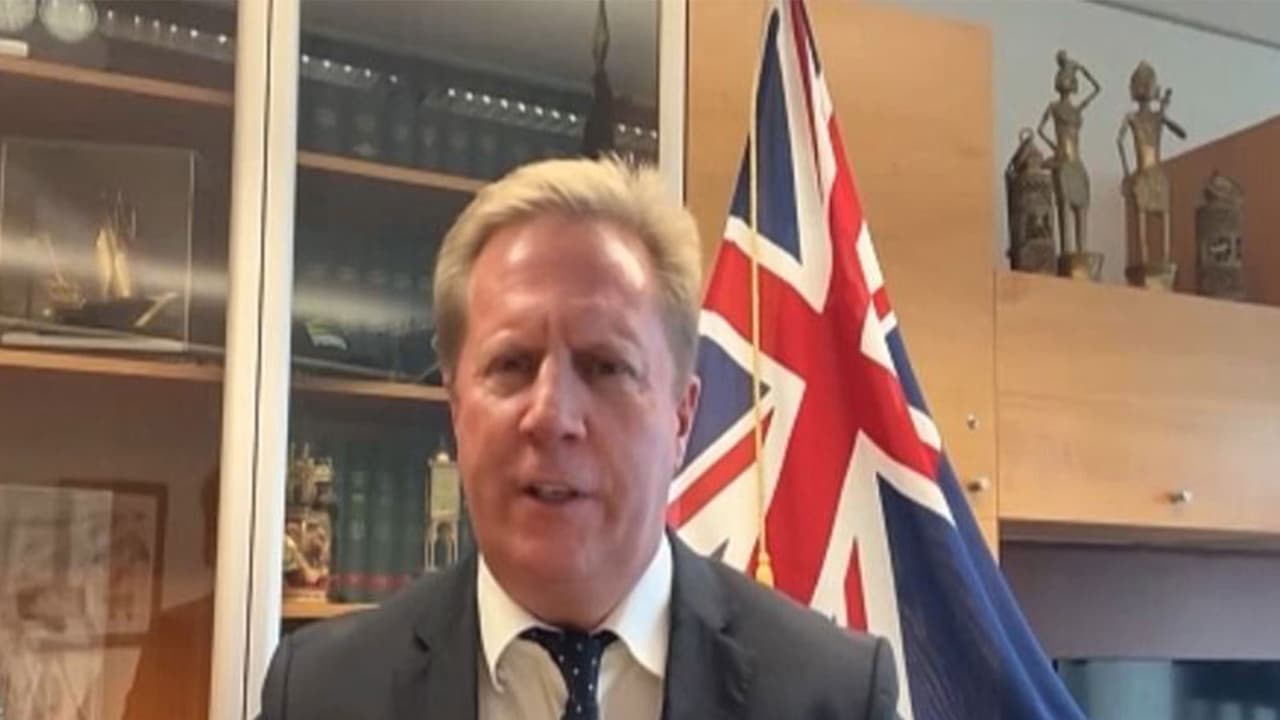
NZ Trade Minister Todd McClay says the India-NZ FTA will provide expanded study and work opportunities for Indian students, particularly for Master’s and PhD scholars. He also predicted direct flights between the countries could begin within a year.
New Zealand Trade Minister Todd McClay on Saturday highlighted the expanded study and work opportunities for Indian students under the India-New Zealand Free Trade Agreement, saying master’s and PhD students will be able to work for longer in the country, while predicting that direct flights between India and New Zealand could begin within about a year.
McClay, during an interview with ANI, said that Indian students coming to New Zealand for higher studies will have the right to work while studying, with master’s and PhD students also gaining longer work opportunities after arriving in the country. Asked about what the FTA would mean for Indian students, professionals and skilled workers, McClay said New Zealand would continue to encourage Indian students to study in the country, while noting that many could eventually take the skills and experience gained there back to India.
Key Provisions of the India-New Zealand FTA
“We have a number of people from India who choose to come and study in New Zealand and we will look to and continue to encourage that. Some of the things we’ve done are for students who want to come and study a master’s degree or a PhD; they’re able to work for longer when they come to New Zealand,” the New Zealand Trade Minister said. “They also have the right to work while they’re here. In many cases, though, we can attract students who’ll come, get a good education, and they’ll take those skills and some of the experience they get in New Zealand back to India as that economy continues to grow. So it’s just the cooperation that I think will see us benefit the most,” he added.
The India-New Zealand FTA, signed on April 27, 2026, provides expanded services and mobility commitments, including dedicated pathways for Indian students and professionals. Under the agreement, New Zealand has offered binding market access in 118 service sectors and Most-Favoured-Nation treatment in 139 sectors.
Student and Post-Study Work Rights
The agreement removes numerical caps on Indian students and guarantees a minimum of 20 hours of work per week during study. It also provides post-study work opportunities of up to three years for STEM bachelor’s and master’s graduates and up to four years for doctoral holders.
Professional Visa Pathways
The FTA also establishes a Temporary Employment Entry visa pathway for Indian professionals in skilled occupations, with a quota of 5,000 visas at any given time and a stay of up to three years. The pathway covers professions including AYUSH practitioners, yoga instructors, Indian chefs and music teachers, besides high-demand sectors such as IT, engineering, healthcare, education and construction.
Working Holiday Visas
The agreement further provides for multiple-entry Working Holiday Visas for 1,000 young Indians annually, allowing them to live and work in New Zealand for up to 12 months.
Boosting Trade, Investment and People-to-People Ties
McClay also pointed to greater opportunities for trade in food, services and investment between the two countries. “In some areas, we have access to some of the food we produce when it’s not produced in India because, of course, there’s a different season of growing. So I think the Indian consumers will have good access to a lot of this high-quality, safe food that New Zealand produces, firstly. Secondly, I do think there are opportunities for both investment and the services trade. I predict within a year or so, we will have direct flights between India and New Zealand. We’ll see people-to-people travel for tourism or visiting friends and family, or business increase, and that will be a win-win for both of our economies,” he said.
Focus on Goods Trade and Sectoral Growth
On goods trade, the agreement eliminates duties on 100 per cent of Indian exports to New Zealand, while New Zealand has committed USD 20 billion in investment. The agreement also places emphasis on strengthening MSMEs and women-led enterprises, while India has protected its interests in dairy and agriculture. The agreement also provides opportunities for labour-intensive sectors such as textiles and leather.
New Zealand has also facilitated health and traditional medicine services under the agreement. The FTA’s mobility provisions, alongside expanded services access, are aimed at strengthening economic and people-to-people links between India and New Zealand while creating new pathways for students and skilled professionals. (ANI)
(Except for the headline, this story has not been edited by Asianetnews Editorial staff and is published from a syndicated feed.)