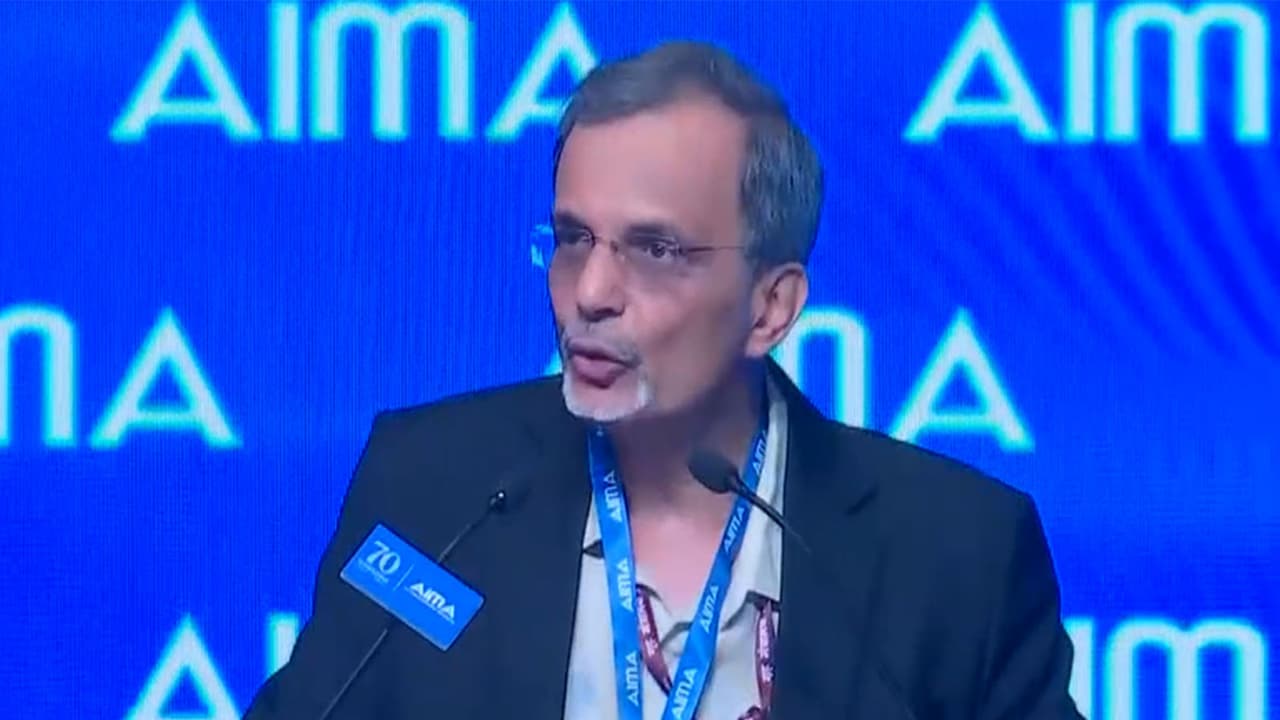
CEA V Anantha Nageswaran stresses that India’s steady economic growth isn’t enough. The focus must be on transformation through higher wages, job creation, and fair treatment of workers, requiring a strong govt-private sector partnership.
India must focus on turning economic growth into broad-based transformation through higher wages, stronger job creation and fair treatment of workers and small suppliers, Chief Economic Adviser V Anantha Nageswaran said, stressing that the next 20-25 years will require a partnership between the government and private sector to achieve the Viksit Bharat goal.
‘Transformation, Not Growth, is the Hard Question’
Speaking at the Platinum Jubilee National Management Convention 2026, Nageswaran said India’s growth outlook remains steady, with major agencies projecting medium-term annual growth of around 6.5-7 per cent. He noted that the economy grew 7.8 per cent in the first quarter despite expectations that the West Asia conflict could weigh on growth.
However, he cautioned that strong economic growth and rising capital inflows do not automatically translate into improved living standards for people. “Growth is no longer the hard question for us. The hard question is transformation,” Nageswaran said, explaining that growth measures the expansion of the economy, while transformation concerns the nature of that growth and how widely its benefits are distributed. He pointed to developed economies where strong corporate profits and investment have coexisted with weak hiring and subdued wage growth. According to him, India must avoid a similar situation, particularly as household savings and asset values cannot indefinitely support consumption in the absence of stronger incomes.
Achieving Transformation: A Public-Private Partnership
Nageswaran said the key to transformation lies in jobs, rising wages and fairness, with growth having to reach people through employment and incomes. He said the government’s role should be to reduce the cost of doing business by making energy cheaper, improving access to land and enabling greater use of available space through denser development. These measures, he said, can lower business costs without reducing workers’ incomes.
The government has also taken steps towards employment through trade agreements, reducing compliance requirements, maintaining fiscal discipline and strengthening bank balance sheets, he said. However, Nageswaran stressed that lasting job creation ultimately rests with the private sector. Businesses need to hire workers, provide real wage growth and make timely payments to small suppliers.
Empowering Manufacturing and Small Enterprises
He said India’s manufacturing ambitions depend heavily on small and medium enterprises, which create jobs in large numbers but can struggle to invest, pay workers or expand when payments from large buyers are delayed by 90 or 120 days. For manufacturing to move beyond simple assembly towards design and components, suppliers must become stronger, he said, adding that services, including healthcare, tourism and jobs less vulnerable to automation, will also remain important. (ANI)
(Except for the headline, this story has not been edited by Asianetnews Editorial staff and is published from a syndicated feed.)