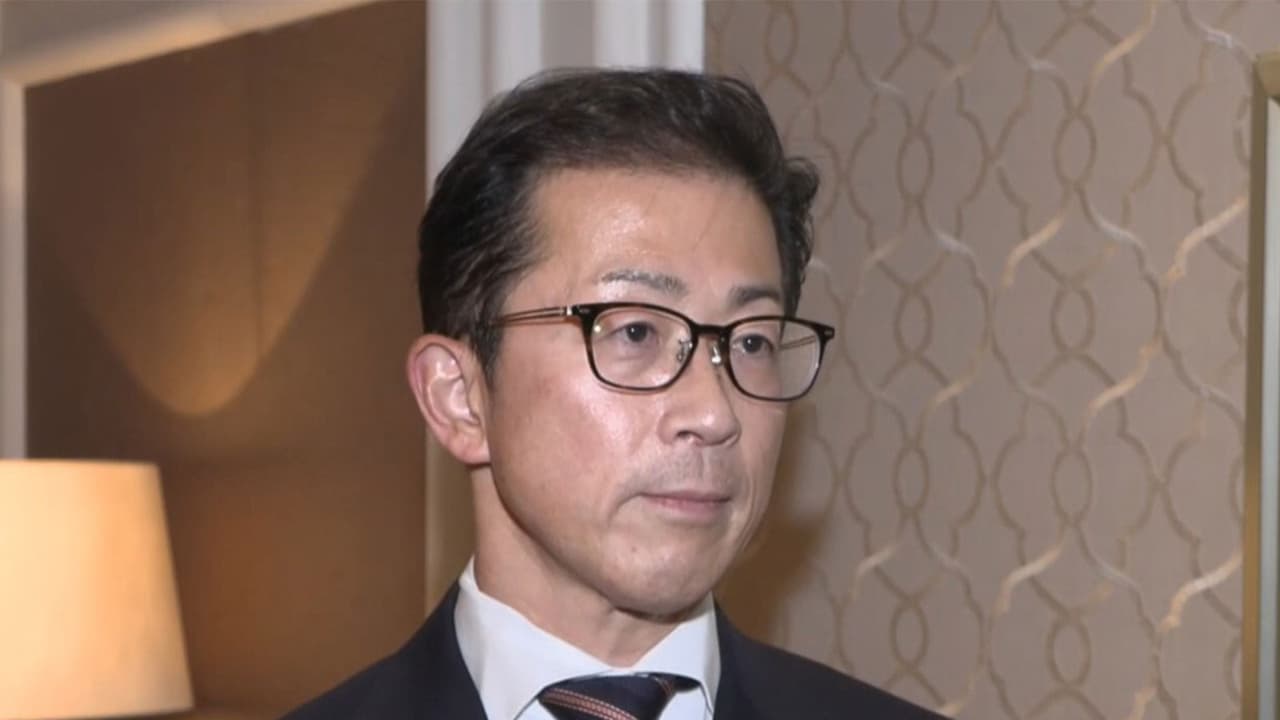
Japanese Press Secretary Toshihiro Kitamura urged India and Japan to collaborate on economic and energy security. He highlighted the severe threat posed by potential disruptions in the Strait of Hormuz due to the Iran-US conflict.
India, Japan Must Cooperate on Energy Security Amid Regional Tensions
Japanese Press Secretary Toshihiro Kitamura on Thursday said that India and Japan must work together to strengthen economic and energy security amid the Iran-US conflict, warning that any disruption to energy supplies passing through the Strait of Hormuz poses a serious threat to both countries and the wider region.
Speaking to ANI, Japanese Press Secretary and Official Spokesperson Kitamura, who is accompanying the Japanese PM Sanae Takaichi, said that the developments in Iran have had wider implications for Asia. He said, “The situation in Iran significantly impacted the Asian countries, including Japan and India.”
He added, “The disruption of the supply of energy and resources passing through the Strait of Hormuz poses an extremely serious threat to the economic security of both countries and other countries in the region.” He said that the impact extends beyond the region because of interconnected supply chains. He said, ” Because of the impact of this, it affects all countries closely connected through the supply chain. So, like-minded countries like India and Japan must work together on such important issues.”
‘POWERR Asia’ Initiative
Highlighting Japan’s regional energy security initiative, he said, “In April, our government launched a new framework of cooperation called ‘POWERR Asia’. Through that meeting, Dr Jaishankar extended his support in this. We would like to work together through this ‘POWERR Asia’; we would like to make this region more resilient in terms of economic security and energy security.”
Japan Welcomes US-Iran MoU
On the 14-point Memorandum of Understanding (MoU) between the United States and Iran, the Japanese Press Secretary welcomed the development. He said, “Japan welcomes the Memorandum signed between the US and Iran as a significant step for resolving the situation. Japan hopes that in accordance with this Memorandum, the consultation between the two sides will continue steadily.”
Kitamura said that Japan would continue working with other countries to help translate the MoU into a final agreement. He said, “Japan is fully committed to working with other countries to realise this MoU, which will be converted into a final agreement between the two sides.”
Joint Statement from India-Japan Summit
Earlier, in a joint statement released on Thursday following the 16th India-Japan Annual Summit, both leaders highlighted the strategic necessity of keeping the Strait of Hormuz open to guarantee uninterrupted global commerce and resilient energy corridors. As two of the world’s premier energy-consuming economies, India and Japan are acutely vulnerable to supply disruptions in the Middle East.
The prime ministers explicitly warned against any geopolitical manoeuvres that could restrict maritime trade. “Recognising their shared status as major energy-consuming nations impacted by volatility in global energy markets, the two Prime Ministers underscored the urgency of deepening India-Japan cooperation on energy security,” the joint statement said.
The two leaders reiterated “the importance of ensuring unimpeded freedom of navigation and uninterrupted flow of global commerce, including through the Strait of Hormuz, and opposing any restrictive measures hampering the flow of commercial vessels.” (ANI)
(Except for the headline, this story has not been edited by Asianet Newsable English staff and is published from a syndicated feed.)