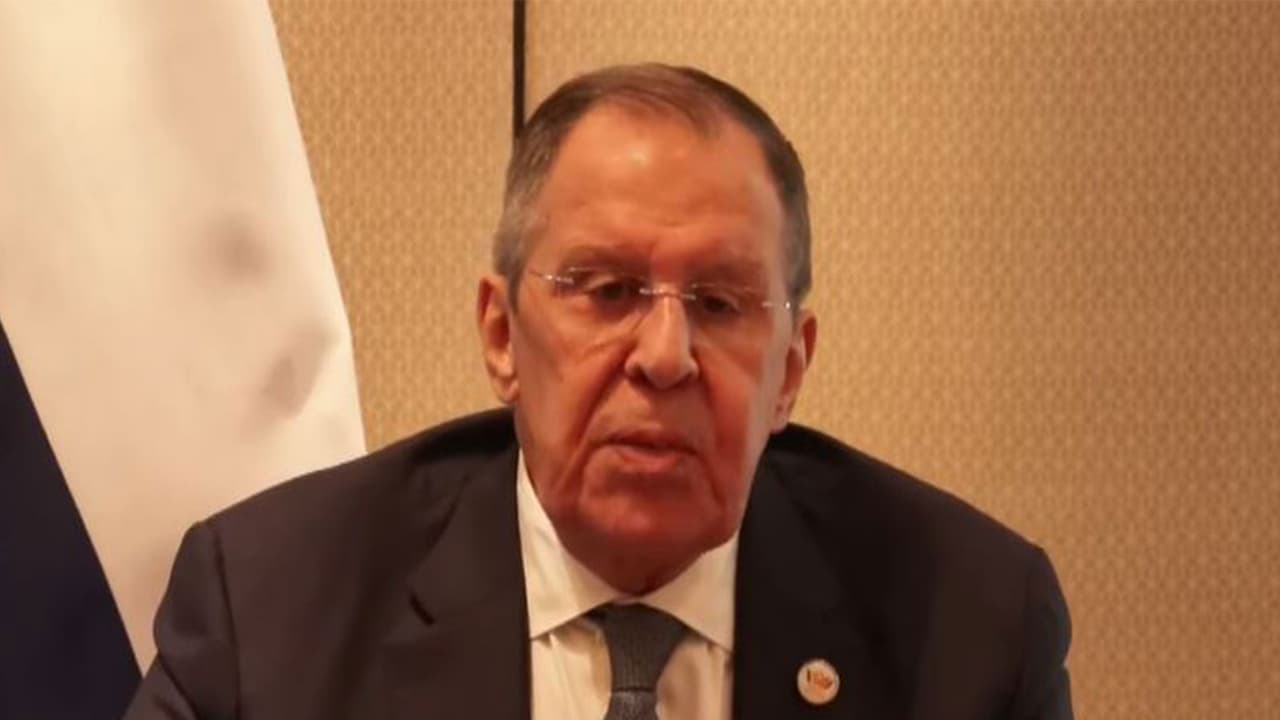
Russian Foreign Minister Sergey Lavrov has endorsed India as a potential mediator in the Iran-US conflict. Citing New Delhi’s diplomatic experience, he suggested India could play a vital role in ensuring long-term stability in West Asia.
Russian Foreign Minister Sergey Lavrov on Friday said India could serve as a potential mediator in the conflict involving Iran and the US, emphasising on New Delhi’s “vast diplomatic experience and international standing.”
He referred to Pakistan’s role in facilitating dialogue between Iran and the United States on immediate issues, while stressing that India would play a vital role in the broader diplomatic engagement to prevent long-term instability in the region. Addressing a media briefing here, Lavrov said, “Pakistan is helping establish dialogues between the US and Iran to resolve urgent problems. If they seek a long-term mediator between Iran and its Arab friends, this role could be played by India, considering its vast diplomatic experience,”
Lavrov’s remarks after a meeting of the BRICS Foreign Ministers came at a time when Prime Minister Narendra Modi was in the UAE. The Russian diplomat’s visit coincides with heightened global anxiety over the Iran conflict and the impending expiry of US sanctions waivers on Russian and Iranian oil.
Lavrov on India’s role as BRICS Chair
At the press briefing, Lavrov further said that India, as the current BRICS chair and a major energy consumer with direct interests in regional stability, could help bring key stakeholders together for dialogue. “India, the BRICS president, is directly interested in receiving oil from this region. Why won’t they offer their services, including as a country that is currently presiding over BRICS, so they could invite Iran, the United Arab Emirates, to start with, to have a conversation with each other to agree on how they can avoid any hostilities between the two countries? ” he said.
‘Unprovoked aggression by US and Israel’
The Russian Foreign Minister also alleged that certain countries were attempting to deepen hostility between Iran and Arab nations, while asserting that Moscow was pursuing efforts aimed at reducing tensions. “And they are trying; other countries are trying to instil this aggression, to instil this hostility in these relations. And I believe that this hostility, this aggression against Iran, was motivated, among other things, to antagonise Iran and its Arab neighbours,” Lavrov said.
“We need to understand root causes of every conflict, here it is unprovoked aggression by US and Israel,” he said He added that Russia was working “with the opposite goal in mind”, stressing the need for diplomacy and regional engagement to avoid further escalation in West Asia.
India’s ‘Vishwa Bandhu’ approach
Since independence, India has acted as a key global mediator and peacekeeper, transitioning from idealistic, non-aligned mediation (e.g., Korea, Vietnam) to a pragmatic, “Vishwa Bandhu” (friend of the world) approach. Its strategy combines moral diplomacy with neutral, high-level communication to resolve complex international conflicts, leveraging its position as a Voice of the Global South
India played a critical role in the 1953 armistice with its proposals on prisoner-of-war repatriation. In the 950s and 60s India chaired the International Commission for Supervision and Control (ICSC) in Vietnam, fostering regional stability. India helped broker the declaration of Austrian neutrality in 1955, leading to the withdrawal of Soviet troops. it also actively facilitated peace efforts in the Suez Canal Crisis, the Congo, and during the Iraq-Iran war Under its G20 presidency, India highlighted the developmental impact of conflicts like the Russia Ukraine conflict and urged dialogue. The idea that “the whole world is one family” drives its peacemaking efforts. (ANI)
(Except for the headline, this story has not been edited by Asianet Newsable English staff and is published from a syndicated feed.)