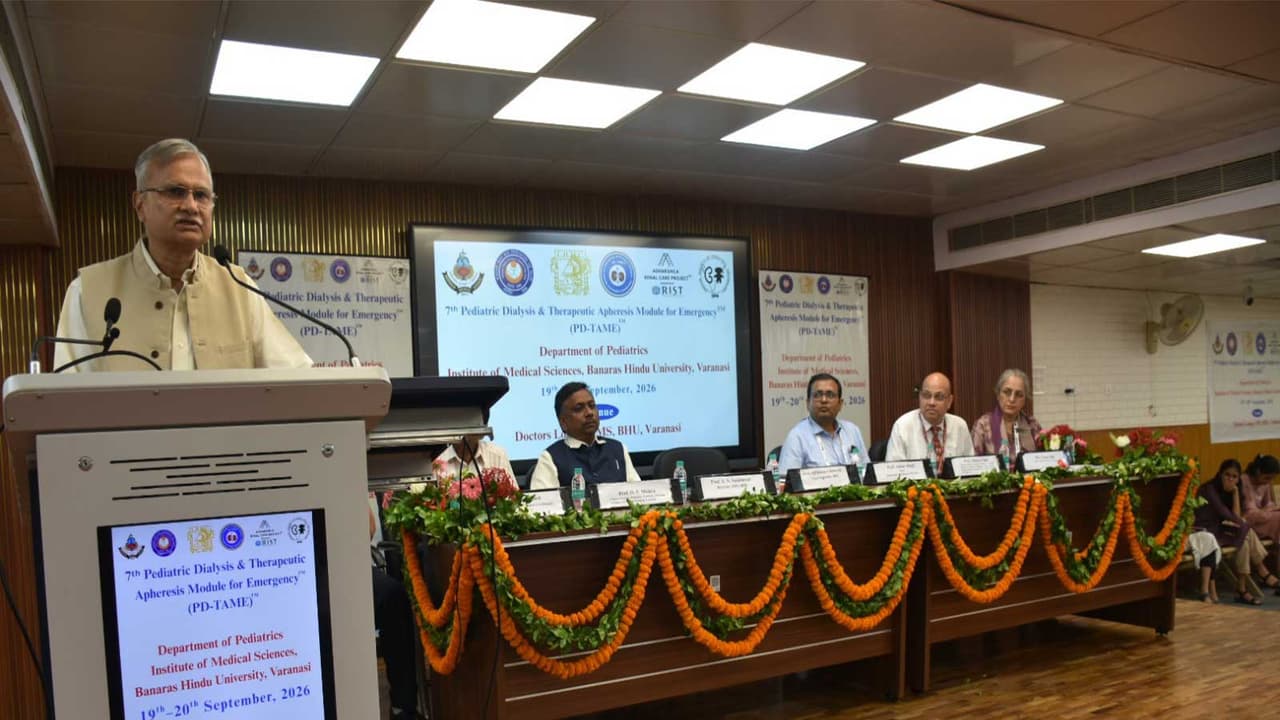
IMS-BHU in Varanasi inaugurated the 7th PD-TAME, a pan-India initiative to train doctors in paediatric dialysis and renal emergencies, addressing the shortage of paediatric nephrologists and improving care for critically ill children.
The Department of Paediatrics, Institute of Medical Sciences (IMS-BHU), inaugurated the 7th Paediatric Dialysis & Therapeutic Apheresis Module for Emergency (PD-TAME) on Saturday at Sir Sunderlal Hospital in Varanasi. The programme, held at the Doctors’ Lounge, brought together paediatricians, paediatric nephrologists and critical-care specialists from across the country.
Implemented by the Adharshila Renal Care Project in partnership with Rural India Supporting Trust (RIST), PD-TAME is a pan-India capacity-building initiative that strengthens a growing network of first responders equipped to recognise and manage paediatric renal emergencies. The programme trains doctors across India through hands-on simulation, standardised protocols and case-based learning in paediatric dialysis, therapeutic apheresis and Acute Kidney Injury.
Vice-Chancellor Highlights Need for More Specialists
In his address, Vice-Chancellor Prof Ajit Kumar Chaturvedi, the Chief Guest of the event, highlighted the need to address the shortage of paediatric nephrologists in India and emphasised expanding such training programmes through a cascading model across medical centres. He said that with trained doctors and basic dialysis facilities, many lives could be saved without patients having to reach higher centres. The Vice-Chancellor also emphasised the importance of empathy and sensitivity in patient care and encouraged healthcare professionals to maintain calm while dealing with stressful situations.
Director Emphasises Importance of Specialised Training
Prof SN Sankhwar, Director, Institute of Medical Sciences (IMS-BHU), highlighted the shortage of paediatric nephrologists in India and said that the availability of specialised training programmes would help increase the number of trained professionals in the field. He emphasised the importance of the workshop in enhancing participants’ knowledge and skills related to paediatric nephrology and expressed hope that the training would help them in managing various nephrology cases.
Focus on Practical Skills for Patient Care
Prof Puneet, Medical Superintendent, Sir Sunderlal Hospital, IMS-BHU, highlighted the prevalence of kidney injury among children and the need for proper training to manage such cases, particularly with regard to peritoneal dialysis and hemodialysis. He said that the procedure-based workshop aims to enhance the practical skills of healthcare professionals and improve the quality of patient care at tertiary care centres. He emphasised the responsibility of training practitioners and young paediatricians and expressed hope that similar workshops would be organised at other medical colleges to benefit more healthcare professionals.
Programme Leadership on Early Intervention and Training
The programme is led by Prof OP Misra, Emeritus Professor, Department of Paediatrics, Heritage Institute of Medical Sciences, Varanasi, and Senior Professor of Paediatrics and Paediatric Nephrologist, who emphasised that all postgraduate paediatricians should know the basics of hemodialysis and therapeutic apheresis—essential life-saving skills for critically ill children.
Director Prof Abhijeet Saha, Division of Paediatric Nephrology, Department of Paediatrics, Lady Hardinge Medical College, and Course Director of PD-TAME, highlighted the importance of training greater numbers of paediatricians in peritoneal dialysis and hemodialysis. Building this capability at the first point of care can enable timely management of children with kidney disorders and reduce the need for referrals to metropolitan centres.
Neena Jolly, Trustee, Adharshila Renal Care Project, delivered a presentation on Adharshila and said that in paediatric nephrology, what is missed early can become a complex problem later. The first healthcare provider can make all the difference. She added that by strengthening first responders to recognise warning signs, initiate the right treatment and establish the appropriate care pathway, we can intervene while disease is still manageable and, in many cases, reversible.
Workshop Curriculum and Hands-on Training
The workshop will include lessons and hands-on training in acute peritoneal dialysis, hemodialysis, hemodiafiltration, therapeutic apheresis, automated peritoneal dialysis, point-of-care ultrasonography and vascular access.
Prof Ankur Singh, Head, Department of Paediatrics, welcomed the dignitaries and delegates. Prof Abhishek Abhinay, Division of Nephrology, Department of Paediatrics, and Organising Secretary of the event, proposed the Vote of Thanks. (ANI)
(Except for the headline, this story has not been edited by Asianet Newsable English staff and is published from a syndicated feed.)