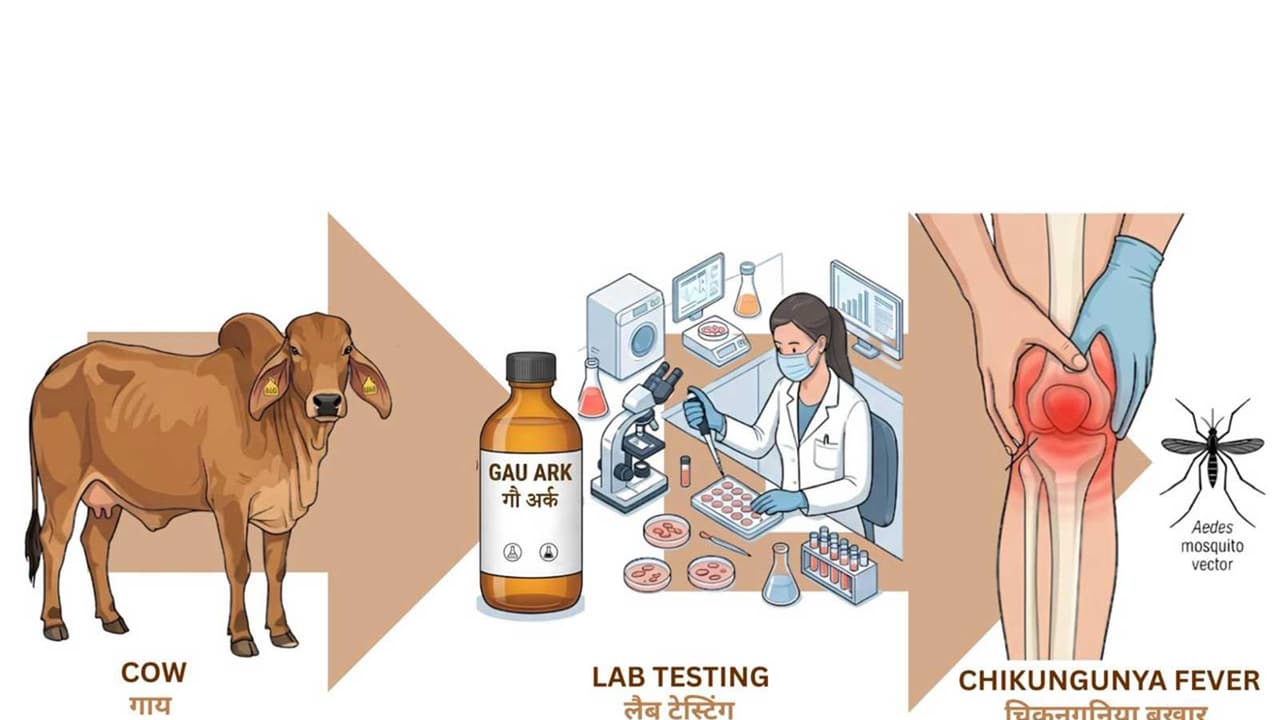
IIT Roorkee researchers found bioactive compounds in cow urine distillate with significant antiviral activity against Chikungunya, reducing viral levels by over 90%. The study opens avenues for new, affordable Ayurveda-inspired antiviral therapeutics.
Researchers at the Indian Institute of Technology Roorkee (IIT Roorkee) have reported promising findings in the fight against Chikungunya, a mosquito-borne viral disease that continues to pose a significant public health challenge in tropical and subtropical regions. The study identifies key bioactive compounds present in cow urine distillate (CUD) that demonstrate substantial antiviral activity against the Chikungunya virus (CHIKV), opening new avenues for the development of Ayurveda -inspired and affordable antiviral therapeutics.
Key Research Findings
The research, recently published in the prestigious journal ACS Agricultural Science & Technology, was led by Prof. Shailly Tomar and her team from the Department of Biosciences and Bioengineering, IIT Roorkee, in collaboration with researchers from leading Ayurveda and biomedical institutions across India. The study combined advanced virology, metabolomics, molecular docking, and biochemical analyses to identify compounds responsible for antiviral activity. Researchers found that treatment with cow urine distillate reduced Chikungunya viral levels by more than 90 per cent at safe concentrations, while an optimised combination of cow urine distillate, thymoquinone (derived from Nigella sativa), and piperine (from black pepper) achieved an impressive 99.85 per cent reduction in viral load under laboratory conditions, a release said.
Further investigations identified benzoic acid, hippuric acid, and oleic acid as key constituents contributing to the antiviral activity. These compounds were shown to interfere with critical viral proteins involved in replication, highlighting their potential as candidates for future antiviral drug development.
Bridging Traditional and Modern Science
Speaking on the significance of the research, Prof. Kamal Kishore Pant, Director, IIT Roorkee, said, “Emerging and re-emerging viral diseases demand innovative, affordable, and scientifically validated solutions. This research exemplifies IIT Roorkee’s commitment to advancing interdisciplinary science that bridges traditional knowledge systems with modern biotechnology to address pressing global health challenges.”
A Foundation for Future Therapeutics
Highlighting the scientific importance of the findings, Prof. Shailly Tomar, Department of Biosciences and Bioengineering, IIT Roorkee, and corresponding author of the study, said, “Our research not only identifies specific bioactive molecules in Ayurvedic Gau mutra ark responsible for antiviral activity but also demonstrates the power of synergistic natural formulations. These findings provide a strong foundation for developing next-generation antiviral strategies against Chikungunya and potentially other related viral infections. Further pre-clinical and translational studies will be essential to evaluate their therapeutic applicability.”
The Global Challenge of Chikungunya
Chikungunya virus is transmitted primarily through Aedes mosquitoes and can cause severe fever, debilitating joint pain, and long-term health complications. Despite its growing global burden, there are currently limited antiviral treatment options available. The findings from IIT Roorkee contribute valuable scientific insights toward addressing this unmet medical need.
The research was supported by the Ministry of AYUSH and involved extensive laboratory validation, computational screening, and antiviral testing. The study further underscores the importance of exploring natural bioactive compounds and integrative scientific approaches for developing future healthcare solutions, a release added. (ANI)
(Except for the headline, this story has not been edited by Asianet Newsable English staff and is published from a syndicated feed.)