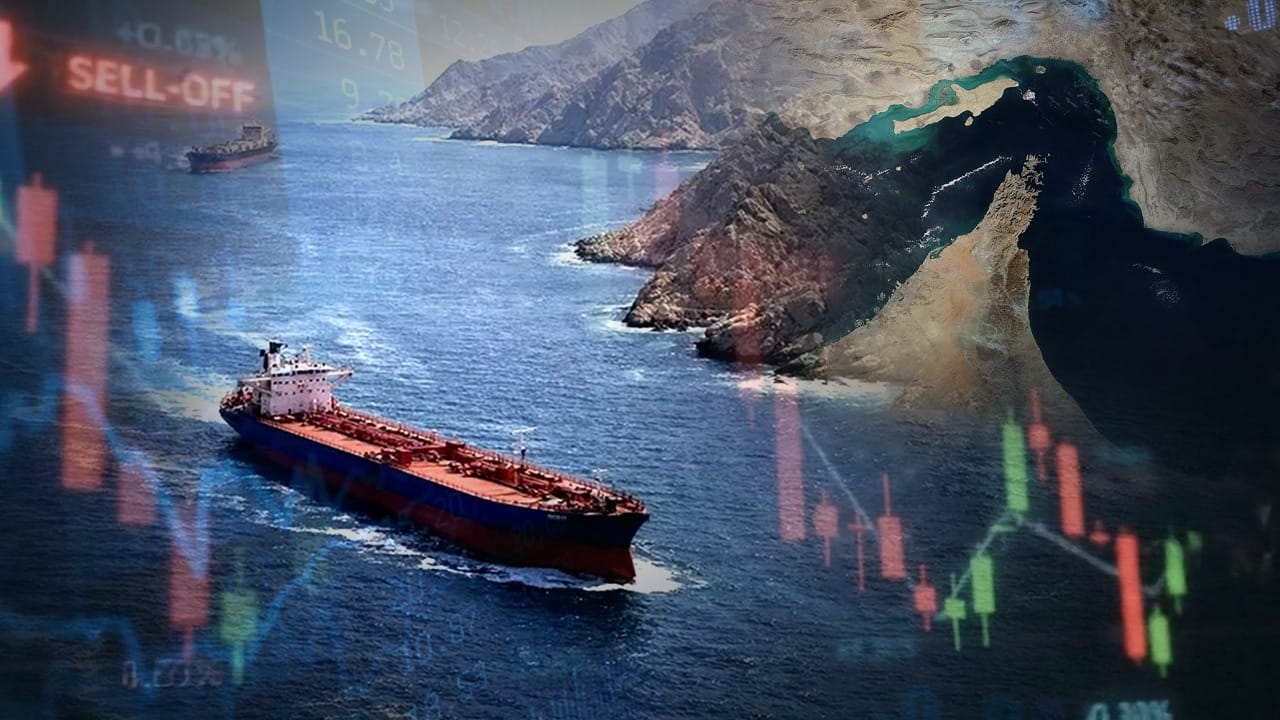
Strait of Hormuz and the stock market
US President Donald Trump says that on June 14, 2026, a deal will be signed between the US and Iran and the Strait of Hormuz will be completely opened. Ever since the war between Iran and Israel started from 28th February 2026 and then when America jumped into it, the whole world had to suffer the consequences of it. Especially for a country like India which is almost completely dependent on imports for its energy supply. Now that the news is coming that a deal will be made between the two countries and peace will be established, let us try to understand what will be its effect on the Indian stock market.
In fact, when the news started spreading that a deal was going to be made between Iran and America, on June 12, a bumper rise was seen in the Indian stock market, the main index of the market, Sensex, closed with a gain of about 17,00 points. In such a situation, when the market has become so green just because of the buzz of a deal, then the question arises that if Hormuz opens and there is an atmosphere of peace in the world, then how far will the Indian stock market go? Hints of a possible agreement created a massive surge in the market, indicating that if lasting peace is established in the world, the Indian stock market could break its previous record and move towards a new historical peak.
Record jump in the market due to the news of opening of Hormuz
On the last trading day of the week, i.e. June 12, 2026, as soon as US President Donald Trump announced the end of the war with Iran and the draft to reopen the Hormuz Strait for commercial ships, the Indian stock market recorded the biggest rally in the last two months. The 30-share BSE Sensex closed at 75,527.95 with a huge gain of 1,695.40 points (+2.30%) in a day. During the day’s trading, the index jumped by 1,775.47 points to reach a high of 75,608.02. Similarly, Nifty 50 of National Stock Exchange also closed at the level of 23,622.90 with a rise of 461.30 points (+1.99%). This clearly indicates that if the deal is made, the market may get a boost.
Crude oil and Indian rupee will be affected
The end of global tensions may have an impact on the major factors driving the Indian economy and stock market. The main ones in this are crude oil and Indian rupee. When the stock market rose amid news of the deal, crude oil fell and the rupee strengthened. These factors can support the economy in future also.
- Fall in crude oil prices- India imports about 90% of its oil needs, making it highly sensitive to oil price fluctuations. At the time of the Hormuz crisis, the global benchmark Brent crude had crossed $120 per barrel. But after the peace agreement initiative, Brent crude fell by about 4% and fell below $87 per barrel. According to financial estimates, every $10 per barrel decline in crude oil prices reduces India’s trade deficit by about $18 billion (0.5% of GDP). Due to falling oil prices, the country’s import bill will reduce, which will keep the current account deficit (CAD) under control.
- Strength of Indian Rupee- Due to cheap crude oil, the demand for US dollar decreases, due to which the Indian rupee strengthens. At the height of the war, the rupee had fallen to a historic low of 95.75, but with signs of peace talks it strengthened by 60-65 paise to 95.11 to 95.25. Inflation reduces due to strengthening of rupee, which can lead to a big decline in retail and wholesale inflation.
How far can the market go once peace is established?
After the outbreak of tension and war in West Asia, continuous selling dominated the market and the index had recovered to the level of 73,000 after falling. Analysts believe that once the Hormuz crisis is averted and global peace is established, the Indian market will not only cross its previous peak of 86,000, but will also set new milestones in the coming months. If lasting peace is established globally and crude oil supplies remain intact, global brokerage houses have set extremely high targets for the Indian stock market. Morgan Stanley has said that if crude oil remains below $70 per barrel and India’s corporate earnings growth reaches 19%, the Sensex can touch the level of 1,07,000. Whereas their “Base Case” (50% probability) sees Sensex at the level of 95,000.
Also read- If Hormuz opens, the game will change! UAE and Saudi will get many big benefits