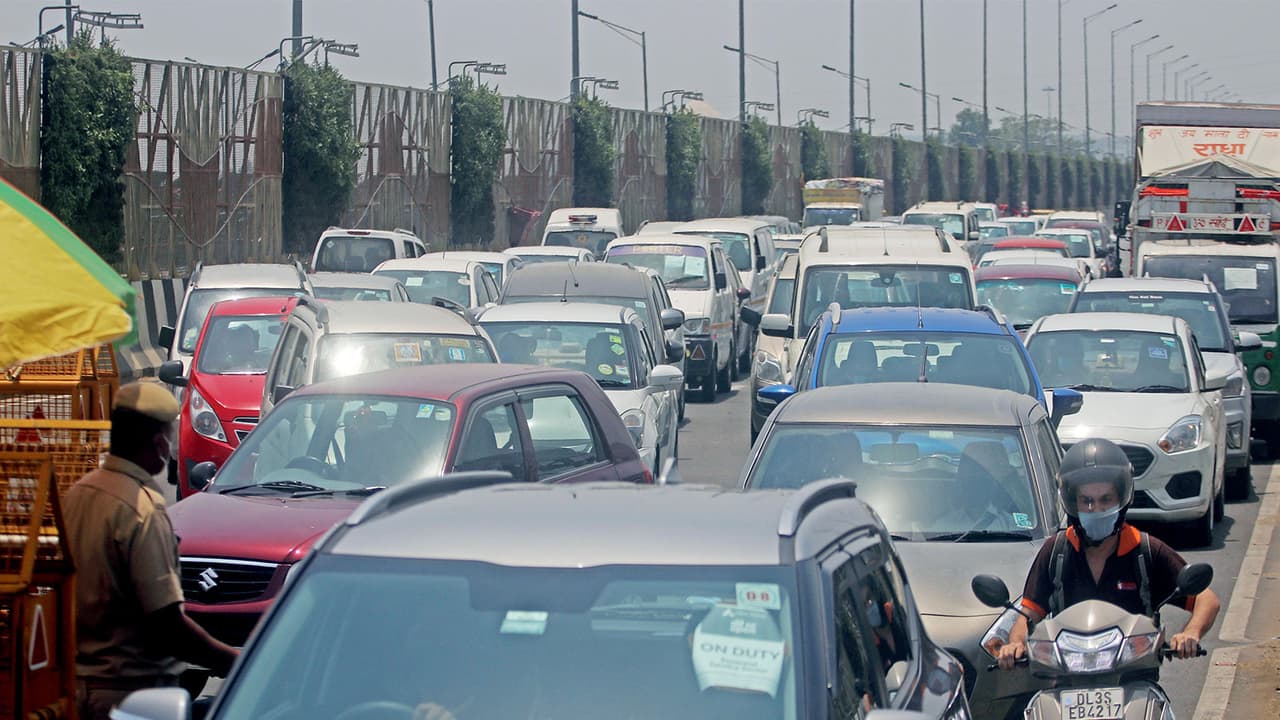
Driven by the government’s new V2V framework, Hyundai Motor India aims for 1 million connected car sales by 2027. Having sold 0.8M units, the company’s Bluelink tech offers advanced safety and convenience features across its portfolio.
The government’s proposed framework for vehicle-to-vehicle (V2V) communication is likely to accelerate the adoption of connected mobility and safety technologies in India, with Hyundai Motor India targeting cumulative sales of 1 million connected cars by 2027. The company’s announcement comes days after the Ministry of Road Transport and Highways issued a draft notification proposing the phased implementation of V2V communication systems to enhance road safety.
Hyundai Motor India Limited on Monday said it has crossed 0.8 million cumulative connected car sales in India, with connected vehicle adoption across its portfolio rising five-fold from 4 per cent in 2019 to 20 per cent in 2026. The announcement comes against the backdrop of the government’s proposed V2V framework last week, under which vehicles manufactured from October 2028 would be required to be fitted with V2V systems conforming to AIS-230.
Proposed V2V Framework to Enhance Safety
The proposed technology would allow vehicles to exchange real-time information such as speed, position and direction, enabling warnings for sudden braking, forward-collision risks, unsafe lane changes and approaching emergency vehicles.
Hyundai’s Bluelink Connected Car Ecosystem
The company introduced Hyundai Bluelink in India in 2019 with the Hyundai VENUE and has since expanded its connected-car ecosystem to more than 70 features spanning safety, security and convenience.
These include remote vehicle monitoring, vehicle health diagnostics, location tracking, trip history, remote commands, in-car payments through Hyundai Pay, Digital Key, Digital Passport, Remote Immobilizer and Home-to-Car Connectivity.
Bluelink also supports more than 450 AI-powered voice commands across five languages, reflecting the increasing integration of software and artificial intelligence into vehicle ownership and driving experiences.
Delivering on Safety and Security
Hyundai said the technology has also delivered safety benefits, assisting more than 0.5 million motorists through SOS and roadside assistance services. It has supported around 15,000 crash notification interventions and helped law-enforcement agencies in vehicle tracing and recovery efforts.
Future Roadmap and Next-Generation Technology
The automaker aims to cross 2 million cumulative connected car sales by 2030 as it advances its Software Defined Vehicle (SDV) roadmap. Its technology progression has included OTA map updates, next-generation Audio Video Navigation Telematics technology and the Connected Car Navigation Cockpit (ccNC), introduced in 2025 with Controller OTA update capability.
The company said its upcoming mass-market electric SUV will offer next-generation connected-car technology as standard across all variants, bringing connected and electric mobility closer together.
Signaling a Shift in the Automotive Industry
The developments signal a broader shift in India’s automotive industry from connected features focused on convenience towards vehicle connectivity that can increasingly support proactive safety and intelligent transport applications. (ANI)
(Except for the headline, this story has not been edited by Asianet Newsable English staff and is published from a syndicated feed.)