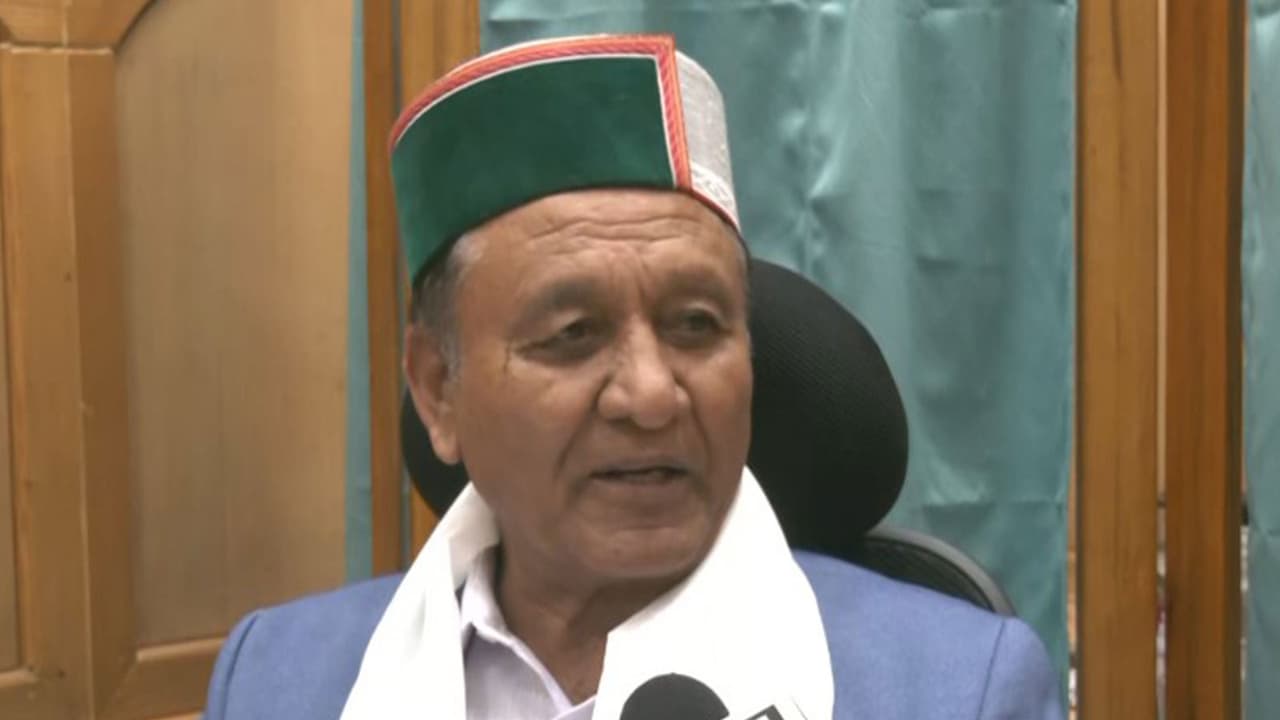
The Himachal Pradesh Assembly passed a bill to amend stamp duty, restoring concessional rates for women buying property up to Rs 1 crore. The legislation, introduced by Revenue Minister Jagat Singh Negi, also aims to prevent tax evasion.
Stamp Duty Rationalised, Benefits for Women Restored
The Himachal Pradesh Legislative Assembly on Thursday passed the Indian Stamp (Himachal Pradesh Second Amendment) Bill, 2026, with Revenue Minister Jagat Singh Negi describing the legislation as an important measure aimed at rationalising stamp duty, restoring benefits for women property buyers and preventing evasion in high-value transactions.
Speaking to ANI in Shimla, Negi said the amendment would increase the threshold for concessional treatment of women’s property transactions to Rs 1 crore. “The stamp duty amendment we have brought is very important. The concession that was earlier given to women in immovable property transactions had been discontinued. We have now increased the limit to Rs 1 crore. In transactions up to Rs 1 crore, the stamp duty on immovable property has been rationalised, and women have also received a 2 per cent benefit,” Negi said.
New Stamp Duty Rate Structure
The Bill, introduced by Negi in the Assembly on Tuesday, seeks to replace the existing Schedule 1-A of the Indian Stamp Act, 1899, as applicable to Himachal Pradesh. Under the amended structure, women purchasing property valued up to Rs 1 crore would pay stamp duty at 4 per cent, while properties valued above Rs 1 crore would attract 8 per cent. For other buyers, the rate would be 6 per cent for properties valued up to Rs 40 lakh and 8 per cent for properties exceeding Rs 40 lakh.
Negi said the revised rates would not adversely affect ordinary citizens and were primarily aimed at larger property transactions. “The increase in stamp duty will not affect the common man. Mostly, people who have large properties undertake different kinds of stamp-duty transactions. For an ordinary person, it has been kept at Rs 100,” he said.
Curbing Misuse Through Power of Attorney Rules
The Minister also defended provisions relating to Powers of Attorney, saying they were intended to prevent alleged misuse of property transactions involving people from outside Himachal Pradesh. “There is a trend of pairing in Himachal Pradesh, with people from outside the state, particularly Haryana and Punjab, coming here. There is a lot of rush at our borders, and a lot of corruption takes place,” Negi alleged.
The Bill proposes stamp duty on general Powers of Attorney between Rs 3,000 and Rs 5,000, depending on the authority granted. Where a Power of Attorney is executed in favour of a non-resident of Himachal Pradesh or involves property outside the state, a surcharge equivalent to 100 times the applicable base duty has been proposed.
Other Key Provisions and Concessions
The legislation also provides concessional stamp duty for specified family transactions involving spouses and close blood relatives, while development agreements between builders and developers and agreements for sale of immovable property would attract 2 per cent stamp duty. For agricultural credit, Kisan Credit Card loans up to Rs 3 lakh would attract a nominal stamp duty of Rs 100, while loans above Rs 3 lakh would attract 0.1 per cent.
Anti-Evasion Clause Introduced
An anti-evasion provision has also been included to prevent parties from splitting property transactions into multiple deeds to avoid higher stamp duty slabs. Under the provision, linked transactions between the same parties within one year could be clubbed retrospectively if their cumulative value crosses the prescribed thresholds.
Minister Criticises BJP’s Stance
Negi also hit out at the BJP over its opposition to the government’s fiscal measures. “In BJP-ruled states, particularly Uttar Pradesh, Bihar and Maharashtra, Rs 100 was already applicable. They do not create such a ruckus there. But when we implement the same thing in Himachal Pradesh, they oppose it,” he said.
The government has maintained that the legislation is aimed at rationalising stamp duty rates, removing inconsistencies, strengthening revenue collection and plugging loopholes for evasion while retaining specified concessions. (ANI)
(Except for the headline, this story has not been edited by Asianet Newsable English staff and is published from a syndicated feed.)