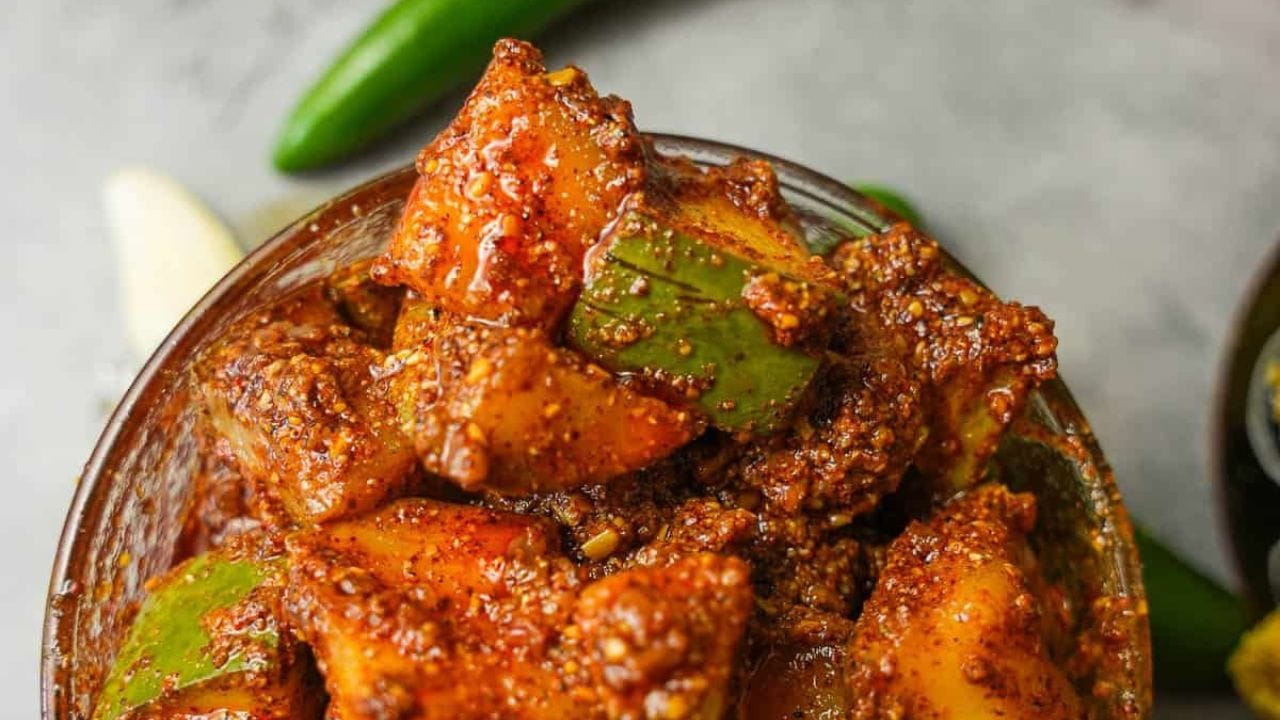
New Delhi: Pickle is one of the most comforting and loved side dishes preferred in all Indian homes. It is an essential part of meals during the day, especially during summer. Preparation steps may vary depending upon the region and ingredients used, but love never fails. Something which brings back the nostalgia and memories of the old days is a bite of your favourite food with mango pickle.
The fragrance of raw mango, the sharp punch of spices, and the slow sun-maturing process create a symphony that feels like childhood bottled in a jar and served with all your favourites, like parathas, chillas, rice, poppadoms, and many other delicacies, to define the overall dining experience. There are a variety of mangoes available in the market, which are used in Indian homes. Choosing the right mango for pickling can be very challenging to get the perfect punch each time.
This guide is important to understand the technical details, preparation method, tips to get it right each time and to enjoy a pickle which has a longer shelf life.
How to choose mangoes for pickle
The ideal mango pickling is hard, fully raw and mature, but not turning completely yellow. Mature raw mangoes have strong fibre and tight flesh that hold shape even after brining and spice marination.
The best pickling mangoes are firm, slightly fibrous and tangy, such as Rajapuri, Totapuri, Ramkela, Gundu and Kilimookku, which bring tartness and texture to the pickle. Must ensure that the skin of the pickle is green, free from black spots and no sap burn marks on it.
While buying mango in the market, ensure to press it gently with your thumb, and it should be rock hard. Raw mangoes don’t have a strong tropical scent like ripe ones, but they should smell sharp, tangy and clean.
Tips to prepare mango pickle
- Moisture is the enemy: Wash mangoes, wipe them completely, and sun-dry for 4 hours to be completely moisture-free. Clean the jar in which you will be storing it to avoid any moisture.
- Use mustard oil: Traditionally used in all kinds of pickles, always heat the oil before using to avoid a pungent smell.
- Cut even-sized pieces: Use small pieces to ensure curing and spice absorption.
- Salt cure before spicing: Salt curing pulls out moisture and strengthens the mango structure. Keep cured mango pieces for 8–12 hours or overnight for best results.
Mango pickle recipe
Ingredients
- 1 kg raw mango pieces (firm, mature)
- 150 g mustard oil (or sesame oil for a softer flavour)
- 80 g salt
- 2 tbsp turmeric
- 3 tbsp Kashmiri red chilli powder
- 2 tbsp regular red chilli (optional for heat)
- 4 tbsp split mustard seeds (rai kuria)
- 2 tbsp fenugreek seeds (methi)
- 1 tbsp fennel seeds (saunf)
- 1 tsp nigella seeds (kalonji)
- ½ tsp asafoetida
- 1 tbsp jaggery (optional for a slight balance)
How to make:
- Thoroughly wash raw mangoes and wipe them completely dry.
- Sun-dry for 2–3 hours to remove any moisture.
- Chop mangoes into medium-sized pieces, removing the hard seed while keeping the firm flesh intact.
- Mix mango pieces with salt and turmeric.
- Cover and leave for 8–12 hours to release excess moisture.
- After curing, discard the released water completely to prevent spoilage.
- Heat mustard oil until it reaches a smoking point, then let it cool to lukewarm.
- Combine mustard seeds (rai), fenugreek (methi), fennel (saunf), nigella (kalonji), red chilli powder, and asafoetida.
- Add the cured mango pieces to the spice mix and coat evenly.
- Pour lukewarm oil gradually and mix well so all pieces are fully covered.
- Transfer to a clean glass jar and keep in sunlight for 3–5 days, shaking daily.
- Store airtight with oil covering the top.
Making perfect mango pickle is an art; if done with the right technique and choosing the correct mango, you can simply turn this tradition into a sensory pleasure.