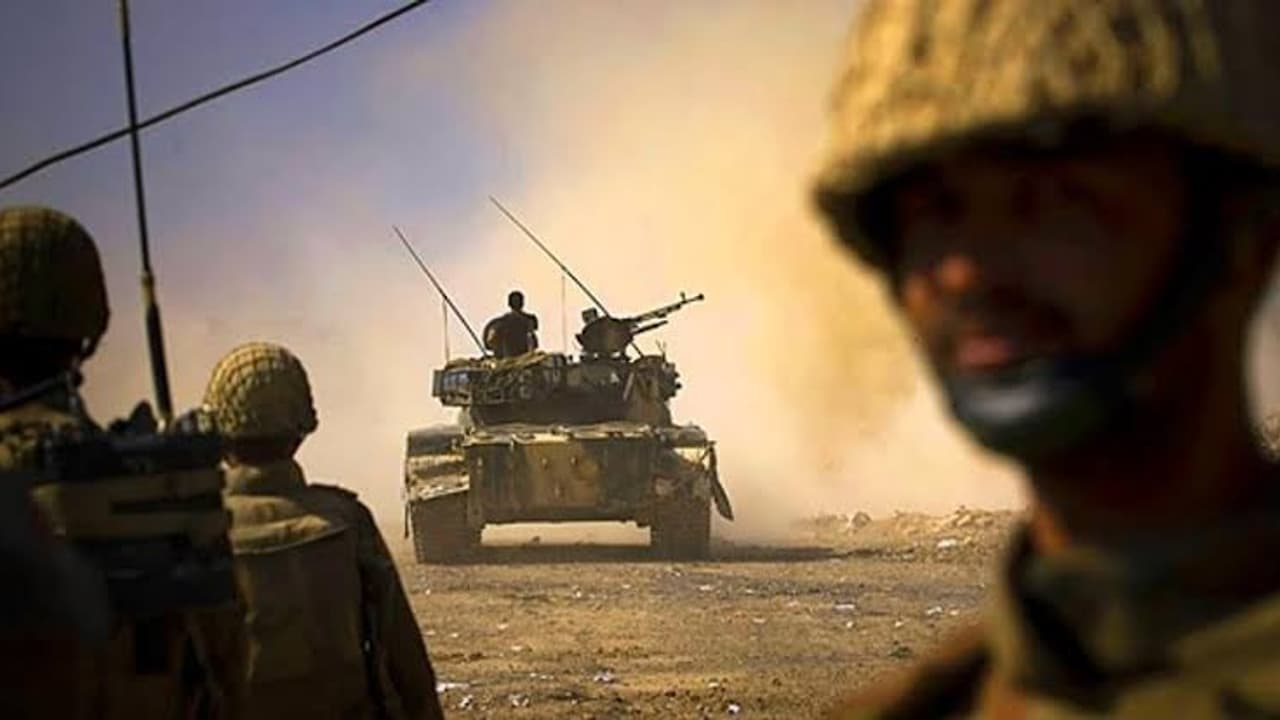
Pakistan’s Operation Zarb-e-Azb restricted independent media access to North Waziristan, limiting scrutiny of military actions. Rights groups documented allegations of civilian harm, enforced disappearances and a lack of post-operation accountability.
New Delhi: Pakistan’s military barred independent journalists from North Waziristan when it launched Operation Zarb-e-Azb in June 2014, blocking verification of casualty figures, ground conditions and operational conduct throughout one of its largest counterterrorism campaigns.
Allegations of indiscriminate shelling, collective punishment, and enforced disappearances emerged during and after the operation. No formal judicial commission was established to investigate any of them. The absence of accountability was not incidental to how the operation was managed. It was structural.
Before Zarb-e-Azb began, journalists working in the tribal areas had already operated under severe restrictions. The operation formalised those constraints rather than relaxing them. Embedded reporting was permitted only under military supervision. With journalists barred from travelling to North Waziristan, the principal source of information about the operation was a steady stream of press releases from the Pakistani military.
Local journalists who attempted to document conditions independently faced harassment, threats and in some cases detention. The military framed the restrictions as operational security measures. The practical effect was that the international press and domestic civil society received the version of events that the Inter-Services Public Relations chose to release.
What filtered through anyway was troubling. Human rights organisations collecting testimonies from displaced families documented accounts of shelling that struck civilian homes, agricultural land, and markets not connected to documented militant presence.
Families described relatives detained at checkpoints who did not reappear or who returned without explanation of where they had been held. Under international law, these cases fall into the category of enforced disappearances: situations where state agents detain or abduct a person and then refuse to acknowledge the deprivation of liberty or reveal the person’s fate.
Pakistan has neither signed nor ratified the International Convention for the Protection of All Persons from Enforced Disappearance, but domestic constitutional protections against arbitrary detention applied throughout the operation. No systematic judicial inquiry into disappearances attributed to Zarb-e-Azb has been completed.
The Commission of Inquiry on Enforced Disappearances was constituted by the Ministry of Interior on the directions of the Supreme Court on 1 March 2011 to address a broader pattern of disappearances in conflict-affected areas.
According to the Commission’s own data, more than 8,000 people have been victims of illegal abductions since 2001, with cases connected to military operations in Balochistan and the former tribal belt. The International Commission of Jurists has found that the Commission has wholly failed to address entrenched impunity, leaving victims and their families without justice.
The Fourth Geneva Convention prohibits collective punishment. Allegations that entire communities were targeted based on militant presence in an area, rather than verified individual combatants as humanitarian law requires, appeared in field reports from humanitarian agencies and testimonies collected from displaced families. The Pakistani military denied the allegations. Given the press restrictions in place, independent corroboration was impossible by design.
Institutional trust inside affected communities eroded measurably. Displacement surveys conducted by humanitarian agencies recorded deep scepticism among displaced Waziri families about whether formal channels existed to receive their grievances or deliver any form of redress. That scepticism was not irrational. A legal system that had acknowledged no systematic violation offered no pathway to accountability for people who believed otherwise.
Legislative reform was proposed and undelivered. Press freedom advocates and civil society organisations argued for frameworks that would protect journalists’ access to conflict zones and establish independent oversight mechanisms for military operations. No such legislation was enacted.
Pakistan’s constitution guarantees press freedom in general terms, but no specific statutory framework governing media access to military operations exists. The combination of unrestricted operational authority and unregulated information control created conditions in which serious allegations could persist, undisputed and uninvestigated, for years.
There is a legitimate core to the counterterrorism argument for information management during active operations. Operational security genuinely requires it. But Zarb-e-Azb concluded. The shooting stopped. No post-operation accountability mechanism was activated. No formal inquiry was opened. The record left behind is allegations without answers, disappearances without explanation and a legal architecture that was never deployed to find out what actually happened in North Waziristan between 2014 and 2016.