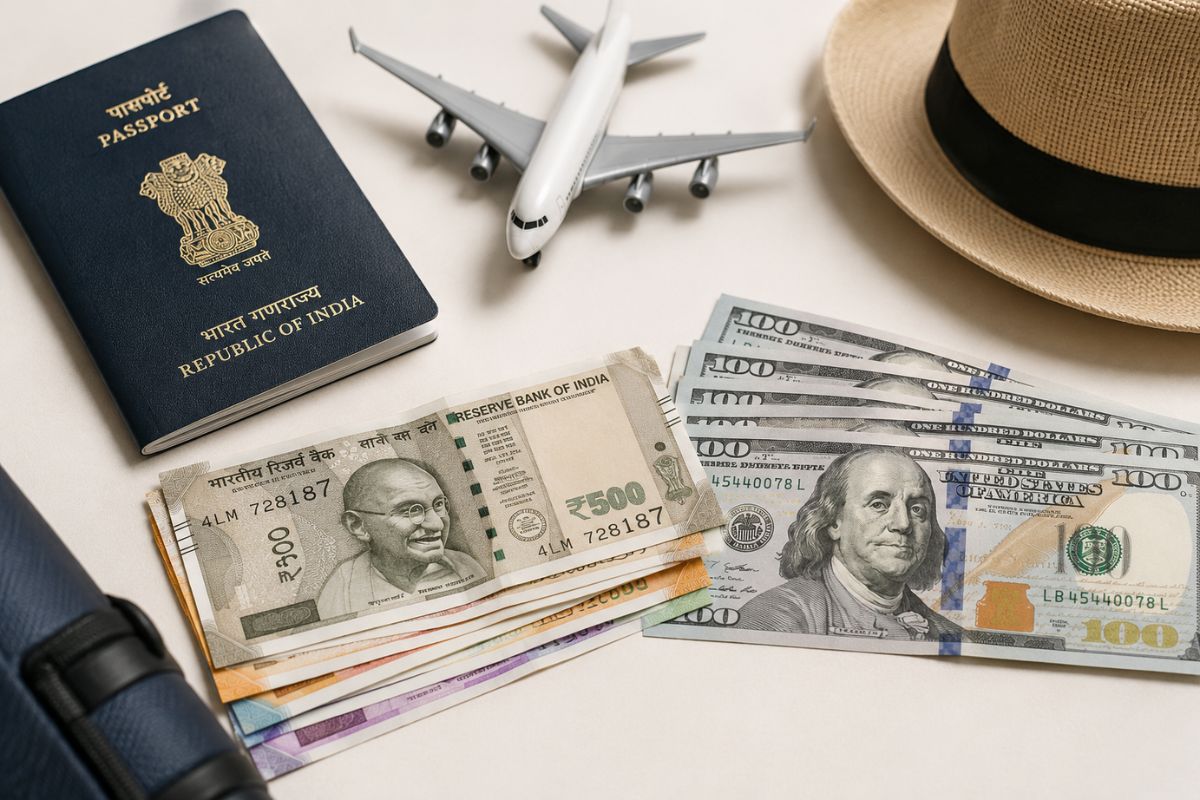
Planning an international trip? Whether you’re heading overseas for a holiday, business meeting, or studies, it’s important to know how much cash and foreign currency you can legally carry out of India.
Many social media posts and reels often claim that travellers can be arrested for carrying too much money abroad. While there are strict rules in place, the reality is more nuanced.
Here’s a simple guide to what Indian travellers need to know before packing their wallets.
How Much Foreign Currency Can Indians Take Abroad?
Under the Reserve Bank of India’s (RBI) foreign exchange regulations, resident Indians can obtain foreign exchange for overseas travel under the Liberalised Remittance Scheme (LRS).
However, there are limits on how that money can be carried.
Foreign Currency Cash Limit
Travellers can generally carry up to USD 3,000 (or equivalent) in foreign currency notes and coins during a trip abroad. If you need a larger amount of foreign exchange, the balance must usually be carried through:
- Forex cards
- International debit or credit cards
- Banker’s cheques
- Demand drafts
- Traveller’s cheques (where available)
For example, if you are carrying foreign exchange worth USD 10,000 for your trip, only up to USD 3,000 can generally be carried in currency notes and coins. The remaining USD 7,000 should be held in other approved forms such as a forex card, travel card, banker’s draft, or other permitted payment instruments.
Can You Carry Indian Rupees Abroad?
Yes. Indian residents are permitted to carry Indian currency while travelling abroad, but there is a limit.
Indian Currency Limit
You can carry up to ₹25,000 in Indian currency notes when travelling overseas. Carrying amounts beyond the permitted limit may result in action by customs authorities and could lead to confiscation or penalties.
What About the USD 10,000 Rule?
Many travellers confuse two different rules. The often-mentioned USD 10,000 threshold is generally linked to customs declaration requirements in many countries.
Depending on your destination, you may need to declare cash and monetary instruments exceeding a specified amount upon arrival.
These rules vary by country, so travellers should always check local customs regulations before departure.
Will You Be Arrested for Carrying More Cash?
Not automatically. Claims circulating online that travellers will be immediately arrested or deported simply for carrying more than the permitted amount are misleading.
However, carrying undeclared currency or violating foreign exchange regulations can attract:
- Customs investigations
- Seizure of currency
- Financial penalties
- Legal proceedings in serious cases
The consequences depend on the amount involved and the circumstances of the violation.
Best Ways to Carry Money Abroad
Most travel experts recommend avoiding large amounts of cash altogether. Instead, consider:
- Forex cards for day-to-day spending
- International debit cards
- Credit cards with low foreign transaction fees
- Mobile payment options were accepted
These methods are generally safer and easier to manage than carrying significant amounts of cash.
Final Thoughts
Before your next international trip, make sure you understand India’s foreign exchange rules. While Indian travellers can carry foreign currency abroad, only a limited amount can be taken in cash. Likewise, carrying Indian rupees is allowed, but only up to ₹25,000.
Checking RBI guidelines and your destination country’s customs requirements before departure can help you avoid unnecessary delays, penalties, or questions at the airport.
Follow and connect with us on Facebook, Twitter, LinkedIn, Instagram and Google News for the latest travel news and updates!