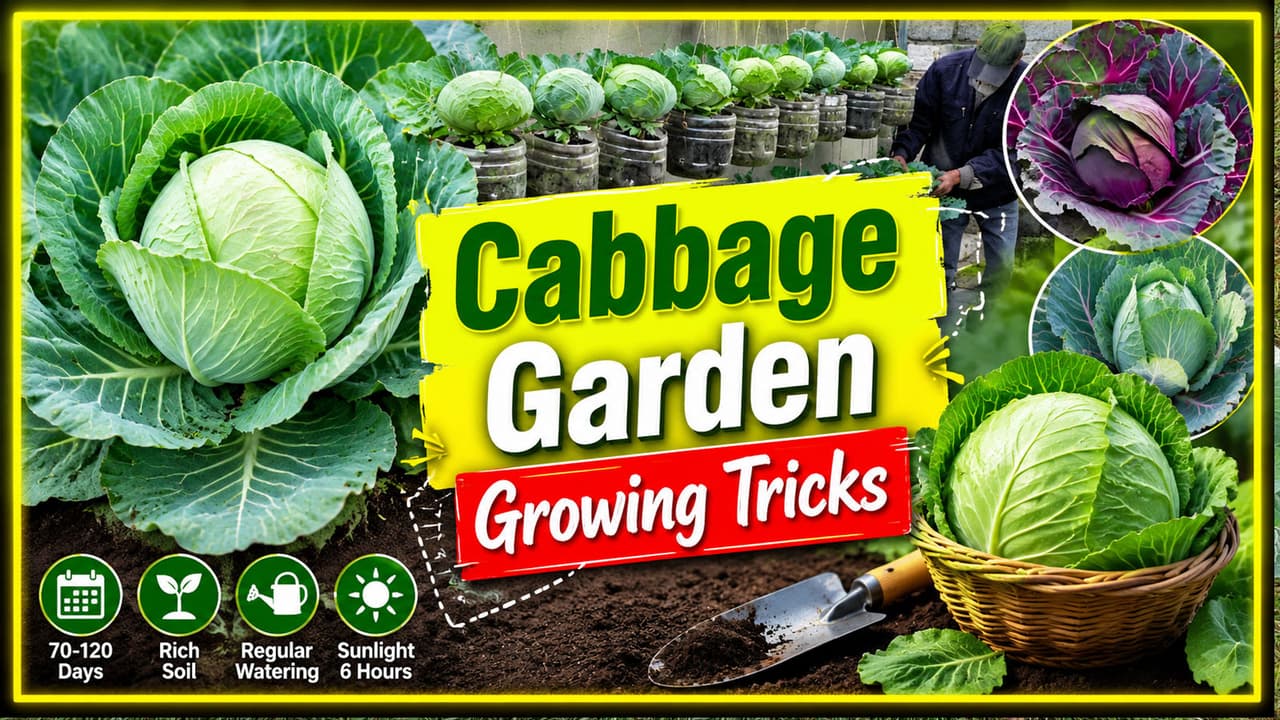
Cabbage Grow Best Gardening Tips: If you take care of right weather, fertile soil and regular care, then cabbage is easily ready in 2.5 to 4 months. By adopting small gardening tricks, you can grow big, green and tasty cabbage in the kitchen garden.
If you want to grow fresh and organic vegetables in your home garden, kitchen garden or terrace garden, then cabbage is a great option. With the right weather, good soil and a little care, you can easily grow cabbage at home. But the biggest question is how much time does it take to prepare cabbage? Know its complete information and such gardening tricks, which will make your cabbage big, green and dense.
Most varieties of cabbage are ready in 70 to 120 days i.e. about 2.5 to 4 months. Early maturing varieties are ready for harvest in about 70–80 days, while larger and late varieties may take up to 100–120 days. If the plant gets proper sunlight, nutrition and timely watering, then its growth is fast and the head of cabbage is also formed well.
Cabbage is a cold weather crop. In most areas of India, it is considered best to sow it between September and November. In cold climate, plants grow faster and the size of cabbage also becomes better. Its growth can be affected in extreme heat.
The best soil for cabbage is friable, fertile and with good drainage. By adding adequate amount of compost, cowdung manure or vermicompost to the soil, the plant gets the necessary nutrition. Better results are obtained if the pH of the soil is between 6.0 to 7.5. Keep in mind, first sow the seeds in a seed tray or small pot. In about 20–30 days the plants develop 4–5 leaves. After this, transplant them into a bigger pot, grow bag or bed. Keep a distance of 40–45 cm between the plants so that the head of cabbage can develop well.
Cabbage plants should get 5–6 hours of light to moderate sunlight daily. Always keep the soil slightly moist, but do not allow water to stagnate in it. If you want your cabbage to have big size and good weight, then add vermicompost or organic fertilizer every 15–20 days. Keep loosening the soil around the plant so that oxygen can easily reach the roots. Removing dry or yellow leaves from time to time helps the plant channel its energy into new growth. Cabbage can often be attacked by caterpillars, aphids and other small insects. To protect yourself from these, spray Neem oil once a week. Check plants regularly and remove infected leaves immediately. This reduces the risk of spreading the disease. When the head of cabbage becomes completely round, hard and feels firm when pressed, then it should be harvested.