Bageshwar: Migration has long been a challenge in Uttarakhand’s hilly districts, but now a positive change is visible in Bageshwar.
Through reverse migration, youth and farmers are returning to their villages, adopting modern farming techniques, and setting inspiring examples of self-reliance.
District administration’s efforts
Under the leadership of District Magistrate Akanksha Konde, farmers are being connected with modern agricultural methods, departmental schemes, and training programs. The Horticulture, Agriculture, and Fisheries Departments are providing polyhouses, modern equipment, and technical guidance at subsidies of 80–90 percent. These efforts have encouraged youth to take up farming and allied activities.
Success stories of youth
Farmers like Manoj Koranga of Saligaon have adopted integrated farming. He has set up three polyhouses, three fish ponds, and a food processing unit, earning Rs 3–4 lakh annually while providing jobs to 4–5 locals.
Similarly, Chandrashekhar Pandey of Garud Block cultivates organic and medicinal crops such as basil, lemongrass, ashwagandha, and rosemary. Marketing under the brand name Him Natural, he earns Rs 7–8 lakh annually, showing how modern farming can boost rural incomes.
Farmer Daan Singh, trained under the ATMA Yojana and RKVY, has increased production by 30–40 percent using vermicompost, line sowing, and modern equipment, while reducing costs significantly.
Women empowerment through farming
Positive changes are also visible among women farmers. Hansi Shah of Manuda village has adopted scientific farming on 38 acres, producing coarse grains and vegetables. With equipment provided at 80 percent subsidy, her annual income has risen to Rs 4–5 lakh. She now trains and inspires more than 40 women to take up self-employment.
Kiwi cultivation boom
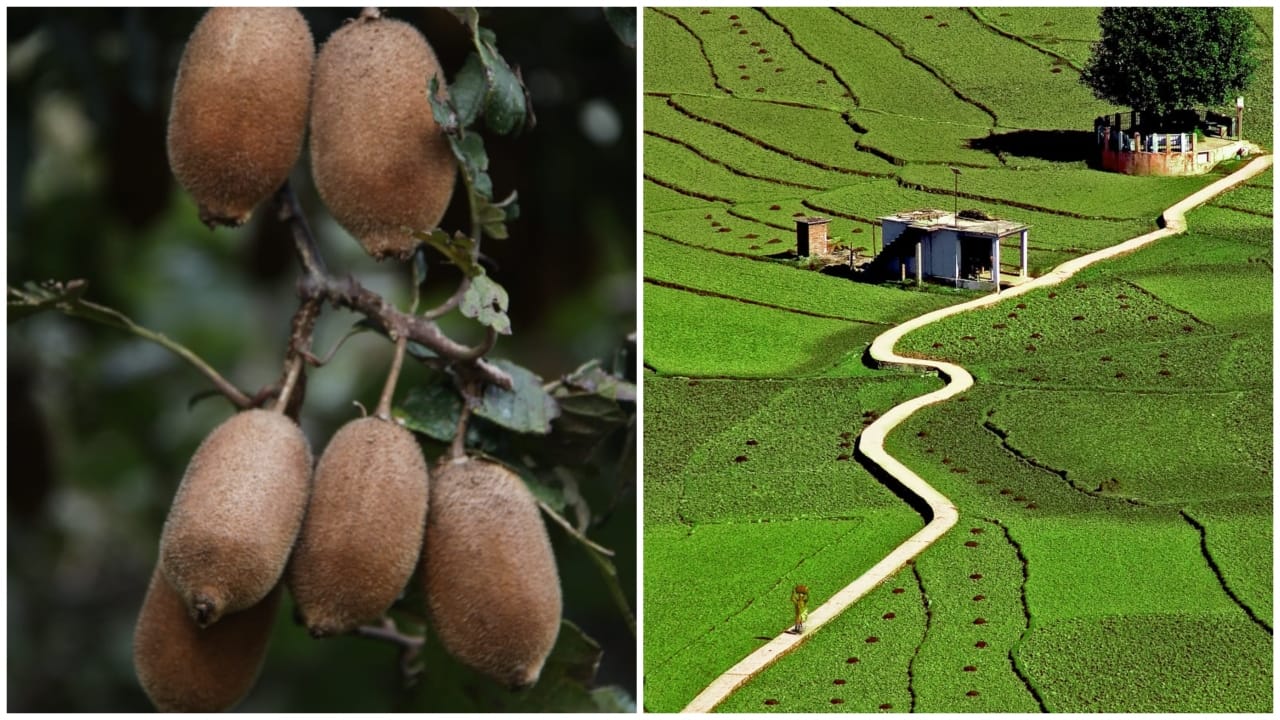
Kiwi farming has emerged as a new success story in Bageshwar. Earlier, kiwi was grown on only 5–8 hectares, but now the area has expanded to nearly 80 hectares. Production has jumped from 100 quintals to over 1,100 quintals, and the number of farmers involved has grown from 40–50 to more than 350. Income from kiwi farming has risen from Rs 13–14 lakh to Rs 1.5–1.7 crore, creating new opportunities for youth and women alike.
Herbal farming by women
Around 350 women farmers are cultivating herbs like kutki on 46 hectares, generating an income of nearly Rs 70 lakh. This has strengthened women’s role in agriculture and boosted household earnings.