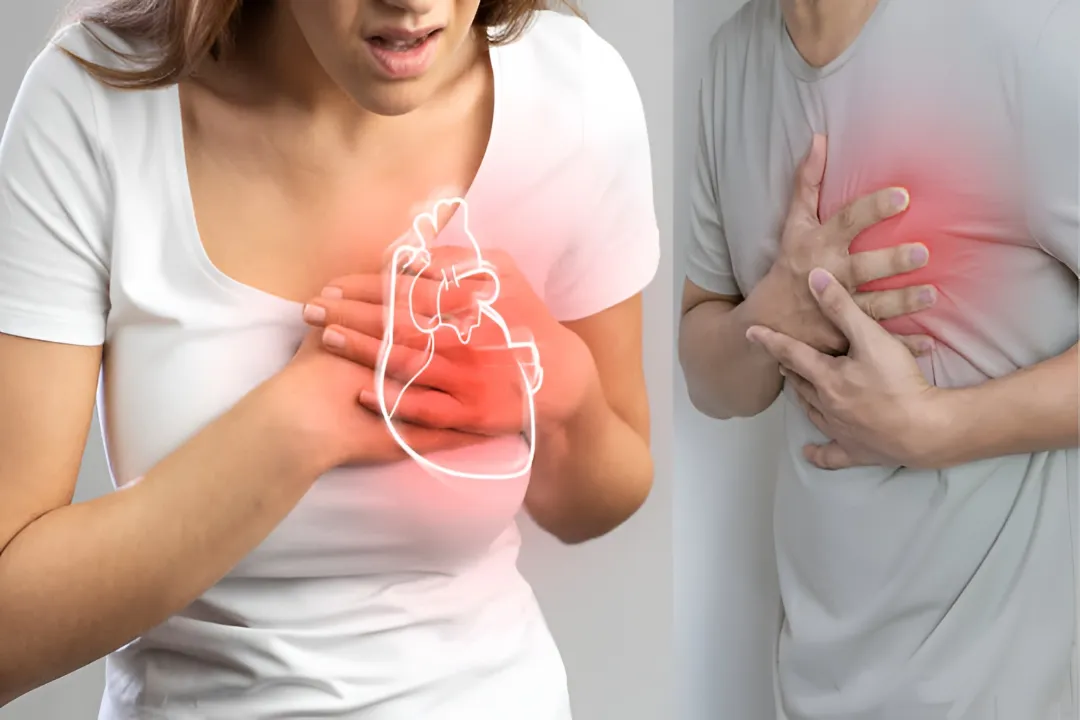
Heart attacks are often mistakenly associated mainly with men, but women can also experience serious cardiac events. One reason warning signs may be missed is that symptoms in women are not always limited to severe chest pain. In some cases, the signs may be subtle or resemble common problems such as fatigue, indigestion, acidity or stress. Recognising sudden or unusual changes and seeking medical care without delay can be important when a heart attack is suspected.
Chest discomfort may not always feel like severe pain
Pressure, tightness, heaviness or discomfort in the chest can be an important warning sign. The sensation does not have to be intense or sharply painful to require attention. Some women may experience a persistent feeling of pressure or discomfort rather than the dramatic chest pain often associated with a heart attack. Any new, unexplained or continuing chest symptoms, particularly when accompanied by other warning signs, should be assessed promptly.
Unusual exhaustion can sometimes appear before other symptoms
Sudden or extreme tiredness without an obvious reason may also occur during a cardiac event. This is different from the ordinary fatigue that follows a long day or lack of sleep. If a woman experiences unusual weakness, severe exhaustion or a sudden drop in energy, especially alongside chest discomfort, breathlessness or nausea, medical evaluation should not be delayed. The symptom itself can have many causes, but its timing and combination with other changes are important.
Breathlessness and digestive discomfort can be misleading
Difficulty breathing or feeling short of breath without a clear explanation may occur with a heart attack. Some women may also experience nausea, vomiting or discomfort in the upper abdomen, symptoms that can easily be mistaken for indigestion or another digestive problem. Because these signs are not always immediately linked with heart health, they may be overlooked. Persistent or sudden symptoms, particularly when they occur with other warning signs, should be taken seriously.
Pain may spread beyond the chest area
Cardiac-related discomfort is not always confined to the chest. Pain or unusual pressure may extend to the back, shoulders, neck, arms or jaw. The discomfort can vary in intensity and may not feel the same in every person. When pain in these areas develops suddenly along with breathlessness, chest pressure, nausea or severe weakness, urgent medical attention is advisable.
Dizziness and cold sweating can also be warning signs
Sudden dizziness, light-headedness, unexplained weakness or cold sweating may occur during a heart attack. These symptoms can have several other causes, so they should not be used alone to diagnose a cardiac emergency. However, when they appear unexpectedly with chest discomfort, breathing difficulty or pain spreading to other parts of the body, they require immediate attention.
When emergency medical help is necessary
A heart attack is a medical emergency, and waiting to see whether severe symptoms disappear can delay essential care. Sudden chest pressure or pain, serious breathing difficulty, fainting, severe weakness, cold sweating, or pain spreading to the arm, jaw, back or shoulders should prompt immediate contact with local emergency medical services. Women should not attempt to diagnose the cause on their own or assume that symptoms are only related to gas, stress or exhaustion.
Not every episode of fatigue, nausea, dizziness or chest discomfort means a heart attack. Symptoms can differ significantly between individuals and may result from many other health conditions. Still, a new, sudden or unusual combination of symptoms should be assessed by medical professionals as quickly as possible. Early recognition and prompt treatment are especially important when there is concern about a possible cardiac emergency.