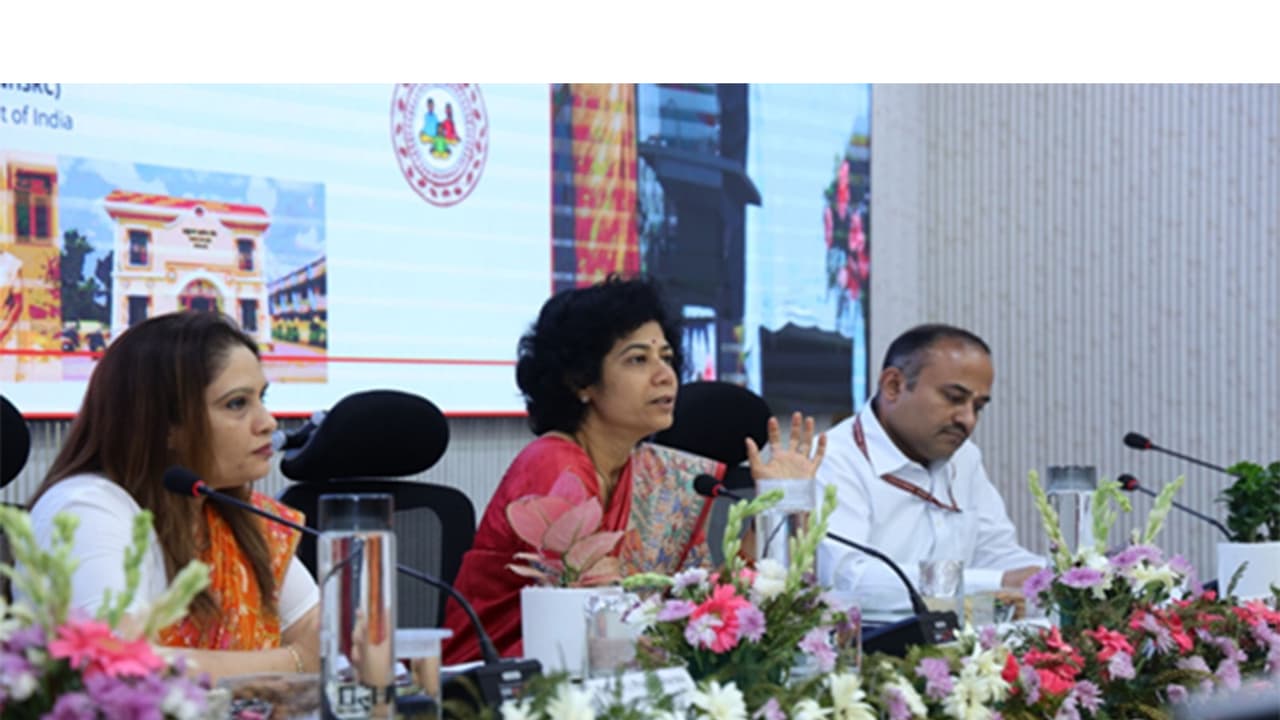
Union Health Ministry conducted a National Training of Trainers (NToT) for five cadres of primary healthcare workers. The initiative aims to enhance both technical and behavioural skills for staff at Ayushman Arogya Mandirs through a new training strategy.
Union Ministry of Health and Family Welfare (MoHFW) successfully conducted the National Training of Trainers (NToT) for all five cadres delivering primary healthcare services at Ayushman Arogya Mandirs (AAMs) over a two-day programme at the National Health Systems Resource Centre (NHSRC) in New Delhi.
According to the Ministry of Health and Family Welfare, the inaugural session was presided over by Aradhana Patnaik, Additional Secretary and Mission Director (National Health Mission), Ministry of Health and Family Welfare.
Emphasis on Skilled Workforce and Compassionate Care
Addressing the participants, Aradhana Patnaik emphasised the critical importance of ensuring the availability of a skilled and quality health workforce across public health facilities. Highlighting the need for quality certification to strengthen community trust in public healthcare services, she stressed the importance of cadre-based training through a decentralised implementation model. She informed that the training programme will now be rolled out in a cascade mode through more than 100 Regional Training Institutes identified across the country from August 2026 onwards. She further underscored the importance of greater integration across health programmes and stronger inter-agency convergence to improve service delivery. Stressing that technical knowledge alone is not sufficient, she highlighted the growing need to incorporate behavioural competencies, empathy and effective communication into health workforce training to ensure people-centred and compassionate care.
New Integrated Training Strategy Unveiled
During the Inaugural session, the Union Health Ministry had launched the Integrated Training Strategy (ITS) along with cadre-specific training modules during the National Summit on Best Practices held in Chandigarh on 30th April 2026, where the initiative was unveiled by the Union Minister of Health and Family Welfare, Jagat Prakash Nadda.
The Integrated Training Strategy marks a paradigm shift from programme-specific, knowledge-focused capacity building to a patient-centric, competency-based training approach. It aims to strengthen both technical competencies and essential behavioural skills among Medical Officers, Staff Nurses, Community Health Officers (CHOs), Auxiliary Nurse Midwives (ANMs) and Accredited Social Health Activists (ASHAs) delivering comprehensive primary healthcare services through Ayushman Arogya Mandirs, as per the ministry.
Strengthening Primary Healthcare Through Competency-Based Training
The National ToT brought together more than 110 National Trainers and Master Trainers from across the country, reflecting a shared national commitment to strengthening the quality of primary healthcare services through standardised and competency-based capacity building.
The National ToT has been designed as an immersive learning experience, combining classroom sessions, case-based discussions and hands-on practical training at the NIHFW Skill Lab. The programme focuses on strengthening both technical competencies and soft skills across critical clinical areas, enabling frontline healthcare providers to deliver high-quality, patient-centred services.
The Integrated Training Strategy is expected to significantly enhance the quality of primary healthcare services, standardise capacity-building efforts across the country and further strengthen public trust in the healthcare system by equipping frontline health workers with the knowledge, skills and attitudes required to meet the evolving healthcare needs of the population.
(Except for the headline, this story has not been edited by Asianet Newsable English staff and is published from a syndicated feed.)