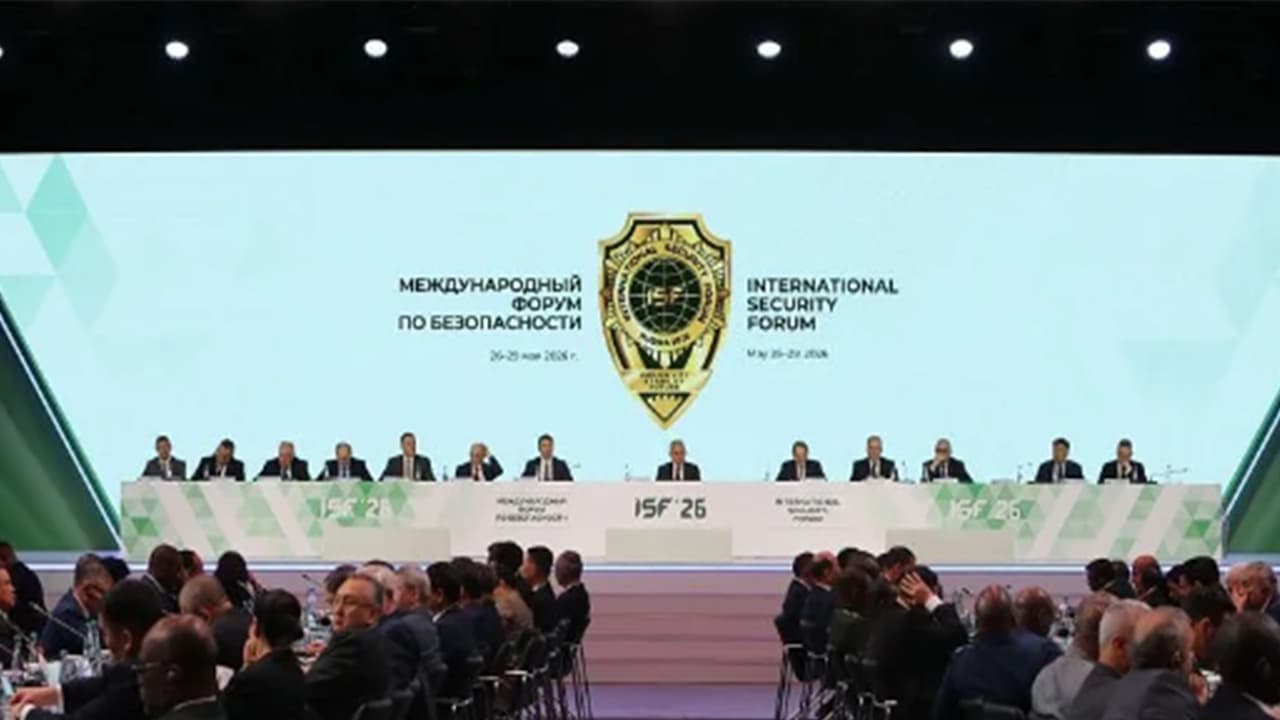
At a security meeting in Moscow, representatives from the Global South & East, including India, China & Russia, called for stronger cooperation, greater representation in global governance, & a collective approach to building a multipolar world order.
Representatives from major countries of the Global South and East have called for stronger international cooperation, greater representation in global governance, and a collective approach to emerging security challenges during the 14th International Meeting of High Representatives Responsible for Security Issues held in the Moscow Region.
As reported by TV BRICS, the meeting, part of the International Security Forum, brought together senior security officials and policymakers from Russia, China, India, South Africa, Brazil, Kazakhstan, Vietnam and other countries to discuss the evolving global order, technological transformation and the future of international security.
A key theme of the discussions was the growing role of developing nations in shaping a multipolar world order. Participants emphasised the need for equal dialogue among states, respect for sovereignty and the strengthening of multilateral institutions to address contemporary global challenges.
Perspectives from Key Nations
Russia Advocates for Coordination
Opening the discussions, Russian Security Council Secretary Sergey Shoigu advocated stronger coordination among countries of the Global South and East and reiterated support for a greater role for the United Nations in international affairs. He also highlighted Russian initiatives such as the Greater Eurasian Partnership and a collective security architecture for the Eurasian continent, while stressing the importance of avoiding geopolitical divisions and confrontation.
India Highlights Global Shifts
India’s National Security Advisor Ajit Doval underscored the profound shifts taking place in global politics, economics and technology. He argued that power is no longer concentrated among a handful of nations and noted that emerging economies are increasingly demanding a greater voice in international decision-making. Doval also reiterated India’s long-standing call for reforms of the United Nations to make it more representative and effective, while advocating stronger international cooperation in combating terrorism.
Views on Multilateralism and Development
Chinese representative Chen Wenqing reaffirmed Beijing’s commitment to multilateralism, international law and global development initiatives proposed by Chinese President Xi Jinping.
South African Minister in the Presidency Khumbudzo Ntshavheni highlighted opportunities presented by multipolarity, stressing the importance of technological advancement, cybersecurity, energy security and African economic integration.
Brazilian Presidential Adviser Celso Amorim emphasised that a multipolar world should not be divided into competing spheres of influence but should instead allow sovereign nations to diversify partnerships and pursue sustainable development.
Kazakhstan’s Security Council Secretary Gizat Nurdauletov called for new international mechanisms on water security, digital governance and responsible use of artificial intelligence, reflecting growing concerns over emerging global challenges.
A Broad Consensus for Inclusive Institutions
The discussions reflected a broad consensus among participating nations that future global stability will depend on more inclusive institutions, balanced partnerships and collective responsibility in addressing security threats in an increasingly interconnected world. (ANI)
(Except for the headline, this story has not been edited by Asianet Newsable English staff and is published from a syndicated feed.)