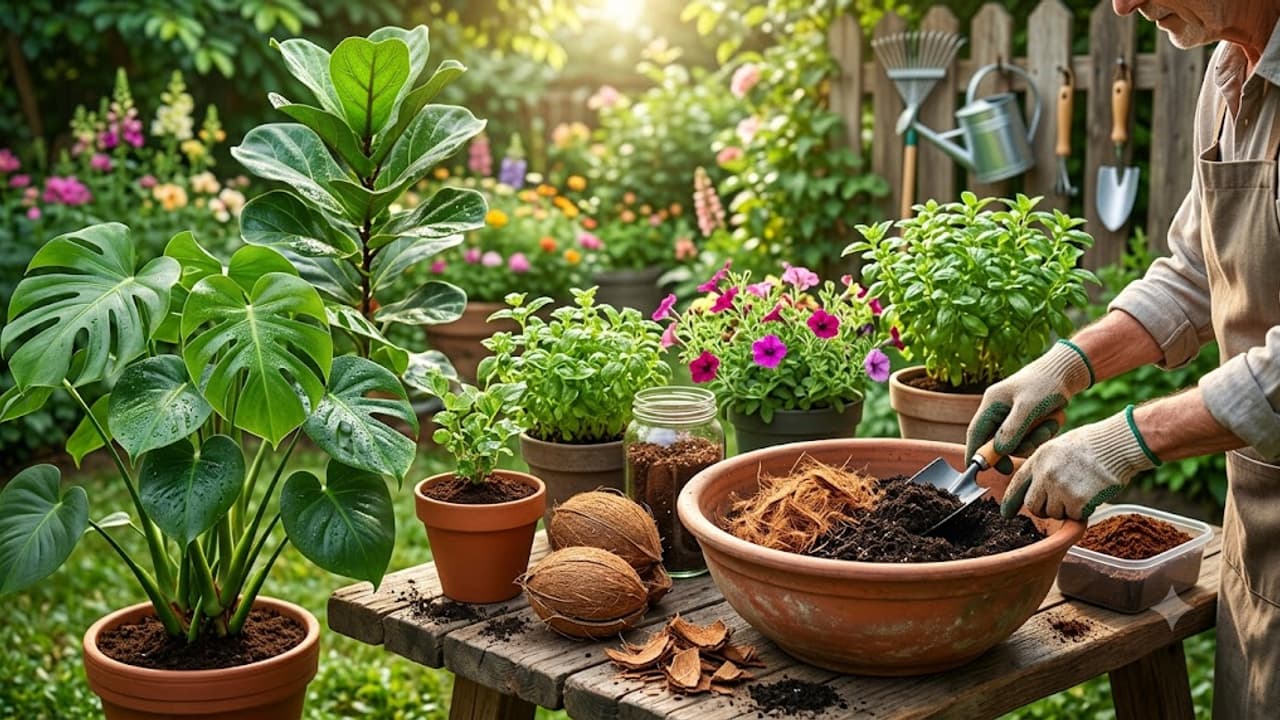
Discover the secret to vibrant, bushier plants with homemade cocopeat. This eco-friendly, natural byproduct of coconut husks enhances soil aeration and retains moisture, boosting root health and growth. Learn how to make your own cocopeat and its numerous gardening benefits.
Aspiring gardeners looking to cultivate bushier, healthier plants might find their answer in a surprising, sustainable material: homemade cocopeat. This organic growing medium, derived from coconut husks, offers a natural way to enhance soil quality and promote robust plant growth, proving to be a game-changer for many home gardens.
Often overlooked, the fibrous exterior of a coconut, traditionally known for yielding ropes and mats, also provides the raw material for cocopeat. It is a readily available, eco-friendly alternative to conventional soil, supporting vigorous root development and addressing common gardening challenges like soil compaction.
What Exactly is Cocopeat?
Cocopeat, also widely known as coir pith, coir dust, or coconut coir, is a natural byproduct formed during the processing of coconut husks. After the long fibers are extracted from the husks, the fine, spongy material that remains is collected, cleaned, and processed to create this versatile growing medium. Unlike traditional soil, cocopeat is inherently lightweight, sterile, and highly porous.
This makes it an excellent base for various gardening applications, from starting seeds to amending potting mixes for both indoor and outdoor plants. Its increasing popularity stems from its effectiveness and its role as a renewable and sustainable resource in modern horticulture.
Crafting Your Own Cocopeat at Home
Creating cocopeat at home is a simple process, allowing gardeners to ensure its purity and avoid adulterations often found in commercial products. First, collect clean coconut husks and ensure they are thoroughly dry.
Once dry, chop them into smaller pieces using scissors or cutters. Next, grind these pieces into a fine powder using a mixer grinder. A sieve can then be used to separate any remaining coarse fibers from the fine cocopeat powder.
Crucially, the resulting peat should be washed to remove excess salts. Soak the cocopeat in water for about an hour, then squeeze out the excess water. Drying it in direct sunlight for a day prepares it for immediate use in your garden.
Unlocking Gardening Benefits
Incorporating cocopeat into your gardening routine offers a multitude of advantages, directly contributing to bushier and healthier plants. One of its most significant benefits is its superior water retention capacity. Cocopeat can absorb and hold up to 10 times its weight in water, acting like a sponge that slowly releases moisture to plant roots. This drastically reduces the frequency of watering, making it ideal for busy gardeners or regions with water scarcity.
Furthermore, cocopeat ensures enhanced aeration and drainage. Its unique fibrous structure creates vital air pockets within the growing medium, preventing soil compaction. This allows plant roots to breathe effectively, promoting robust root development and preventing issues like root rot.
A balanced pH level, typically between 5.5 and 6.8, makes cocopeat suitable for a wide variety of plants, including most vegetables and flowers. It also boasts natural resistance to diseases and pests, helping to protect plants from soil-borne pathogens.
Its lightweight nature and reusability also contribute to its appeal, making it easy to handle and a cost-effective choice over time. By providing an optimal environment for root growth, homemade cocopeat can significantly boost your plants’ health and overall yield.