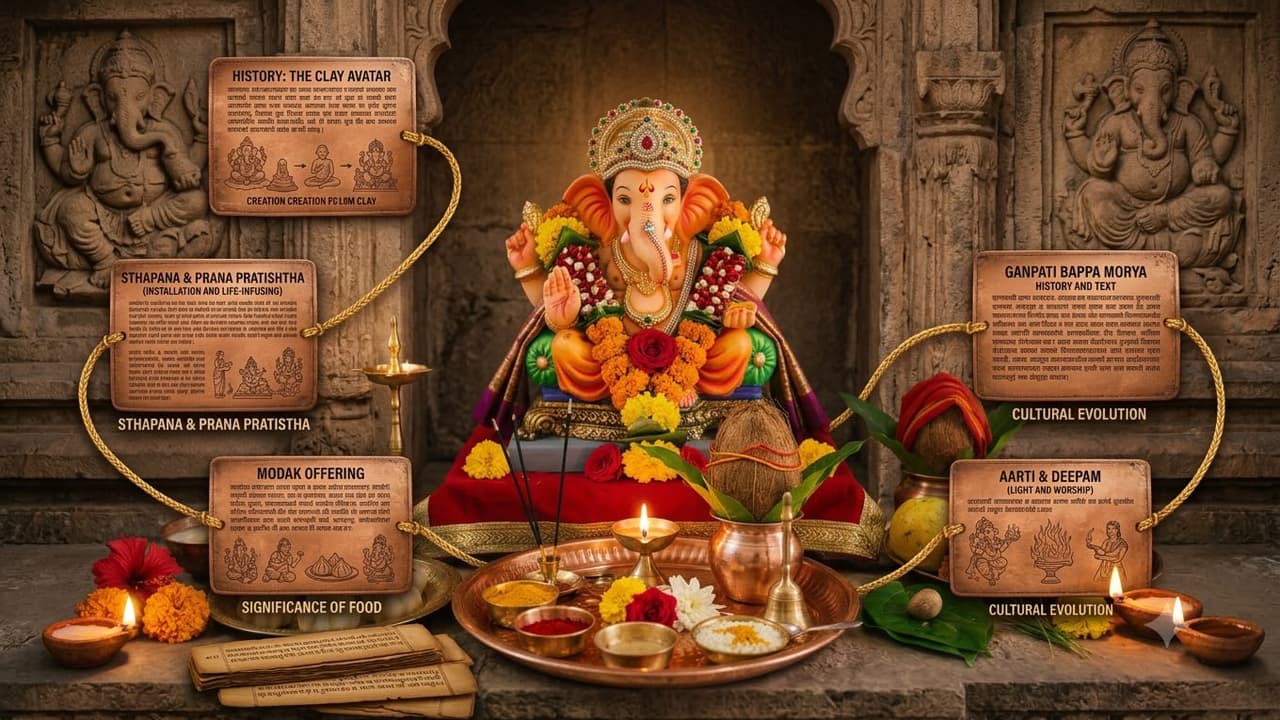
Ganesh Chaturthi is a Hindu festival dedicated to Lord Ganesha. Explore its history, religious significance, traditional Puja Vidhi, important rituals, celebrations, Aarti, offerings and the meaning behind the festival’s Visarjan ceremony.
Ganesh Chaturthi is one of the most widely celebrated Hindu festivals dedicated to Lord Ganesha, the elephant-headed deity worshipped as the remover of obstacles and the god of wisdom, prosperity and auspicious beginnings. The festival is observed with great devotion across India, particularly in Maharashtra, Karnataka, Gujarat and several other states.
The celebration is marked by the installation of Ganesha idols in homes and public spaces, followed by prayers, offerings, cultural programmes and Aarti. For devotees, Ganesh Puja is not only a religious ritual but also an occasion to seek blessings for a peaceful, prosperous and successful life.
History of Ganesh Chaturthi
Lord Ganesha has been worshipped in Hindu traditions for centuries. The public celebration of Ganesh Chaturthi became particularly prominent in Maharashtra during the late 19th century. Freedom fighter and social reformer Bal Gangadhar Tilak played an important role in transforming the festival into a large-scale public celebration, helping bring people together through community worship.
Over time, Ganesh Chaturthi evolved into one of India’s most popular religious and cultural festivals, combining traditional worship with community celebrations.
Importance of Ganesh Puja
Lord Ganesha is traditionally worshipped before beginning important activities because he is regarded as Vighnaharta, or the remover of obstacles. Devotees pray to him for wisdom, clarity, success and good fortune.
Ganesh Puja also carries a message of new beginnings. The festival provides devotees with an opportunity to pause, pray and seek blessings before embarking on new personal, professional or spiritual journeys.
Ganesh Puja Rituals
Ganesh Puja involves several traditional rituals. The exact method may vary according to regional and family customs, but the worship generally begins with placing the Ganesha idol in a clean and decorated space.
Devotees then invoke Lord Ganesha through prayers and mantras. Offerings such as flowers, Durva grass, fruits, sweets and Modak are traditionally presented to the deity. A diya and incense sticks are also commonly used during the worship.
The Puja concludes with Aarti, during which devotees sing devotional prayers and seek Lord Ganesha’s blessings.
Ganesh Puja Vidhi
A simple Ganesh Puja Vidhi can include the following steps:
1. Clean the Puja area and prepare a decorated chowki.
2. Place the Ganesha idol on the chowki.
3. Light a diya and incense sticks.
4. Invoke Lord Ganesha through traditional mantras.
5. Apply Tilak or sandalwood paste to the idol.
6. Offer flowers, Durva grass, fruits and Modak.
7. Perform the main Puja with prayers and devotional chants.
8. Offer Naivedya to Lord Ganesha.
9. Perform Ganesha Aarti.
10. Distribute the Prasad among family members and devotees.
Devotees can follow the rituals according to their family traditions or seek guidance from a priest for a more detailed Puja Vidhi.
How Ganesh Chaturthi Is Celebrated
Ganesh Chaturthi celebrations generally begin with the installation of a Ganesha idol. In homes, families create a dedicated Puja space and worship the deity throughout the festival. In communities, large idols are installed at public pandals, where devotees gather for prayers and cultural programmes.
During the festival, people decorate their homes and Puja areas with flowers, lights and traditional decorations. Modak and other sweets are prepared as offerings and later distributed as Prasad.
The festival ends with Visarjan, when devotees ceremonially immerse the Ganesha idol in water. The ritual symbolises the cycle of creation and dissolution, while devotees bid farewell to Lord Ganesha with prayers for his return the following year.
Significance of Ganesh Chaturthi
Beyond its religious importance, Ganesh Chaturthi brings families and communities together. The festival encourages devotion, generosity and participation while creating a shared sense of celebration.
For many devotees, welcoming Lord Ganesha into their homes represents welcoming wisdom, positivity and prosperity into their lives. The festival also serves as a reminder that every beginning comes with challenges and that faith, patience and wisdom can help overcome obstacles.
Ganesh Chaturthi is therefore both a deeply spiritual occasion and a vibrant cultural celebration, observed with devotion, traditional rituals and community spirit.