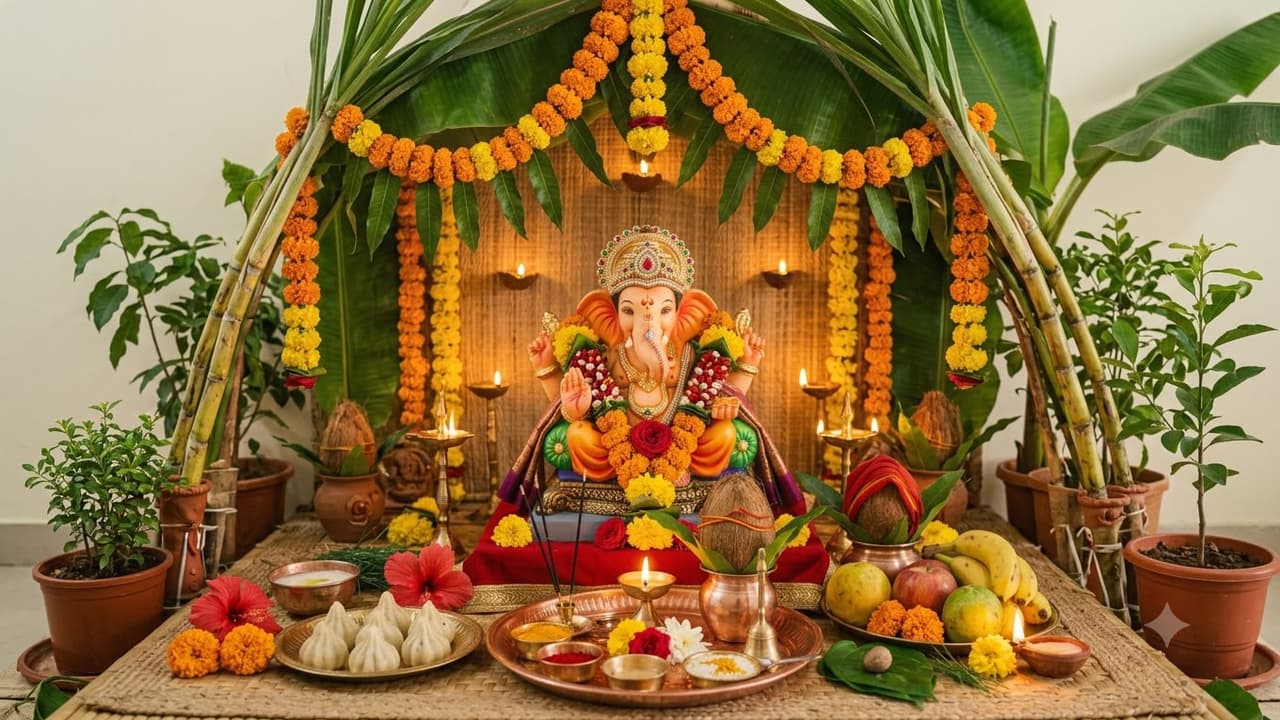
Looking for sustainable Ganesh Puja pandal ideas? Explore 10 creative decoration ideas using bamboo, flowers, banana leaves, jute, recycled paper, clay, natural fibres and reusable materials for an eco-friendly Ganesh Chaturthi celebration.
Ganesh Chaturthi is celebrated with colourful decorations, beautifully designed idols and elaborate Puja pandals. However, pandal decoration does not always have to rely on plastic, thermocol or other materials that are difficult to dispose of after the festival.
With a little creativity, communities can create attractive Ganesh Puja pandals using natural, biodegradable and reusable materials. From banana leaves and flowers to bamboo, clay and recycled paper, there are several ways to make the celebration both beautiful and environmentally conscious.
Here are 10 eco-friendly Ganesh Puja pandal ideas
1. Bamboo Pandal
Bamboo is a versatile natural material that can give a traditional yet elegant look to a Ganesh Puja pandal. It can be used to create the main structure, arches, frames and decorative panels. Bamboo is also reusable, making it a practical choice for communities that organise Ganesh Chaturthi celebrations every year.
2. Banana Leaf Decoration
Fresh banana leaves can add a natural and traditional touch to the pandal. They can be used to decorate pillars, entrances and the area surrounding the Ganesha idol. The leaves can also be composted after the celebrations instead of adding to plastic waste.
3. Flower Pandal
Flowers can instantly brighten a Puja pandal without requiring plastic decorations. Marigolds, roses, jasmine and other locally available flowers can be arranged into garlands, patterns and wall decorations. After the festival, the flowers can be composted or reused to make natural products.
4. Recycled Paper Decorations
Old newspapers, magazines and waste paper can be transformed into colourful decorations, flowers, lanterns and wall art. This idea is especially useful for community pandals because volunteers can work together to create unique decorations while giving discarded paper a second life.
5. Clay and Terracotta Theme
A clay or terracotta-themed pandal can create a simple, earthy appearance. Clay diyas, pots, sculptures and handmade decorative pieces can be arranged around the idol. The theme can also highlight traditional Indian crafts and encourage the use of natural materials.
6. Coconut and Natural Fibre Decor
Coconut shells, coir, jute and other natural fibres can be used to create creative decorations. These materials can be turned into hanging pieces, lampshades, borders and decorative panels. The earthy textures can give the pandal a distinctive traditional appearance.
7. Leaf-Themed Pandal
Create a nature-inspired pandal using leaves, branches and other natural elements. Banana leaves, palm leaves and other locally available foliage can be arranged around the entrance and Puja area. A green theme can make the pandal look refreshing while reinforcing the message of environmental responsibility.
8. Upcycled Household Items
Instead of buying new decorations, communities can turn old household items into creative pandal décor. Glass bottles, cardboard boxes, wooden pieces, old cloth and unused containers can be transformed into decorative elements. This approach reduces waste while allowing volunteers to create a completely personalised theme.
9. Jute and Cotton Fabric Theme
Jute ropes, cotton fabric and old sarees or dupattas can be used to decorate the pandal. Fabric can replace plastic sheets and synthetic decorations for backdrops, curtains and hanging elements. Choosing reusable fabrics also means the decorations can be stored and used for future celebrations.
10. Diyas and Natural Lighting
Replace excessive plastic lighting decorations with traditional diyas or energy-efficient lighting. Clay diyas arranged around the pandal can create a warm and traditional atmosphere. LED lights can also be used thoughtfully to reduce electricity consumption while highlighting the Ganesha idol and important sections of the pandal.
Tips for a Sustainable Ganesh Pandal
- An eco-friendly pandal is not just about its appearance. The entire celebration can be planned with sustainability in mind. Avoid single-use plastic wherever possible and choose decorations that can either be reused, recycled or composted.
- Communities can also encourage visitors to use reusable plates and cups instead of disposable plastic tableware. Waste-segregation bins can be placed around the pandal to separate wet and dry waste.
- For lighting, energy-efficient options can help reduce electricity consumption. After the festival, decorations should be carefully dismantled so reusable materials can be stored for the following year.
A sustainable Ganesh Puja pandal can therefore combine creativity, tradition and environmental responsibility without compromising on the festive spirit.