Is peace returning to the Strait of Hormuz after the Iran-US ceasefire? Will this step prove to be a turning point for India’s energy security? What happened to the ships caught in the conflict? Is the Hormuz crisis over or is the threat still there? India continues to keep an eye on the strategic waterway. Know the whole story.
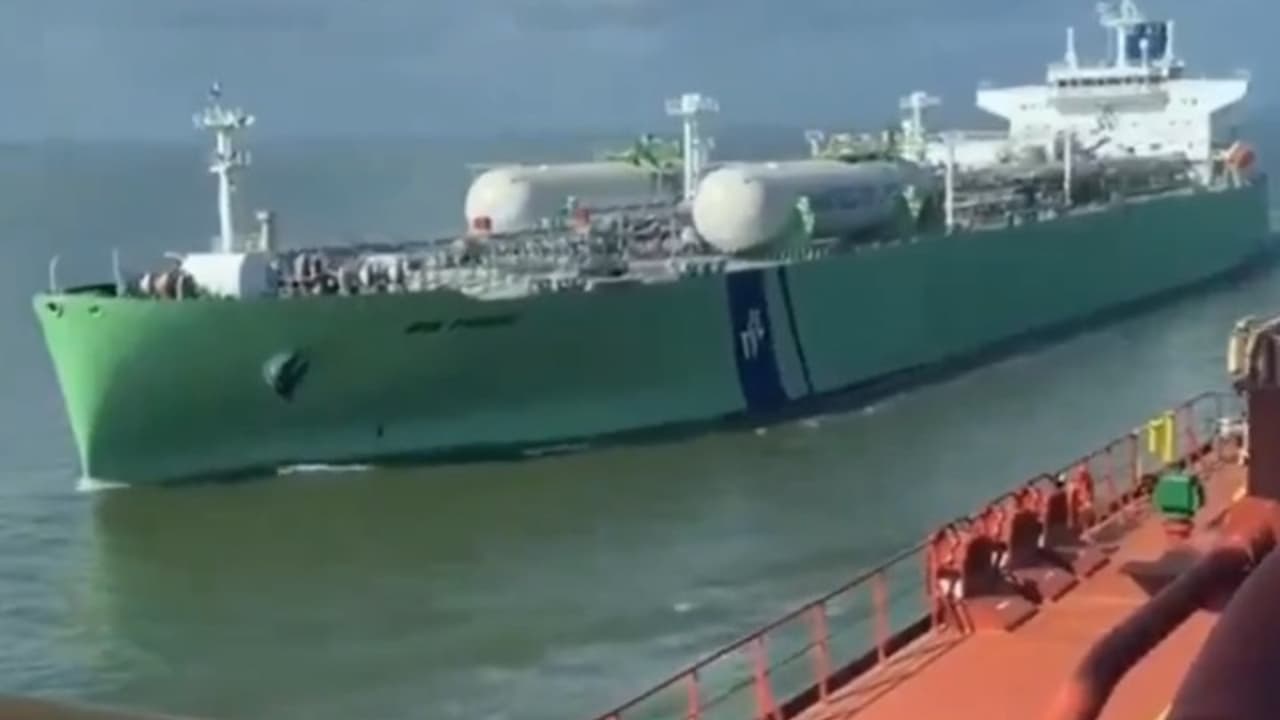
India LNG Carrier Hormuz Strait Crossing: In the midst of the fierce war and gunpowder situation that has been going on for the last three and a half months in West Asia (Middle East), a huge and historic success has come as a relief for India. Soon after the initial ceasefire agreement between the US and Iran, the giant Indian ship named ‘LNG Carrier Disha’ has successfully crossed the world’s most dangerous and strategically sensitive ‘Strait of Hormuz’. This step is very shocking because since the beginning of the war, the movement of commercial ships on this route was completely stopped. This tanker has left for Dahej Terminal in Gujarat, which has given a new life to India’s ongoing struggle for energy security.
Qatar’s ‘Force Majeure’ and crisis on half of India’s needs: Why did the country’s heartbeats stop?
After all, why is the entire government and industry celebrating the safe passage of this one Indian ship? The answer lies in India’s energy dependence. India imports about half of its natural gas (LNG) requirement from abroad, of which about 65 percent comes to India from Gulf countries like Qatar through the Strait of Hormuz. On February 28, when America and Israel launched deadly military attacks on Iran, Tehran closed this route in retaliation. The situation had become so bad that Qatar had declared ‘force majeure’ (unexpected emergency) in the matter of supplying gas to buyers around the world including India, due to which the threat of gas and power crisis in India was looming.
Scroll to load tweet…
62,370 tonnes of gunpowder fuel on ‘Mission Dahej’: There will be a stir on the coast of Gujarat on June 18
Managed by a consortium led by ‘Shipping Corporation of India’ (SCI) and chartered by ‘Petronet LNG Limited’, the vessel is no ordinary freighter. Upesh Kumar Sharma, Director, Ministry of Ports, Shipping and Waterways, revealed in the press conference that the LNG carrier ‘Disha’ is sailing with a cargo of 62,370 metric tonnes of highly sensitive Liquefied Natural Gas (LNG). If everything goes as per plan, the ship will anchor at Dahej terminal in Gujarat on June 18. With the opening of this route, the now closed Indian factories and gas supply chain are hopeful of getting momentum again.
Rescue of 18,000 Indian sailors stranded in the Gulf: The truth of ‘Bokem Marengo’ incident comes out
According to ministry officials, a total of 15 ships have been safely evacuated from the Strait of Hormuz so far, which includes 10 Indian flagged and 5 foreign ships. But the suspense is not completely over yet. Recently, raising the curtain on the mysterious incident that happened with the Hong Kong flagged oil and chemical tanker ‘Bokem Marengo’, Director Sharma made it clear that all the Indian crew members present on the ship are completely safe. At present, about 18,000 Indian sailors are risking their lives in the troubled areas of the Gulf, for whose safety the government has started a 24-hour emergency helpline, with the help of which more than 3,500 sailors have been evacuated safely so far.
13 Indian warship-like ships on the brink of war: Directorate General of Shipping’s tough ultimatum
Although the movement of ships has started after the ceasefire, the danger hidden under the sea still remains. There are still about 325 Indian sailors deployed on Indian-flagged ships just west of the Strait of Hormuz and 13 Indian ships are present in this danger zone. Considering the seriousness of the situation, the Directorate General of Shipping of India has issued a strict ultimatum to all the maritime companies and recruitment agencies. The government has clearly said that while passing through this conflict area, security related rules should be strictly followed 100%. The Ministry of External Affairs and Indian missions around the world are closely monitoring every wave so that like ‘Disha’, other ships can also be brought back home safely.