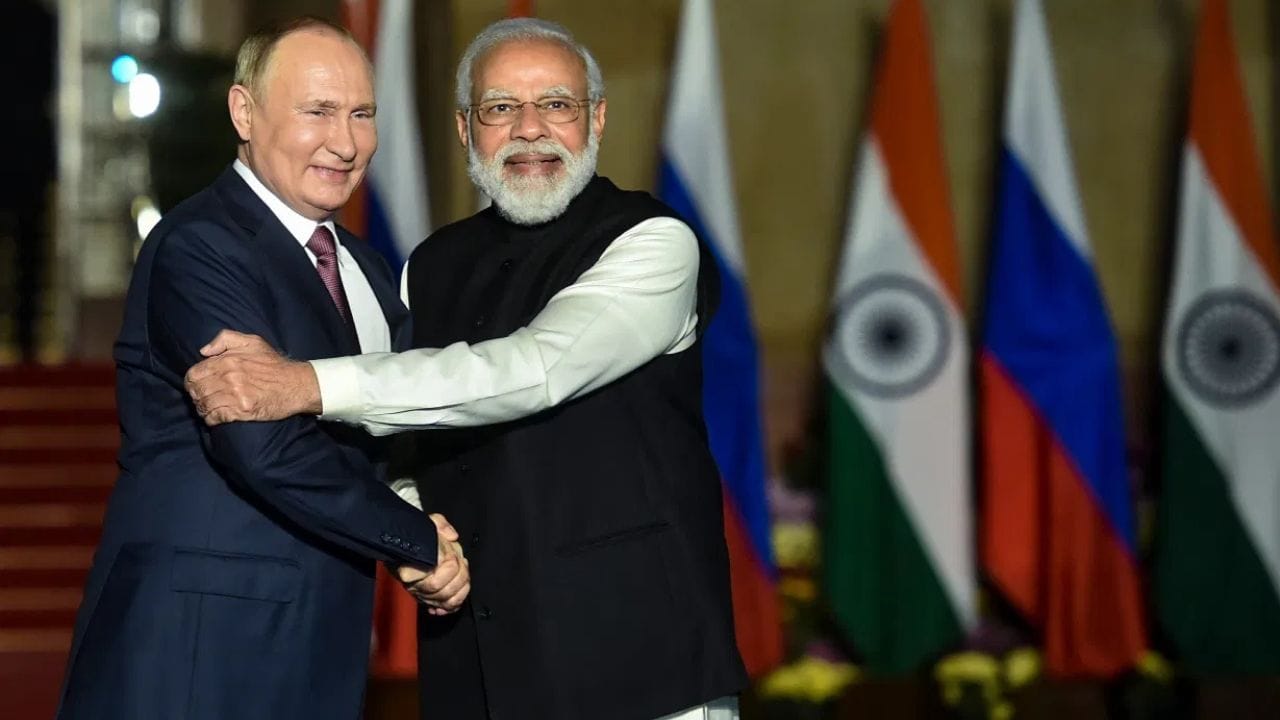
President Putin and PM Modi (pti)
For the first time, Russia has started importing gasoline from India via sea. In fact, Russia is facing fuel shortage due to repeated Ukrainian drone attacks on its oil refineries. This is a change in energy trade relations, as Russia has traditionally been the largest supplier of crude oil to India.
News agency Reuters quoted sources as saying that at least 60,000 metric tons of gasoline has been sent from India to Russia. Industry sources said that two tankers have been sent, each carrying 30,000 to 40,000 tonnes of gasoline. Another source told Reuters that Russia plans to import about 400,000 tons of gasoline per month from several countries, including Belarus.
There is a fuel shortage in many areas of Russia after Ukrainian drone attacks damaged refining infrastructure. President Vladimir Putin also admitted that these attacks have disrupted fuel supplies in some parts of the country. To address this shortcoming, Russia recently approved tax changes, including subsidies on fuel imports. This subsidy is linked to the cost and prices of delivery from India.
India’s Russian crude oil import at record level
This export of gasoline is taking place at a time when India is buying record quantities of crude oil from Russia. According to energy intelligence firm Kpler, India imported a record 4.93 million barrels per day (bpd) of crude oil in June. Of this, about 2.6-2.7 million bpd came from Russia, which was more than half of India’s total crude oil imports that month. Russian crude oil supplies increased sharply compared to May; In May it was about 2.13 million bpd and accounted for 36.5 percent of India’s total imports.
Kpler analyst Sumit Ritolia told PTI that India’s crude oil imports have quietly shown strong strength in the last 100 days. Over the last 100 days, India has perhaps been one of the best-positioned major importers, successfully maintaining crude oil supplies through proactive sourcing and procurement strategies from different sources.
He further said that despite the increasing geopolitical tension in the Middle East, India imported 4.93 million barrels per day (bpd) of crude oil in June, which is the highest volume ever in the month of June. Additionally, crude oil imports from Russia increased to approximately 2.6 million bpd, further strengthening Russia’s position as India’s largest and most important crude oil supplier.
Russia was a small supplier before the Ukraine war
Russia was not always India’s biggest energy partner. According to Al Jazeera, before Russia’s attack on Ukraine in 2022, the share of Russian crude oil in India’s total oil imports was only around 2.5%, while India was mostly dependent on Gulf countries for its energy needs. According to the US Energy Information Administration, the value of India’s oil imports from Russia in 2021 was only $2.3 billion.
turning point of 2022
After the Ukraine War, Russia’s access to European buyers reduced due to Western sanctions, which brought about a drastic change in the relations between the two countries. Moscow started offering heavy discounts on crude oil, making Russian oil very attractive for Indian refineries. Indian Oil Corporation was among the first refineries to purchase Russian ‘Urals’ crude oil after the war began. At the same time, India maintained a diplomatically neutral stance and said that it was buying oil based on market conditions rather than politics.
Russia becomes the biggest source of oil for India
Russia’s share in India’s crude oil imports was 21.6 percent in 2022-23, which increased to 35.9 percent in 2023-24 and remained at 35.8 percent in 2024-25. India’s Russian crude oil imports could reach $52.7 billion in 2024, averaging about 1.7 million barrels per day. By 2025, India will become the second largest buyer of crude oil from Russia after China. Trade between the two countries also increased rapidly. It increased from about $13 billion in 2021 to about $68 billion in 2024-25, which mainly included imports of oil, gas and fertilizers.
Alternative payment arrangements
Western sanctions on Russian banks made payments for oil difficult as many Russian financial institutions were cut off from the SWIFT banking network. India initially considered a rupee-ruble payment system similar to the arrangements used during the Cold War. However, since India imported much more from Russia than it exported, a large amount of rupees got deposited with Russian banks, which they found difficult to use. As a result, refineries started making payments in UAE dirhams, while India later allowed Russia to invest its rupee funds in Indian government bonds, equities and other domestic assets.
‘Shadow Fleet’ continues to supply Russian oil
The sanctions have forced Russia to rely on a large “shadow fleet” of aging tankers that operate under foreign flags and complex ownership structures to transport oil. According to the ‘Kyiv Independent’, this fleet now handles about 65 percent of Russia’s seaborne oil exports. Western governments have stepped up their crackdown, imposing hundreds of sanctions on these ships and, in some cases, seizing ships involved in the embargoed oil trade.
India emerged as a major refining hub
India has also benefited from refining cheap Russian crude into petroleum products and exporting them across the world. After the Ukraine War, there was a significant increase in petroleum exports from India to Europe, which also led to criticism that Russian crude oil was actually reaching Western markets after being refined in India. The European Union has since tightened sanctions, including measures targeting Nayara Energy. It is an Indian refinery in which Russian oil company Rosneft has a partial stake.
American sanctions and tariffs increased pressure
Pressure on India’s Russian oil purchases increased during 2025 as the US imposed tighter sanctions on Russian energy companies and increased tariffs on Indian goods. Although imports occasionally decreased after the sanctions on Rosneft and Lukoil, they did not stop completely. Rising energy demand and concerns about supply disruptions in West Asia encouraged Indian refiners to continue purchasing cheap Russian crude whenever it made commercial sense.
Current relations between India and Russia
India is largely dependent on cheap Russian crude to meet its energy needs, while Russia is now turning to India for refined fuel as it deals with refinery bottlenecks due to the Ukraine war. Despite sanctions, payment challenges and geopolitical pressure, energy trade between the two countries remains strong and is adapting to changing global conditions.