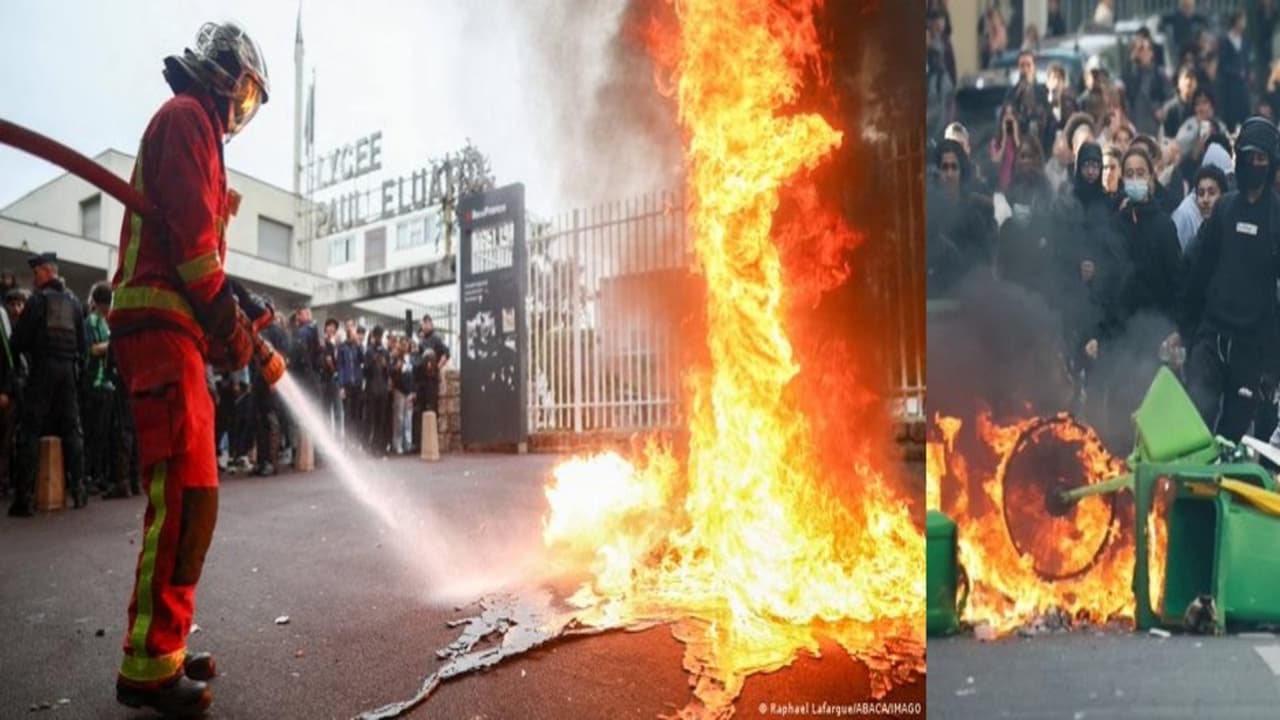
A growing protest movement by high school students is disrupting education across France as they demand better facilities, more teachers, and smaller class sizes. What began as local school blockades has escalated into nationwide demonstrations and violent clashes with police.
A growing student protest movement is disrupting schools across France, with high school students taking to the streets to demand better educational facilities, more teachers and improved learning conditions.
The demonstrations, which began in the Paris region in September, have now spread to several parts of the country. School blockades, rallies and clashes with police have disrupted classes, with hundreds of schools facing full or partial closures.
French authorities said up to 500 schools could remain closed or partly closed as security concerns continue. Education Minister Édouard Geffray said dozens of schools had been damaged and education staff had been injured since the protests began.
Why Are French Students Protesting?
At the heart of the demonstrations are complaints about the condition of France’s public high schools, known as lycées. Students have raised concerns over teacher shortages, overcrowded classrooms, inadequate school infrastructure and a lack of support staff. Some students say absent teachers are not being replaced, leaving them without lessons for extended periods.
Overcrowding has also emerged as a major grievance, with students describing classrooms packed with around 35 pupils. Others have complained about poorly maintained buildings, insufficient toilets and uncomfortable classroom temperatures during heatwaves.
Students have also criticised long school schedules and the pressure associated with the country’s university admissions system, Parcoursup.
How Did The Protests Begin?
The movement began in September at the Saint-Exupéry high school in Créteil, a suburb southeast of Paris. Students initially joined teachers who were protesting staff shortages and inadequate resources.
The demonstrations subsequently spread through the Paris region before reaching cities including Marseille, Lyon, Lille, Strasbourg and Tours. Students have used school blockades and street demonstrations to draw attention to their demands.
Social media has also played a major role in the movement’s rapid expansion. Videos showing demonstrations, burning barricades and police using tear gas have circulated widely, helping students share their experiences and mobilise others.
When Did The Protests Turn Violent?
What started largely as school blockades has increasingly involved clashes between demonstrators and police. Some protesters have thrown stones, bottles and other objects, while fires have been reported outside schools. Police have responded with tear gas and other crowd-control measures.
French authorities say thousands of people have been arrested since the unrest began, many of them minors. Officials have also reported injuries among students, school staff and police officers. The police response has itself become a point of controversy. Critics have accused officers of using excessive force against teenage protesters, while the government has condemned attacks on police and damage to public property.
What Are Students Demanding?
The protesters are primarily calling for more resources for public education.
Their demands include:
- More teachers and support staff
- Smaller class sizes
- Better-maintained school buildings
- Improved classroom conditions
- More resources for schools in disadvantaged areas
- Changes to academic pressure and the university admissions system
Students and education advocates have also highlighted inequalities between schools serving wealthier communities and those in lower-income areas.
Why Has The Issue Become Political?
The student movement comes at a politically sensitive time in France, with presidential elections approaching. The government has acknowledged that some student complaints are legitimate but has accused far-left groups of exploiting or infiltrating the demonstrations and contributing to violence.
The left-wing France Unbowed (LFI) party has rejected those accusations. Its representatives have defended students’ right to protest while calling for demonstrations to remain peaceful. The unrest has therefore developed into more than an education dispute, becoming part of a wider political debate over government spending, public services and the future of France’s education system.
What Happens Next?
Student organisations have called for further nationwide demonstrations on October 6, raising concerns that disruptions could continue. The government has said it wants schools to return to normal while responding to students’ concerns. Education authorities have announced measures including discussions with students and efforts to speed up teacher recruitment.
With hundreds of schools already affected, the coming days will determine whether the protests remain focused on education reforms or develop into a broader confrontation over France’s public services and political direction.