Will AI completely change the role of CMOs and marketing teams in the times to come? Is today’s marketing industry losing long-term brand value under the pressure of short-term ROI? Are marketing talks at big corporate events and conferences just a show?
Every year, the marketing industry seems to be full of expectations and positivity. But when there’s no stage, no panel, no one to judge, what do CMOs (Chief Marketing Officers) actually talk about? ‘The CMO Assembly’ is one such exclusive platform, built specifically for CMOs and senior marketing leaders of consumer-facing brands. This is a departure from traditional public forums and smooth talk. The platform provides leaders with a trusted environment where they can talk openly and honestly about real marketing pain points, lessons learned, and new innovations. Recently, ‘The CMO Assembly’ has released ‘The India CMO Index 2026’, in which candid opinions have been taken anonymously from 121 marketing leaders from 11 industries. The index reflects the unique contradictions facing Indian marketing leadership—including the tug-of-war between the pressures of short-term performance and building long-term brand value.
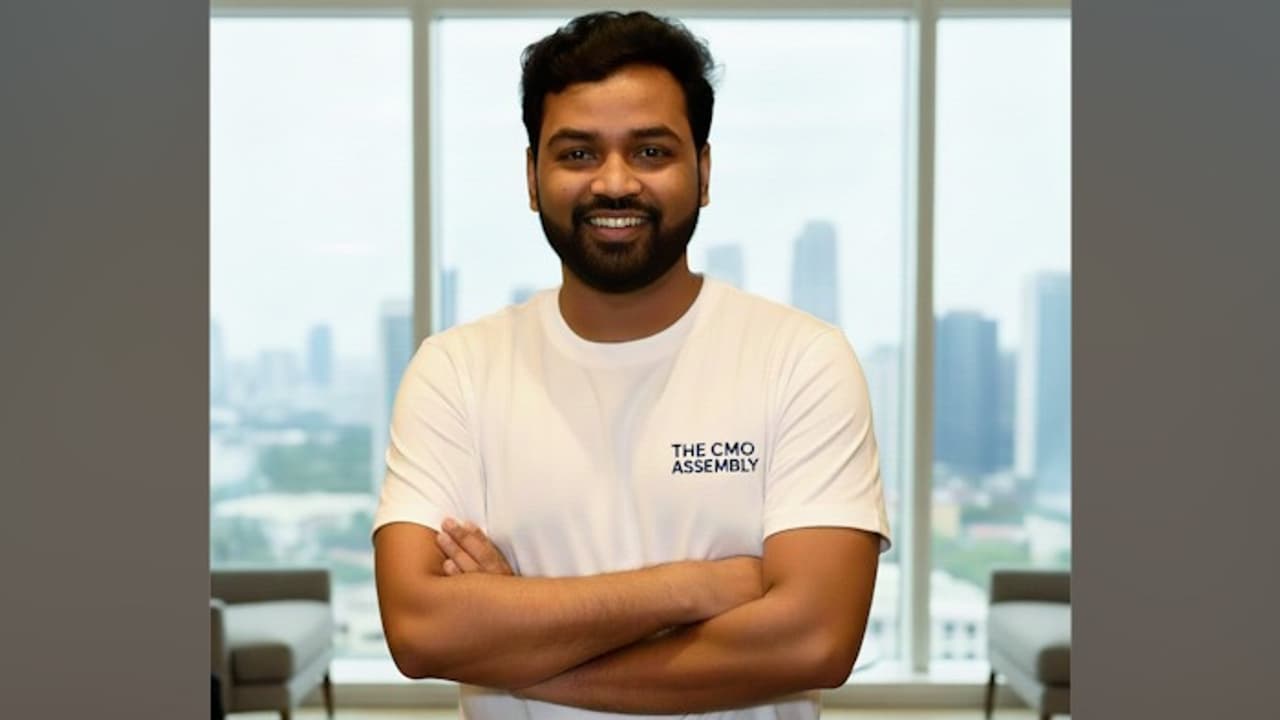
Here are some excerpts from our exclusive interview with Vivek Sheth, Founder of ‘The CMO Assembly’, in which he explains his philosophy, the reason for creating this organization and much more.
1. What did you see lacking in India’s marketing ecosystem that felt the need to create ‘The CMO Assembly’?
answer: I felt there was a severe lack of spaces for CMOs in India to talk honestly. There are plenty of conferences, panels, awards and networking groups, but very few places where CMOs can speak the truth without pretense. Most conversations are either very artificial, or influenced by PR, or transactional. The truth is that today’s CMOs are struggling with a lot of problems—board pressure, AI-driven changes, people’s decreasing attention span, performance pressure, office politics—but no one was creating an environment where they could talk openly about all this with others like them. ‘The CMO Assembly’ was created to fill this gap. This is not just another industry platform, but a trusted community where people facing similar pressures can have honest conversations with each other.
2. You’ve said several times that most of the marketing community “talks to” CMOs, not “with” CMOs. What’s really wrong with the current model?
answer: Most of today’s ecosystems are designed for visibility, not vulnerability. The format is usually the same: a stage, a moderator, well-worn questions, rote answers, sponsor talk, and everyone acting like they know it all. But real leadership conversations don’t happen like this. CMOs don’t need more bookish knowledge. They need honest advice from people of their level. They need a place where they can say: ‘This campaign failed.’ I’m struggling to prove long-term brand ROI. AI is changing my company so fast that I can’t keep up. I don’t know what marketing will look like in three years. The current model rewards certainty. But the best conversations often begin with uncertainty.
3. Was there a specific moment or conversation that sparked the idea for this platform?
answer: Yes. I remember talking to CMOs after industry events—not on stage, but over coffee or dinner afterwards. His private words were completely different from what he said in public. People who seemed very confident on stage may privately admit that they are under a lot of pressure, questioning old marketing methods, struggling with board expectations, or just being unsure about where AI will take the industry. This difference stuck with me. I realized that the most valuable marketing conversations in India are happening informally, behind closed doors. ‘The CMO Assembly’ was born out of the thought that perhaps those things should find a real home.
4. What are the major concerns that CMOs are talking about privately today which are not visible to the public?
answer: Three things come up again and again. First, relevance. Many marketers are wondering whether traditional methods of brand building still work in this AI-first and distraction-free world. Second, measurement. There is a lot of pressure to account for every rupee spent, but not everything valuable can be measured immediately. CMOs are torn between short-term performance expectations and long-term brand building. Third, identity. AI is forcing leaders to rethink what marketing teams should look like in the future. Many people are asking: What will be left of the unique work of humans in marketing?
5. Are today’s CMOs under more pressure than ever to justify marketing spend and ROI?
answer: Absolutely. Earlier, marketing had the facility that the impact of results was visible later. Today, leadership teams want instant clarity about results, efficiency and business impact. The challenge is that marketing works on two timelines: impact on revenue in the short-term and brand recall in the long-term. The danger lies when companies focus only on things that can be measured in the short-term. You may improve quarterly results, but gradually weaken the brand identity. Today’s CMOs are not only expected to drive growth, but are also expected to justify every decision in real time.
6. Has AI completely changed the way marketing leaders interact?
answer: Completely. A year ago, conversations around AI were mostly filled with curiosity. Today, it has become a question of survival. The tone of the conversation was “What can AI help us with?” Changed from “What would happen to marketing organizations if AI changed everything?” It is done. CMOs are now discussing smaller teams, AI-powered creativity, synthetic consumers, personalization at scale, and how quickly consumer behavior can change. Interestingly, the smartest leaders are not considering AI just as a productivity tool. They see this as a fundamental change that will change the way brands are built.
7. What is the bitter truth that marketers are finally accepting in these closed-door meetings?
answer: That no one knows completely anymore what the future of marketing will look like. For years, this industry rewarded confidence and certainty. But privately, many leaders are recognizing that the old methods are becoming less reliable. Customers’ attention is divided. Brand loyalty has weakened. Algorithms decide what is visible. AI is reshaping creativity. And strong brands can’t be built through performance marketing alone. The harsh truth is that even the most experienced marketers are now learning again in real time.
8. It seems difficult to build trust among CMOs who compete with each other. How do you create an environment where people really open up?
answer:Trust comes from intention. As soon as people feel that a platform is mainly for show, to sell something or to take advantage, honesty disappears. At ‘The CMO Assembly’, we focus a lot on creating an environment where there is no pressure to look better. Small groups, non-recorded sessions, and more. Surprisingly, when people realize they don’t need to impress anyone, conversations become much more valuable. Senior leaders don’t really need more networking. They want fewer, but more meaningful conversations.
9. What surprised you the most after launching ‘The CMO Assembly’?
answer: How desperate the CMOs were to talk honestly. I expected interest. But I did not expect to see so much emotional openness from CMOs. Many CMOs take the pressure very personally. From the outside, marketing leadership looks glamorous. Inside, it can be lonely. What surprised me most was how quickly leaders responded once they realized this was a place where they didn’t need to maintain a ‘have it all under control’ image.
10. Was it difficult to convince senior leaders to trust a new, out-of-the-box platform?
answer: In the beginning, yes. Because trust in this area is earned slowly. Senior leaders have seen too many communities becoming transactional and too commercial. We never tried to be aggressive or show off. We focused on depth instead of scale, and conversations instead of visibility. Over time, trust grows. When a respected leader has a meaningful experience, they bring it to others too. Building trust this organic way has been more powerful than traditional growth tactics.
11. Five years from now—what do you want to see ‘The CMO Assembly’ become?
answer: A network, a movement, a think tank, or something bigger? I want it to become one of the most trusted ecosystems for CMOs in the space—not because it’s the biggest, but because it’s the most honest. A place where innovative industry thinking emerges, meaningful research occurs, future marketing leaders are nurtured, and difficult conversations are had before they become mainstream. I think the future belongs to communities that create clarity, not just visibility. We also run something called ‘The Marketing Assembly’—which is open to the entire marketing ecosystem—the idea is to do just that—people help each other grow!
12. If you could force every CMO in India to personally answer one very honest question, what would that question be?
answer: I would ask: If no one was watching, what would you stop doing in marketing tomorrow? Because this question exposes everything: the metrics we don’t even believe in, the campaigns we run for show, the meetings that don’t do anything, the reports no one reads, and the industry habits we continue just because everyone else is doing it. This is where an honest conversation about marketing begins.