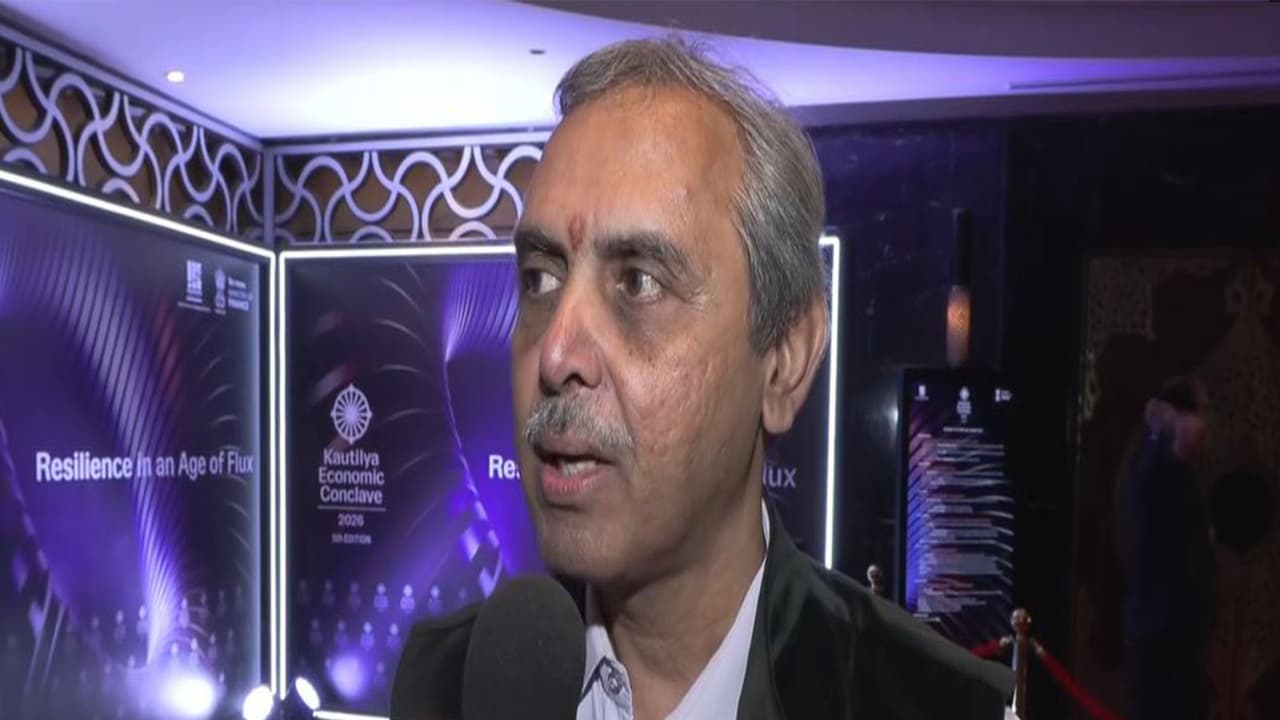
Economist CSC Sekhar warns rural incomes may decline due to uneven monsoon and supply issues. He suggests the govt could hike PM-KISAN support to cushion farmers, noting existing safety nets will be crucial if farm incomes weaken.
PM-KISAN Hike Proposed to Cushion Farmers
Rural incomes could come under some pressure this year as uneven rainfall and supply-side disruptions affect the Kharif season, and the government could consider increasing support under the PM-KISAN scheme to cushion farmers, CSC Sekhar, Professor of Economics at the Institute of Economic Growth (IEG), Delhi University, said on Saturday.
Speaking to ANI on the sidelines of the 5th Kautilya Economic Conclave in New Delhi, Sekhar said existing rural safety-net programmes would play an important role in supporting households if farm incomes weaken. “If the government can think of probably hiking up the support levels under PM Kisan, that should help a lot. That will help a lot. But rural incomes probably will take a little hit this year,” he said. He described PM-KISAN as an important safety-net programme for farmers, alongside the rural employment guarantee programme, and said the effectiveness of such measures would depend on their implementation.
Supply-Side Pressures on Kharif Output
His comments come amid concerns over the impact of El Niño conditions and uneven monsoon rainfall on Kharif production. The economist said agricultural output was likely to face some supply-side pressure, both from rainfall shortages in several regions and disruptions in fertiliser supplies.
“Certainly on the supply side there will be some effect,” he said, adding that while the aggregate rainfall shortfall was around 10-12 per cent, the national number masked wide differences across states and districts. “There are some districts where there has been excess rainfall and there have been many states and districts where there has been a very substantial shortfall of rainfall. So there is going to be an effect on the production part,” he said.
No Major Impact on Food Prices Expected
However, he said the expected production shortfall was unlikely to translate into a major increase in food prices or a significant decline in consumption because India has sufficient buffer stocks of rice and wheat. “So to sum it up, basically on the supply side there will be some shock, there will be some production shortfall, but that production shortfall will not result in an increase in prices or lowering of consumption or anything,” he said.
He added that there was no immediate cause for concern over India’s food supplies despite disruptions to global trade routes caused by geopolitical conflicts. “At least India, Indian food stocks and food supplies are satisfactory, I should say,” he said.
Agricultural Growth Outlook
On agricultural growth, Sekhar said the expansion could be around one percentage point lower than last year, but a stronger Rabi season could offset part of the weakness in Kharif output. “Very often India has seen that when there is a problem during the Kharif season, normally the Rabi season performance more or less more than takes care of that,” he said.
He added that most Rabi crops are irrigated, reducing the risk of a similarly large weather-related impact in the winter cropping season. (ANI)
(Except for the headline, this story has not been edited by Asianet Newsable English staff and is published from a syndicated feed.)