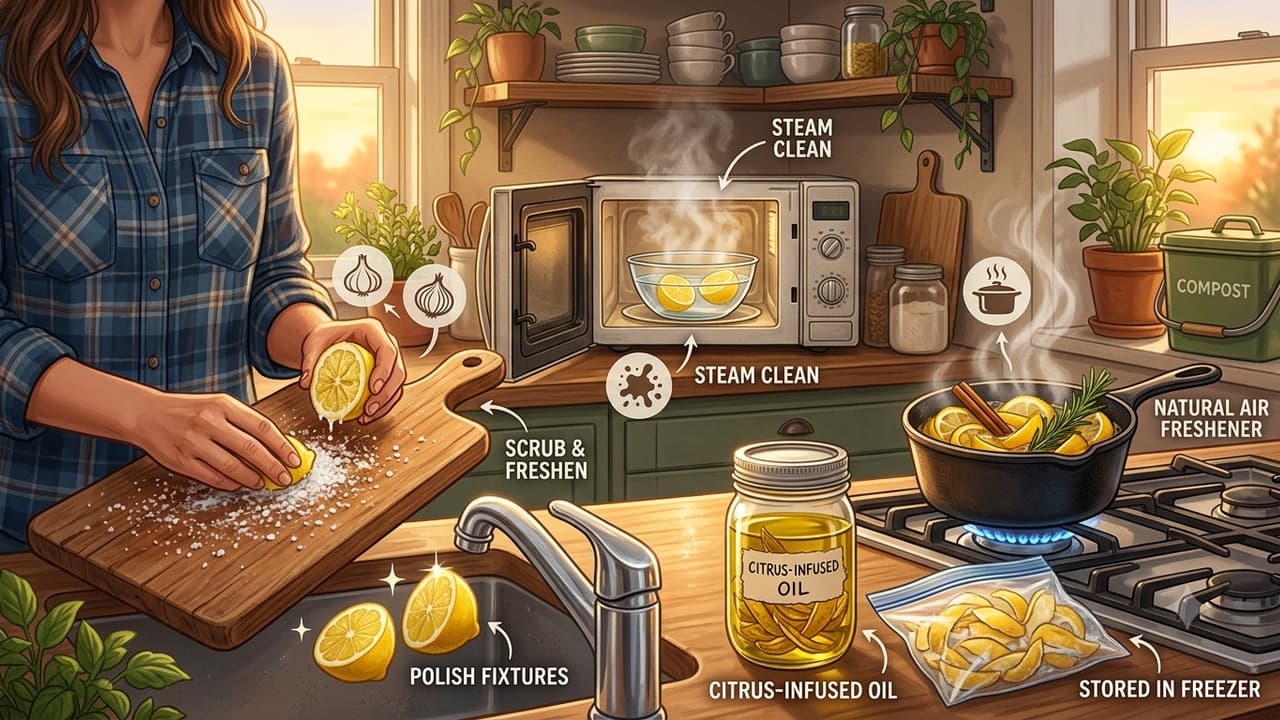
Instead of discarding squeezed lemons, you can repurpose their leftover peels and pulp for various household tasks. Their natural acidity makes them perfect for creating DIY cleaning solutions, deodorizing microwaves, and making natural air fresheners.
Every time we squeeze a lemon for juice, the leftover peel and pulp usually end up in the bin. But those discarded lemon halves can still be useful around the kitchen. Their natural acidity makes them particularly handy for tackling grease, grime and stubborn residue on household utensils. Instead of throwing squeezed lemons away immediately, you can give them a second use with a few simple cleaning tricks.
1. Baking Soda and Lemon Juice For Greased Utensils
You can make a simple cleaning paste at home by mixing baking soda and lemon. Baking soda gently scrubs, and lemon juice’s acidity can help get rid of greasy buildup.
Pour baking soda over the area that needs help and rub it in with a half of a squeezed lemon. Let it sit for a few minutes, then use a sponge or soft cloth to gently scrub it. After using the tool, wash it well with water.
2. Create an All-Natural Stovetop Air Freshener
Commercially scented aerosol sprays often mask odors with synthetic fragrances. You can create a warm, natural aroma using kitchen scraps. Fill a small saucepan with water and add your squeezed lemon peels, a few sprigs of fresh herbs (like rosemary or thyme), and a cinnamon stick or whole cloves. Bring to a gentle simmer on low heat. As the water simmers, it releases a clean, subtle fragrance that eliminates cooking odors from fish, deep-frying, or spices throughout your home. (Just be sure to top off the water periodically so it doesn’t dry out.)
3. Steam-Clean and Deodorize Your Microwave
Hardened food splatters and stubborn cooking smells inside the microwave can be tough to scrub away. Drop a couple of squeezed lemon rinds into a microwave-safe bowl filled halfway with water. Microwave on high for 3 to 5 minutes until the water boils and the window fogs up with steam. Leave the door closed for another 2 minutes to let the steam loosen grease and grime. Carefully remove the bowl and wipe down the interior walls effortlessly with a clean cloth. The citric steam dissolves grease while leaving behind a fresh citrus scent.
4. Lemon-based Cleaning Solution
You can also make a simple cleaning spray at home with squeezed lemon. If you mix lemon juice with vinegar and warm water, you can use it on some kitchen surfaces. Spray the mix on areas that are greasy and let it sit for a moment before wiping or cleaning. Any surface that comes in touch with food should always be rinsed, and the solution should be right for the material being cleaned.
5. Make Zest or Citrus-Infused Oil
Even after squeezing out the juice, the outer skin (the flavedo) remains loaded with fragrant citrus oils and intense flavor. Use a fine zester or microplane to grate the outer yellow peel before tossing the inner rind. Alternatively, place dried lemon peels into a clean glass jar, cover them with extra virgin olive oil, and let them infuse in a cool, dark spot for a week. You get fresh lemon zest to elevate pasta dishes, baked goods, and dressings, or a fragrant citrus-infused oil perfect for drizzling over salads and grilled vegetables.
If you don’t have time to use leftover citrus rinds right away, toss them into a reusable freezer bag. Kept frozen, lemon peels remain fresh for months and can be pulled out whenever you need to clean the microwave, make a simmer pot, or zest for a recipe.