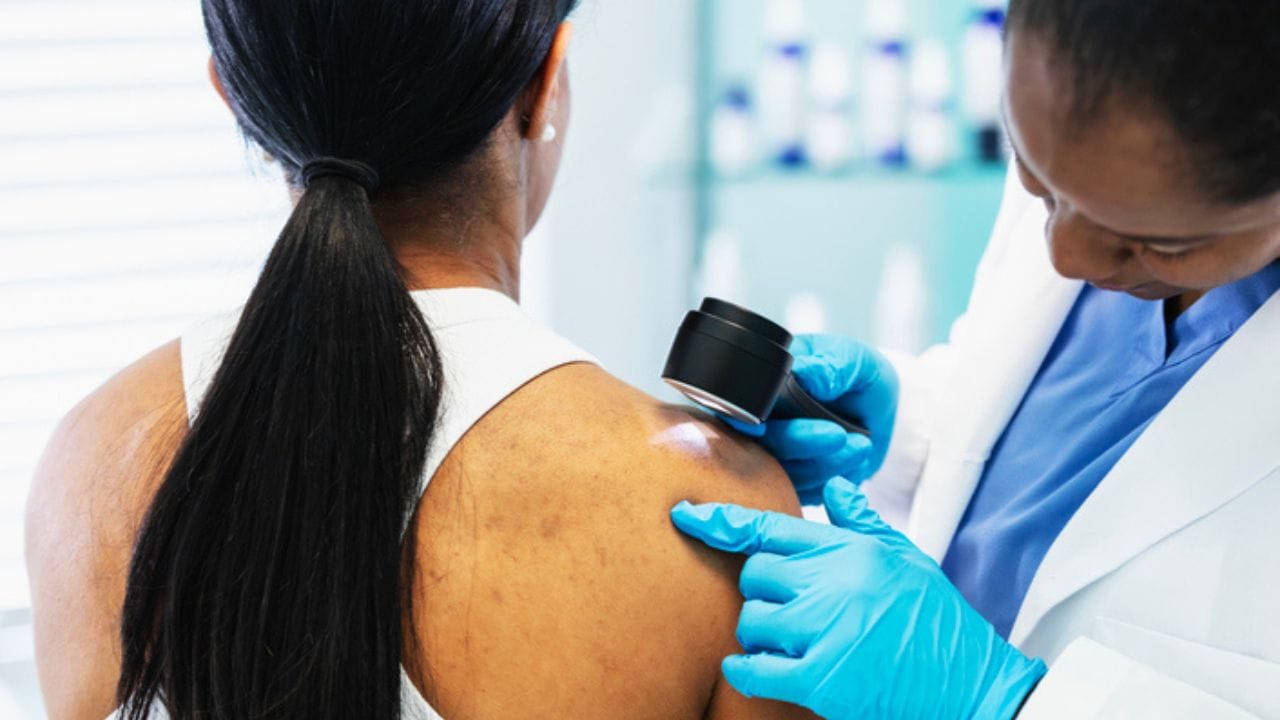
skin cancer Image Credit source: Getty Images
Skin cancer is a disease in which skin cells start growing abnormally. The biggest reason behind this is considered to be the harmful ultraviolet (UV) rays of the sun, which penetrate deep into the skin and cause damage. Apart from this, staying in the sun for a long time, frequent sunburns, having light skin and going out without protection can also increase its risk.
In summer, the sun is stronger and the effect of UV rays is also greater, in such a situation skin cancer The risk may increase. Although it is not limited to summer only, the risk becomes higher in this season. Often people ignore sun protection, which causes continuous damage to the skin. Therefore, it is very important to understand this topic and be alert in time. Let us know why the risk of skin cancer increases in summer.
Why does the risk of skin cancer increase in summer?
Dermatologist Dr. Soumya Sachdeva at Max Hospital It is said that in summer, the sun’s rays fall directly on the earth with more intensity, due to which the level of UV radiation increases. Repeated exposure to sunlight causes damage to skin cells, which can turn into cancer over time. Sunlight is most harmful especially during the afternoon. Going out without sunscreen, hat or other protection further increases the risk.
Apart from this, sweat and dust also harm the skin in summer, due to which the skin becomes more sensitive. Due to continuous exposure to sunlight, the natural protective layer of the skin starts weakening. This risk may increase further in people who have light skin or who work outside for long periods of time. This exposure for a long time weakens the skin’s protective capacity, increasing the risk of skin cancer.
What are the symptoms?
Symptoms of skin cancer can be very mild in the beginning, so it is important to recognize them. Formation of a new mole or stain on the skin, change in size or color of the old mole, wound not healing quickly, itching or burning sensation can be its signs.
In some cases, abnormal patches of red, brown or black color may also appear on the skin. If any such changes persist for a long time, then it should not be ignored.
How to protect?
Sun protection is most important to prevent skin cancer. When going out, use sunscreen, wear full sleeve clothes and carry a hat or umbrella. Avoid going out in strong sunlight and keep the skin clean and hydrated. Check the skin regularly and consult a doctor immediately if any unusual changes occur.