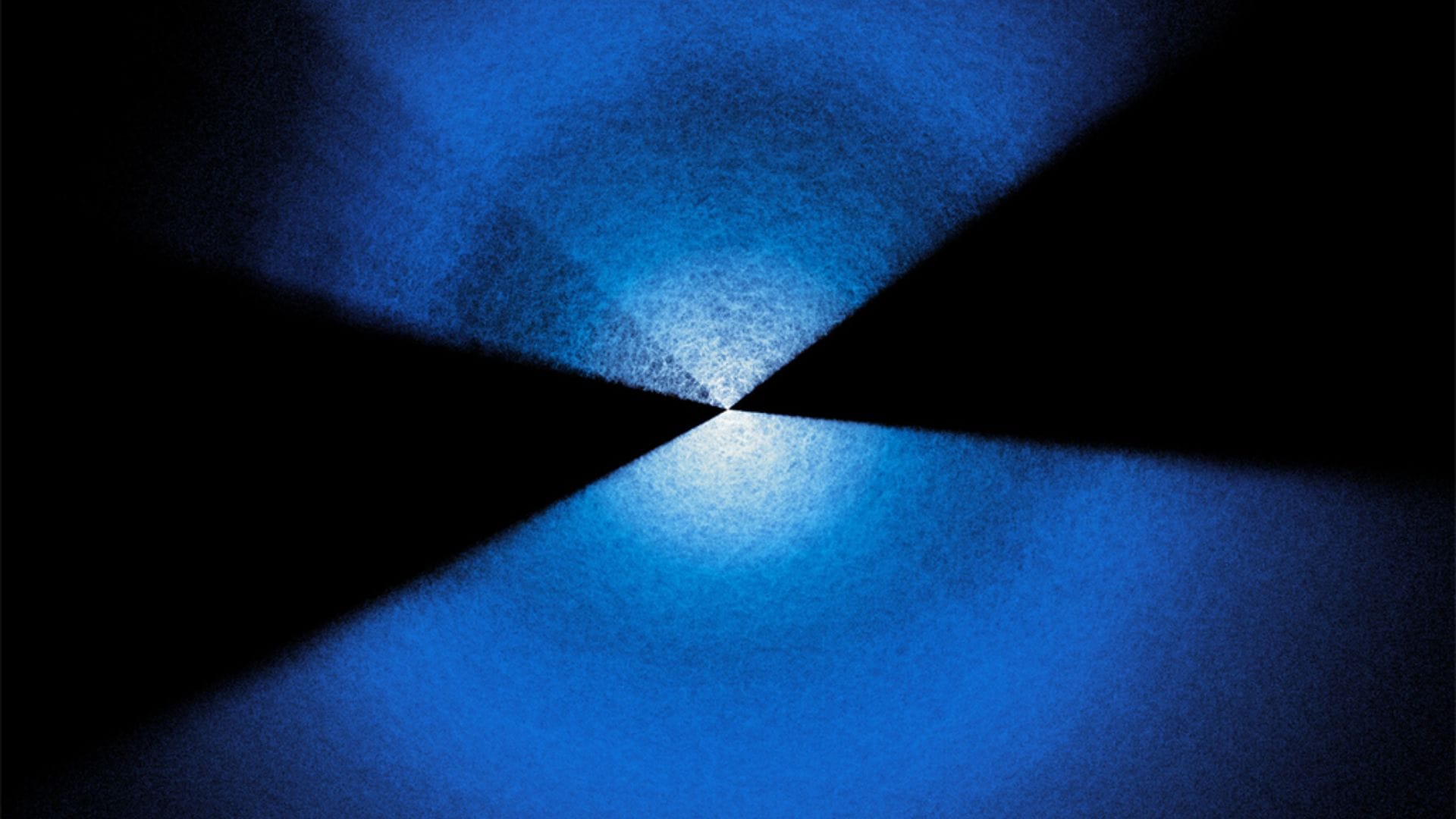
New Delhi: The Dark Energy Spectroscopic Instrument (DESI) has completed its primary five year survey, and has produced the largest three-dimensional map of the Universe. The instrument continues to observe the skies, to better understand the distribution of dark matter, the mysterious, invisible substance that makes up the bulk of the mass in the universe. The instrument is revealing the three-dimensional distribution of galaxies, which are themselves embedded in vast haloes of dark matter. The universe is believed to be about 70 per cent dark energy, which is driving the accelerating expansion of the Universe, pushing apart matter.
While scientists know what dark energy does, they do not know what it is. Something is driving the accelerating expansion of the universe, and scientists do not know what it is, which is why it is called dark energy. By seeing so many millions of galaxies in three-dimensions, scientists can recognise the structures that they sit on. This structure has a pattern, and it is a pattern that can be found throughout time. Only five per cent of the universe is made up of regular, ‘baryonic’ matter that we can see, while 25 per cent is dark matter, which we cannot see.
The distribution of galaxies is not random
One of the scientists conducting the survey, Gontcho A Gontcho says, “If you are able, from a picture, to add a third dimension in the form of a very precise distance measurement of where galaxies are, you are effectively creating a 3D map of where galaxies are located compared to each other, from your viewpoint here on Earth. Galaxies are not located at random – they follow a subtle, special pattern. They are located on a substructure made of dark matter in the universe.” Scientists refer to this hidden network of dark matter as the cosmic web.