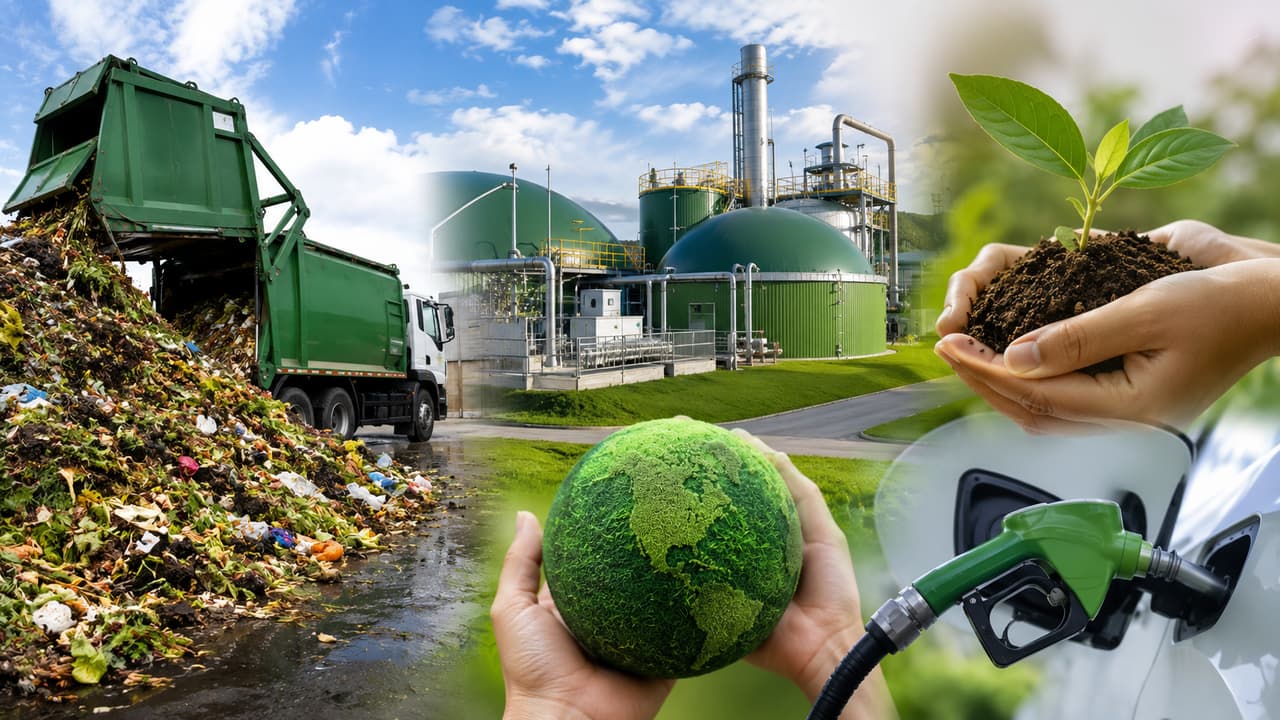
Delhi has signed a major MoU with Oil India Limited to set up two Bio-CNG plants in Tehkhand and Okhla. The project aims to convert organic waste into clean energy, reduce landfill pressure, and strengthen the city’s Waste-to-Wealth mission.
Delhi has taken a major step forward in its initiatives to enhance waste management practices and promote clean energy solutions. In the presence of Chief Minister of Delhi, Rekha Gupta, Municipal Corporation of Delhi (MCD) and Oil India Limited signed a Memorandum of Understanding (MoU) for the construction of two state-of-the-art Compressed Biogas (Bio-CNG) facilities at Tehkhand and Okhla. The initiative is believed to reinforce the waste to wealth concept of the capital city by converting biological waste into useful products, thus helping towards environmental sustainability.
Two Bio-CNG Plants with Processing Capacity of 800 TPD
Under this agreement, the Bio-CNG plants will have total processing capacity of 800 tons per day (TPD). The plants will process segregated biological waste collected from all around the city.
This hi-tech waste treatment technology is said to minimize the quantity of wet waste which is sent to landfills, in the meantime producing green energy and green fertilizers for agriculture and horticulture.
Strong Call to Lower Delhi’s Landfills of Waste
There has been a problem with large waste dump yards in the city such as the one in the Ghazipur, Bhalswa, and Okhla landfills. However, by converting biodegradable waste before it reaches the dumping ground, the Bio-CNG plants will be able to lower the pressure put on these landfills.
It is thought that by diverting organic waste to produce energy, they will not only increase the life of the landfills, but they will also help reduce pollution, stench, and dangerous emissions related to waste disposal.
Clean Energy and Environmental Impact
The largest benefit that comes from the project is the clean energy production through it. This Bio-CNG can serve as an environmentally-friendly fuel as opposed to fossil fuels, thus reducing carbon emissions.
Moreover, the organic manure produced in this process helps fertilize the soil and make agriculture more sustainable.