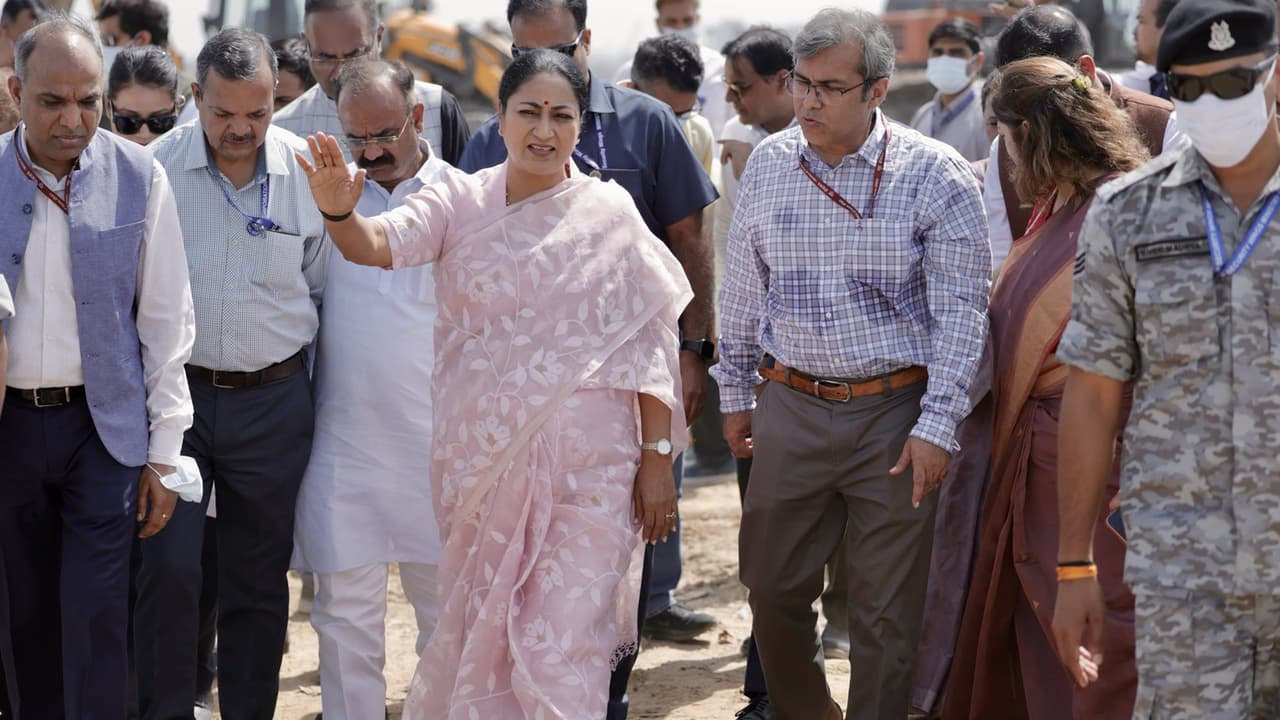
Delhi CM Rekha Gupta reviews Okhla landfill remediation as the city accelerates legacy-waste processing, land reclamation and fresh-waste management to tackle its long-standing garbage mountains.
The Delhi chief minister Rekha Gupta inspected the waste management activities being carried out at the Okhla landfill site, with the main focus being on cleaning up old wastes and avoiding accumulation of any new garbage.
Okhla Landfill Clean-up: All About Speed and Deadlines
In the course of her inspection, officials informed the Chief Minister about the activities going on at the landfill site. The Chief Minister emphasized the need for sustained speed and that the targets must be met within deadlines.
The overall aim is to cut down the long-pending pile-up of garbage by scientific treatment of the waste that has been accumulating for years now. The process involves biomining and bioremediation, whereby the waste is dug out, segregated and treated, and different types of waste are handled in a separate manner.
Delhi Landfill Cleanup: 100 Acres Reclaimed
The size of the process can be appreciated from the fact that roughly 2.16 crore metric tonnes of waste have been processed through the three landfill sites in Delhi. As a result of these processes, almost 100 acres of land have been reclaimed. Out of this number, roughly 70 lakh metric tonnes of waste have been processed at the Okhla landfill site, and approximately 35 acres of land have been reclaimed.
Reclamation of land through this process is important because the landfill remediation is not only about reducing the height of the landfill site but also making the possibility of using this land for productive purposes.
Rainwater Interfered With Biomining Operation During Monsoons
However, the process is not without problems, especially because of the heavy rainfall during monsoon season in August, which interfered with biomining operations at the landfill sites in Delhi. For example, at Okhla, the daily biomining capacity was reduced substantially from the normal average level of 6,000-9,000 metric tonnes per day.
Maintenance of the capacity is thus very important.
The New Waste Is Still a Big Problem
It is not enough to clear the existing garbage because the daily fresh waste also requires adequate capacity to ensure that there are no new mountains of garbage.
As such, the government of Delhi has tried to build up the capacity for dealing with the new waste in addition to solving the problem of legacy waste. The construction of such facilities for fresh waste and construction-and-demolition waste was announced on October 3 at Okhla, Ghazipur, and Singhola.
For Delhi, it would be crucial not only how soon the current mountains of garbage will be cleaned but also how to manage the daily fresh waste.