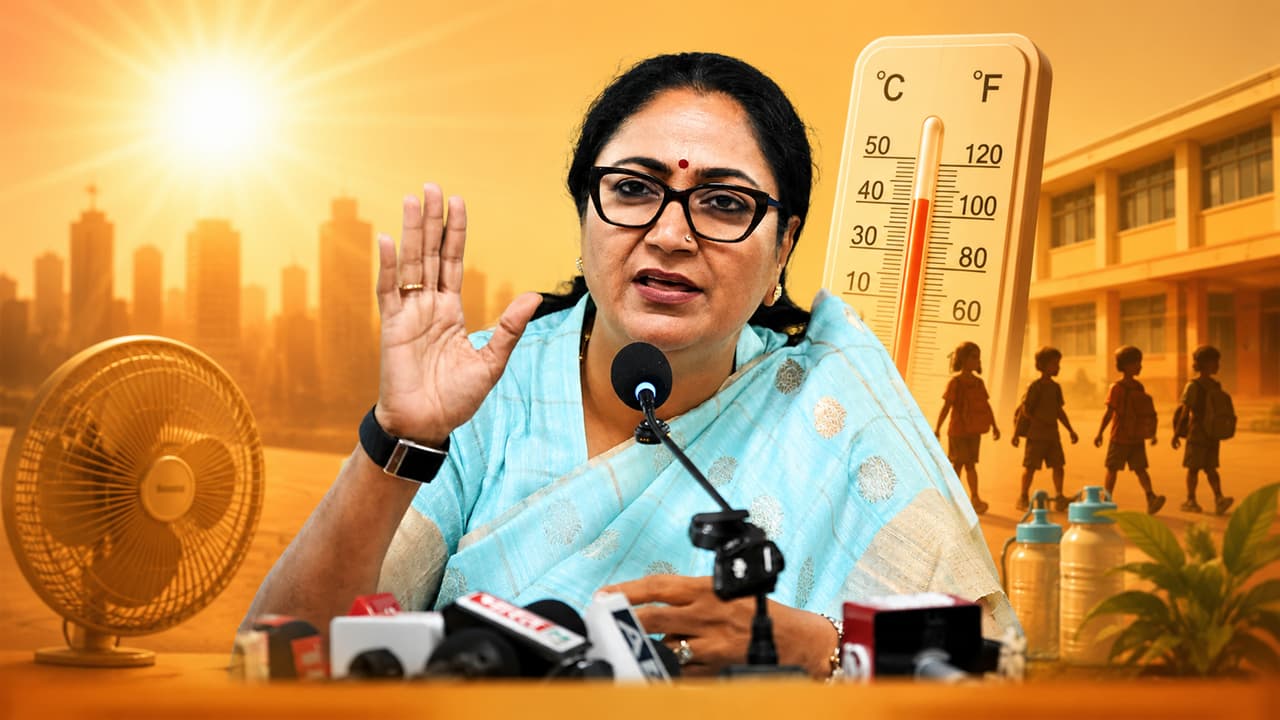
‘Heat Smart School’ pilot project started in Delhi to protect children from heat wave and scorching heat. Measures like cool roof, safe drinking water and awareness were implemented.
New Delhi. A high-level visit to the ‘Heat Smart School’ pilot project was conducted on Wednesday with the aim of saving children from the havoc of scorching heat and heat wave in Delhi. The visit took place at Sarvodaya Bal Vidyalaya located in BT Block of Shalimar Bagh. According to a statement issued by the Chief Minister’s Office, the tour was jointly organized by the District Administration (Central-North District), National Disaster Management Authority (NDMA) and GIZ India. During this, the team of officials took stock of the changes and measures taken in the school, which create a safe and better learning environment for the children during the scorching heat. All these measures are practical and easily implemented.
Chief Minister Rekha Gupta calls ‘Heat Smart School’ model a need for the future
Congratulating all the departments and partner organizations associated with the ‘Heat Smart School’ pilot project, Chief Minister Rekha Gupta said that the safety and health of children is the biggest priority of the Delhi government. He said that in view of the changing climatic conditions, such new initiatives are the need of the hour. He expressed confidence that this model will also be implemented in other schools of the capital, so that it can play a big role in creating a safe and climate-resilient environment for studies.
Officials from many organizations including NDMA, GIZ India and German Embassy were present.
This high-level team includes NDMA Member Secretary and Head of Department Krishna S Vats, Central-North District District Magistrate Shailendra Singh Parihar, German Embassy’s Second Secretary Economic Cooperation and Development Division Johannes Schneider, GIZ India Director Rachna Arora, GIZ India Project Manager Meghna Kshirsagar, ADRA India Country Director Santosh Shrikant Pattar, Sarvodaya Vikram Yadav, principal of the children’s school, along with senior officials from Delhi Government, GIZ India, ADRA India and other partner organizations were present.
Facilities like cool roof, shady corridors and safe drinking water were demonstrated.
According to the statement, during the visit, the team inspected the school campus and observed heat protection measures. These included ‘cool roof’ technology, shaded corridors and waiting areas, improved drinking water facilities, awareness campaigns run by students, displays providing information on heat protection and activities to reduce heat stress among children.
Big initiative to implement ‘Delhi Heat Action Plan’ at grassroots level
On this occasion, District Magistrate Shailendra Singh Parihar said that this initiative is a practical form of the ‘Delhi Heat Action Plan’ being run under the leadership of Chief Minister Rekha Gupta. He said that this brings the policy down to the grassroots level, thereby ensuring the safety of children and making schools climate resilient.
NDMA told- why heat smart schools are necessary in the era of climate change
NDMA Member Secretary and Head of Department Krishna S Vats said that heat wave is one of the fastest growing threats facing India today due to climate change. He stressed that climate adaptation needs to be institutionalized by incorporating structural improvements, preparedness measures and awareness into practice across all public infrastructure, including schools.
‘Heat Smart School’ can become a model for schools across the country
According to him, ‘Heat Smart Schools’ not only provide children a safe learning environment, but also encourage them to become ambassadors of climate adaptation in their families and society. Appreciating this collaboration between the Government of India, Government of Delhi, GIZ India, German Embassy and ADRA India, Vats said that this model should be simple, cheap and such that schools across the country can easily adopt it.
InCRIS project will strengthen heatwave management and climate adaptation
The InCRIS project helps heatwave management through policy advice, institutional capacity building, digital decision-support systems and pilot demonstrations. Its purpose is to protect essential infrastructure and vulnerable communities from the effects of climate change.