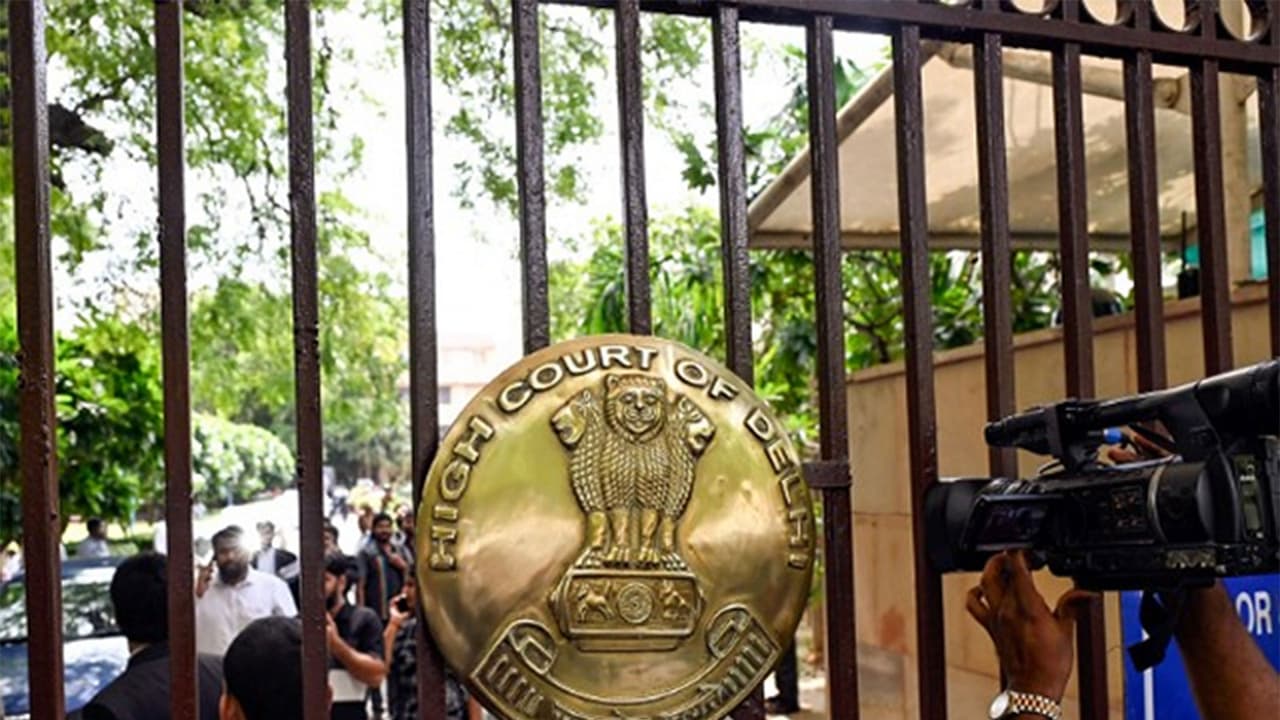
The Delhi High Court overturned the 2002 conviction of two men in a 28-year-old murder case, citing significant discrepancies in the prosecution’s evidence regarding the weapon recovery and blood-stained clothing presented as proof.
Delhi High Court Acquits Two in 28-Year-Old Murder Case
The Delhi High Court has recently acquitted 2 convicts of 28 year old murder case citing discrepancies casting a grave doubt on the statement and recovery of sword cited as weapon of alleged offence and long duration of clothes with blood stain worne by accused for a period of 5 days. An FIR was lodged in Sultanpuri Police Station for the murder of one Hari Chand on October 13, 1998. A Division Bench of Justices Navin Chawla and Ravinder Dudeja acquitted Yashpal and Banarasi Das after setting aside the conviction and sentence awarded by the trial court in 2002.
The High Court said, “Discrepancies cast a grave doubt on the alleged disclosure statements and the consequential recoveries of the sword at the instance of appellant Banarsi Dass, as also upon the clothes worn by appellant Yashpal.” “We find that the learned Trial Court has tried to complete the chain of circumstances against the appellants, which the prosecution had failed to establish,” the High Court said in the judgement passed on November 5. The bench headed by Justice Navin Chawla said in the judgement, “In our view, the prosecution has failed to meet this test. In fact, the learned Trial Court had extended the benefit of doubt to the co-accused Virender, while proceeding to convict the appellants.”
“The impugned judgment of conviction of 31.01.2002 and the consequential order on sentence of 31.01.2002 cannot be sustained. They are, accordingly, set aside. The appellants are acquitted of the charges, giving them the benefit of doubt,” the bench ordered. The appellants had challenged the January 2002 Judgement of the Trial Court convicting for murder and sentencing them for life imprisonment with fine of Rs 2000 each.
Evidence and Prosecution Case Analysis
As per the prosecution, an Information was received on October 13, 1998, at about 08:35 pm, regarding a murder having taken place in Sultan Puri. Upon reaching the spot, police found the blood-soaked body of the deceased, Hari Chand, in the gali between the Government Higher Secondary School, BC Block and Ambedkar Park. The deceased was found to have sustained multiple wounds and injuries on his head, neck, chest and back. A cycle was also found lying at a distance of about 50 paces from the body of the deceased. No eyewitness was found present at the spot. The deceased was removed to the hospital.
The case of the prosecution was built on the testimony of Prosecution witness Ratan Lal, who was presented as an eyewitness to the offence. However, the Trial Court itself disbelieved him as an eyewitness to the offence. The High Court observed, “In fact, if one sees his testimony as a whole, it becomes evident that he had not witnessed the incident but had come to know of the same only later.” The High Court said that the main plank on which the learned Trial Court, in spite of finding Ratan Lal not to be an eyewitness to the offence, convicted the appellants, is the alleged recovery of the weapon of the offence, that is, a sword, at the disclosure and pointing out of appellant Banarsi Dass and the recovery of blood-stained clothes worn by appellant Yashpal at the time of the offence and at the time of his arrest.
Court Observations on Evidence
The High Court said that as far as the disclosure and the recovery of the sword at the instance of appellant Banarsi Dass are concerned, it is well settled that in view of Sections 25 and 26 of the Evidence Act, a confessional statement made by an accused to a police official is not admissible. “At the outset, we would note that the offence was committed on 13.10.1998 and the accused were arrested on 18.10.1998, that is, after a period of 5 days. While it is the case of the prosecution that appellant Banarsi Dass had thrown the clothes worn by him at the time of offence near the Wazirabad Bridge, curiously, appellant Yashpal continued to wear the same clothes for five days, in spite of having blood spots on the same. This appears to be very improbable,” the division bench observed.
The High Court further observed that at the time of their interrogation and the alleged disclosure statements, the blood spots on his clothes were not noticed by the police officers. The accused are first taken to the house of appellant Banarsi Dass and, thereafter, to the Wazirabad Bridge. “It is only thereafter, when they returned to the Police Station, that blood stains on the clothes of appellant Yashpal are noticed by the police officials, and his clothes are seized. This again casts a doubt on the case of the prosecution,” the High Court said.
(Except for the headline, this story has not been edited by Asianetnews Editorial staff and is published from a syndicated feed.)