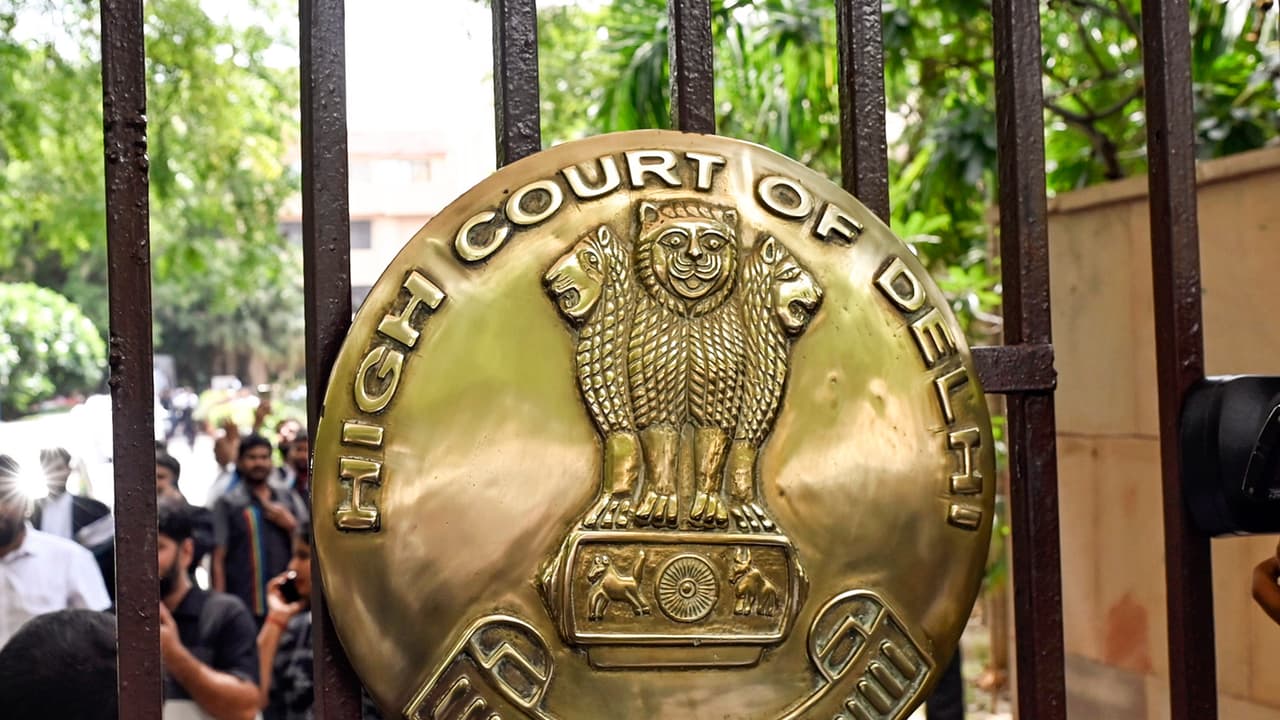
The Delhi High Court dismissed a plea by accused in the JP Nadda effigy burning case. The court ruled that violence in the guise of protest is unacceptable, calling the act a ‘brazenly disruptive activity’ and not a legitimate protest.
The Delhi High Court has observed that violence carried out in the guise of protest cannot be accepted in a democracy while dismissing a plea filed by accused persons seeking discharge in a case relating to the burning of an effigy outside the bungalow of the senior BJP leader and Union Minister J P Nadda.
Justice Girish Kathpalia said that after burning the effigy on the road, the accused Jagdeep Singh alias Jagga and others crossed the road, broad footpath and service lane to throw the burning portions onto the rooftop of the guardroom of the bungalow despite resistance from security personnel. The Court remarked that such conduct could not be described as a protest and was “nothing but a brazenly disruptive activity.”
Legal Arguments and Evidence
According to the prosecution, the incident took place on June 21, 2022, when the accused persons gathered outside Nadda’s official residence at Motilal Nehru Marg, raised slogans and burnt the effigy. They allegedly carried the burning effigy with wooden sticks and threw it towards the gate and rooftop of the security room before fleeing the spot. The entire incident was captured on CCTV cameras, and the footage forms part of the chargesheet.
The accused argued before the High Court that no injuries were caused and there was no intention to kill anyone; the offence under Section 307 IPC for attempt to murder was not made out. It was also contended that Section 285 IPC relating to negligent conduct with fire would apply instead, and that Section 436 IPC could not be invoked as no explosive substance was used.
Opposing the plea, the State submitted that eyewitness statements and CCTV footage clearly established the dangerous nature of the act and justified the framing of charges. The CCTV footage was also played before the Court during the hearing.
High Court’s Ruling
The High Court held that the CCTV footage itself contradicted the claim that the gathering was merely a protest. The Court observed that if the intention was only to protest, there was no reason for the accused persons to cross the wide footpath and service road before throwing the burning effigy at the gate and security room.
On ‘Attempt to Murder’ Charge
On the charge under Section 307 IPC, the Court said that the absence of injuries did not dilute the seriousness of the act. It was observed that the accused persons could not deny knowledge that throwing a burning effigy towards the gate and security room where guards were standing was “so imminently dangerous” that it could in all probability have caused death or serious injury.
On Mischief and Negligence Charges
The Court further clarified that Section 436 IPC covers mischief caused not only by explosive substances but also by fire. Rejecting the reliance on Section 285 IPC, the Court held that the act alleged against the accused was intentional and not negligent.
‘Shoot and Scoot’ Acts Cannot Be Legitimate Protest
Emphasising democratic values, the Court observed that while protests are an important part of democracy, “shoot and scoot” acts of violence cannot be treated as legitimate protest. It also expressed concern that a section of society was indulging in disruptive activities in the name of protest.
Finding the petition to be “completely frivolous,” the High Court dismissed it with costs of Rs 25,000 to be deposited, within one week, with Bharat Ke Veer, a trust managed by the Ministry of Home Affairs. It allows citizens to financially support the families of bravehearts from the Central Armed Police Forces (CAPF) who sacrificed their lives in the line of duty.
(Except for the headline, this story has not been edited by Asianet Newsable English staff and is published from a syndicated feed.)