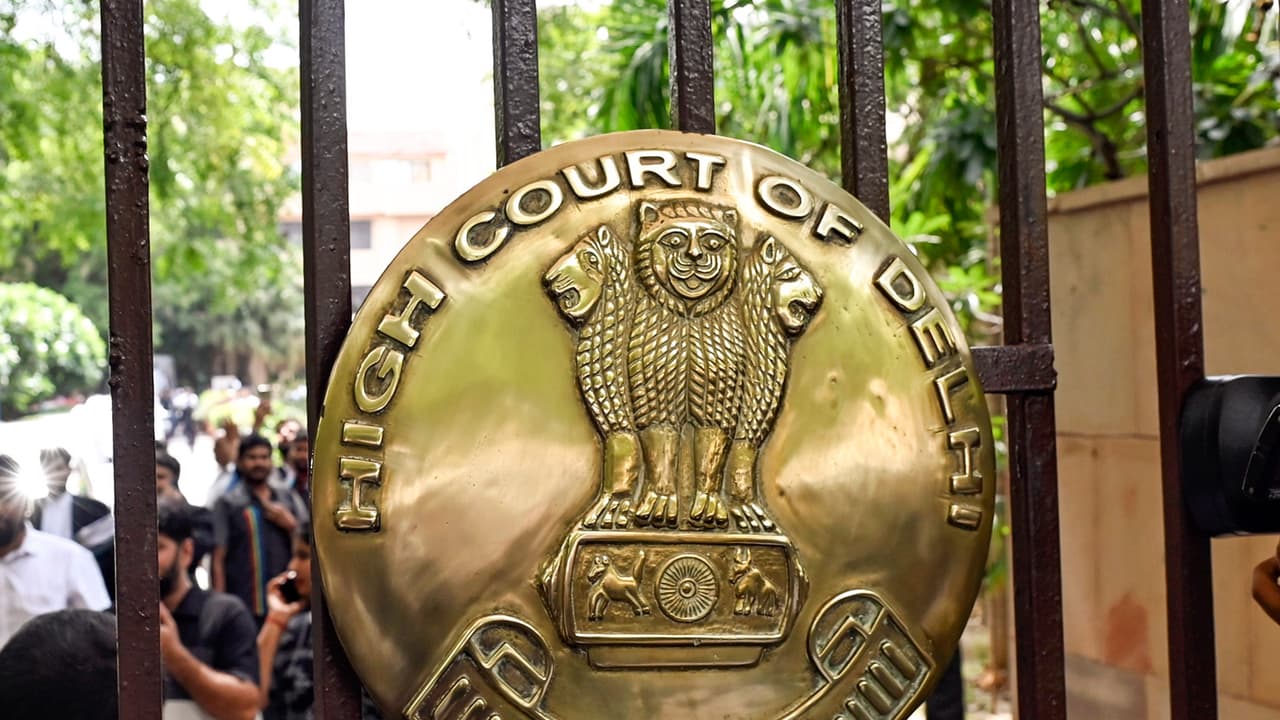
The Delhi High Court stayed a June 9, 2026 judgment against Sir Sobha Singh and Sons Pvt Ltd in a decades-old property dispute with the Centre over the Ambassador Hotel, directing all parties to maintain the status quo until the appeal is disposed of.
Justice Neena Bansal Krishna, in an order pronounced on August 10, directed the parties to maintain status quo with respect to the suit property till the disposal of the second appeal. The court also restrained the Centre from acting upon the June 9 judgment and decree.
Decades-Old Property Dispute
The dispute concerns an Agreement for Lease executed on October 8, 1945, relating to land measuring about 7.58 acres at Sujan Singh Park. The company had approached the civil court in 1960 challenging the government’s decision to re-enter the property and seeking, among other reliefs, specific performance of the lease agreement.
The litigation has continued for over six decades. The order records that the company’s possession of the property has remained protected since 1960 and that it has been in continuous possession since 1943.
The dispute primarily concerns the construction and use of the building described in the proceedings as the “Hotel Block”, besides alleged misuse of portions of the Servants’ Quarters and 31 garages in the Servants’ Block. According to the company, the Hotel Block was constructed with the knowledge and approval of government authorities.
The High Court noted that correspondence between the parties prima facie indicated that the construction had been undertaken with the knowledge and approval of competent government officials. The court also took note of an ex-post-facto sanction granted for the hotel in 1951.
Legal Battle Through Courts
The Union government had alleged breaches of the terms of the grant and, in 1959, directed the company to remove the alleged breaches. It subsequently informed the company that it had re-entered the property with effect from July 29, 1960. The company challenged the action before the civil court.
In 2009, the trial court decreed the suit in its favour, holding, among other things, that the buildings had been constructed in accordance with the instructions and orders of the government and that the alleged misuse had not been established. However, the First Appellate Court, through its June 9, 2026 judgment, reversed the trial court’s decision and dismissed the suit. It also held that the reliefs of specific performance, declaration and injunction sought by the company did not constitute a competent suit in view of the Government Grants Act, 1895.
High Court’s Prima Facie Observations
The company challenged that decision before the High Court, raising several substantial questions of law. Justice Bansal Krishna noted that one of the issues requiring examination was whether Section 3 of the Government Grants Act excluded the jurisdiction of a civil court to interpret the grant, determine whether its terms had been breached and examine whether the government’s action was in accordance with the grant.
The High Court also noted that the First Appellate Court had not, according to the prima facie assessment made for the interim application, adequately considered various contemporaneous communications concerning the construction of the Hotel Block and its subsequent regularisation.
The court observed that two divergent findings had emerged from the trial and appellate courts and that substantial questions of law had already been framed. It held that the suit property needed to be preserved until those questions were adjudicated.
The High Court also considered the Centre’s proceedings under the Public Premises (Eviction of Unauthorised Occupants) Act, 1971. While the Centre argued that those proceedings were independent of the June 9 judgment, the High Court observed that the contents of the June 11 show-cause notice prima facie indicated that the eviction proceedings had been commenced following the appellate court’s decision.
The court clarified that the stayed June 9 judgment would not form the basis for initiating or continuing proceedings under the Public Premises Act. However, it also made clear that the Union of India would remain at liberty to pursue remedies available under law independently of the stayed judgment. The court stressed that its observations were confined to deciding the interim application and should not be treated as an expression on the merits of the second appeal. The application filed by Sir Sobha Singh and Sons Pvt Ltd was accordingly allowed, the operation of the June 9 judgment and decree was stayed, and the parties were directed to maintain status quo over the suit property until disposal of the appeal. (ANI)
(Except for the headline, this story has not been edited by Asianet Newsable English staff and is published from a syndicated feed.)