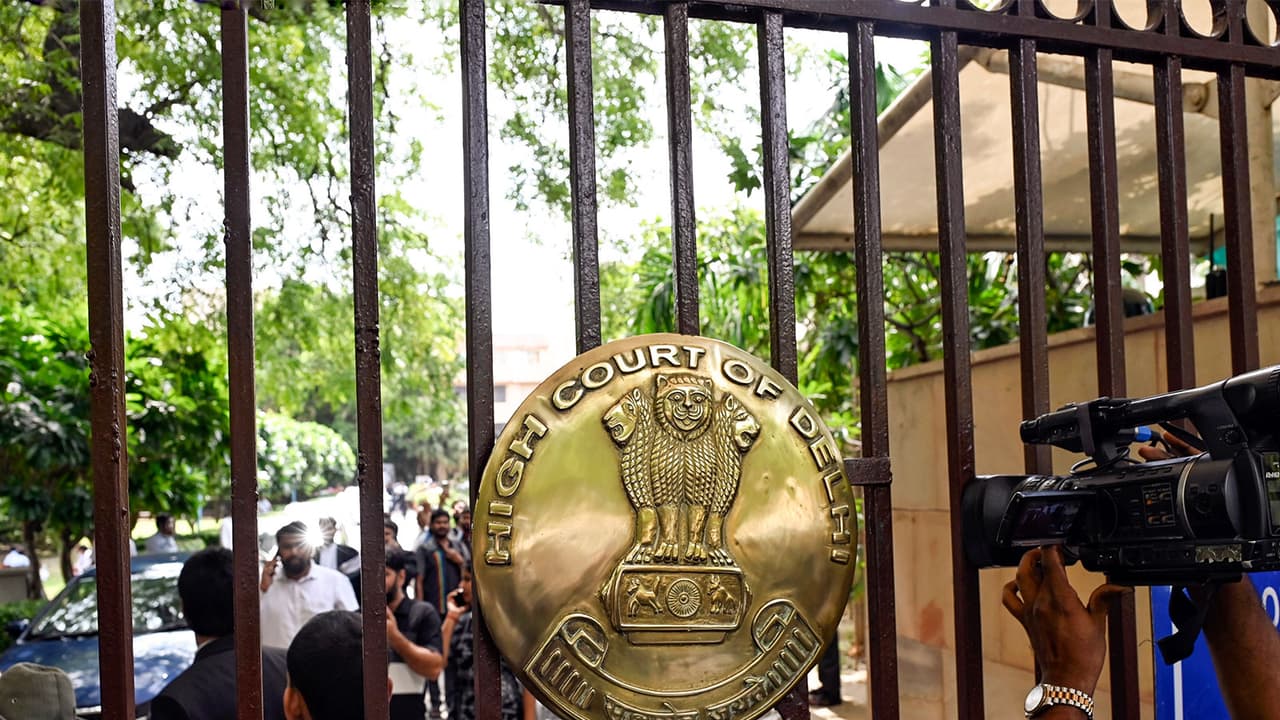
The Delhi High Court slammed jail authorities for making a ‘mockery’ of the legal system by defying its order to release an undertrial on parole. The court initiated contempt proceedings against the concerned jail official for wilful violation.
Jail Authority Made ‘Mockery’ of Legal System, Says Court
The Delhi High Court has observed that the jail authority’s actions had made a “mockery” of the legal system by keeping an undertrial behind bars despite a court order directing his release on parole. Justice Purushaindra Kumar Kaurav said the conduct of the jail authority had prevented implementation of the court’s order and violated the petitioner’s right to the rule of law and personal liberty under Articles 14 and 21 of the Constitution. The court further held that the conduct of the concerned jail official in imposing additional conditions beyond those specified by the High Court amounted to a wilful violation of its order and accordingly initiated contempt proceedings.
Parole Denied Despite Repeated Court Orders
The observations came while hearing a petition filed by Anwar Hussain, represented by advocate Shannu Baghel, seeking release on parole after his parole application was rejected by the jail authority. Hussain had remained an undertrial prisoner for 5 years and 5 months and sought parole to pursue his legal remedies before the Supreme Court after dismissal of his criminal appeal.
On July 30, the High Court directed his release on four weeks’ parole, subject to conditions to be imposed by the competent authority. The court noted that the authority did not impose the conditions and the petitioner continued to remain in prison.
Hussain was subsequently required to approach the High Court again, following which the court, on August 11, specified the conditions for his release. However, when the petitioner’s wife/family member approached the jail authority to comply with the conditions, she was allegedly told that the August 11 order would not be acted upon unless it was received directly from the High Court.
Court Rejects ‘Flimsy and Unjustifiable’ Excuses
The High Court observed that the order was a digitally signed public document whose authenticity could easily be verified. It termed the reason given by the jail authority “flimsy and unjustifiable” and said the action appeared aimed at frustrating the court’s order and preventing the petitioner’s release.
When the matter was taken up on September 8, the court directed the Jail Superintendent to appear personally and explain the conduct, besides asking why contempt proceedings should not be initiated. During the hearing, the court was told that the concerned official had not acted with ill-will or malice. It was submitted that the petitioner’s place of residence could not be verified and that verification of the address was a “customary” and “routine” condition. The court, however, questioned why such a condition had not been dealt with earlier and noted that there was no condition relating to the petitioner’s residence in its August 11 order. It observed that the jail authority appeared to be seeking to impose conditions over and above those prescribed by the court.
Contempt Proceedings Initiated
The court said the actions had caused the petitioner, who had already spent 5 years and 5 months as an undertrial, to continue behind bars despite a constitutional court directing his release. Holding the conduct to be a wilful violation of its order, the court initiated contempt proceedings and directed the concerned official to file a response explaining why he should not be punished under the Contempt of Courts Act, 1971. The official was also directed to remain personally present on the next date of hearing. The matter has been listed for September 22.
(Except for the headline, this story has not been edited by Asianet Newsable English staff and is published from a syndicated feed.)